Understanding Rule 10.44: Appealing a Refusal of a Bankruptcy Order in England and Wales
In the insolvency framework of England and Wales, individuals seeking to initiate bankruptcy proceedings must sometimes face a decision by an Adjudicator not to make a bankruptcy order. Rule 10.44 of the Insolvency (England and Wales) Rules 2016 provides a legal avenue for applicants to challenge such decisions through an appeal process. This guide offers a comprehensive overview of the procedure, its scope, and the key considerations involved.
The Purpose and Scope of Rule 10.44
Rule 10.44 establishes the formal process by which an applicant can appeal against an Adjudicator’s refusal to issue a bankruptcy order. This rule ensures that applicants have a fair opportunity to contest decisions that they believe are unjust or incorrect, thereby safeguarding their rights within the insolvency process. The rule applies specifically to cases where a debtor’s application for bankruptcy has been refused by the Adjudicator, and the applicant wishes to seek a review or reversal of that decision through the court system.
Who Can Make an Appeal?
The primary individual eligible to appeal under Rule 10.44 is the applicant who submitted the original bankruptcy application. This includes debtors who have sought bankruptcy protection and have had their application refused by the Adjudicator. It is important to note that the appeal process is initiated by the applicant or their legal representative, typically a solicitor, who files the necessary documentation with the court.
The Procedure for Filing an Appeal
1. Preparing the Application
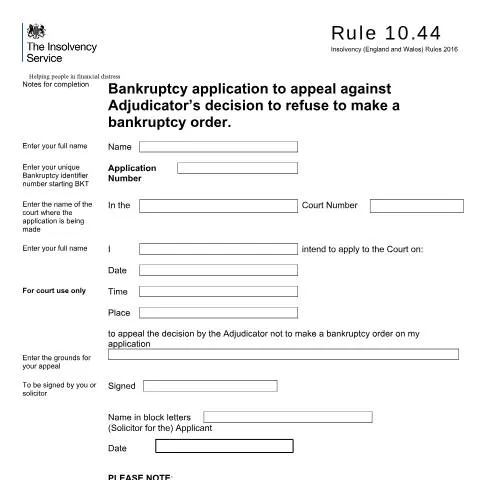
The appeal process begins with the applicant completing a formal application form, which must include specific details:
- The applicant’s full name and unique Bankruptcy identifier number (starting with BKT).
- The name of the court where the appeal is being lodged and the relevant court number.
- The date and time the applicant intends to appear before the court.
- The grounds for the appeal, which should clearly state why the applicant believes the Adjudicator’s decision was incorrect or unjust.
- The signature of the applicant or their solicitor, along with their name in block letters and the date of submission.
2. Notifying the Adjudicator
Once the appeal application is submitted to the court, it is mandatory for the applicant to inform the Adjudicator of the appeal. This notification must include the court reference number and details of the court application. Prompt communication ensures transparency and helps maintain the procedural integrity of the insolvency process.
3. Court Hearing and Decision
The court will review the appeal and decide whether to dismiss it or to proceed with making a bankruptcy order against the debtor. If a bankruptcy order is issued following the appeal, the court’s decision must explicitly state that the order was made as a result of an appeal under Rule 10.44. The court’s ruling is final, and failure to attend the hearing may result in the court making an order deemed appropriate based on the available evidence.
Legal Considerations and Important Notes
Applicants should be aware of several legal provisions and procedural requirements under Rule 10.44:
- The appeal must specify the grounds for contesting the Adjudicator’s decision, as mandated by Rule 10.44 (3).
- The court’s options are limited to either dismissing the appeal or issuing a bankruptcy order, as per Rule 10.44 (4).
- If a bankruptcy order is granted following an appeal, the order must include a statement confirming it was made after an appeal under this rule (Rule 10.44 (5)).
- Timely notification to the Adjudicator is essential; failure to do so may affect the validity of the appeal process.
Conclusion
Rule 10.44 provides a critical legal pathway for individuals who wish to challenge a refusal to grant a bankruptcy order in England and Wales. By understanding the procedural requirements—such as preparing a detailed appeal application, notifying the Adjudicator, and attending court hearings—applicants can effectively exercise their rights within the insolvency process. For specific cases or legal advice, it is recommended to consult a qualified solicitor experienced in insolvency law.