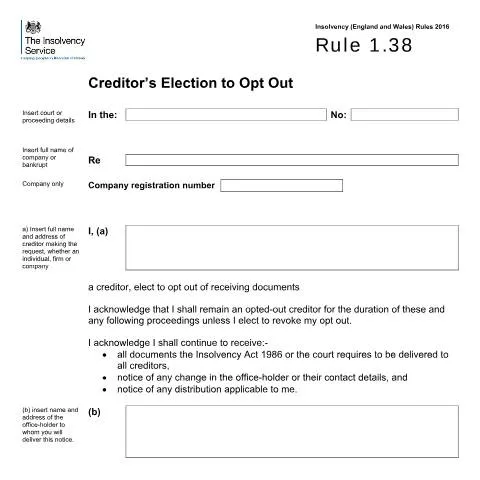
Navigating the Complexities of the Rule 1.38 Creditor’s Election to Opt Out
When faced with insolvency proceedings, creditors may find themselves inundated with various forms and legal jargon. One such document that warrants attention is the Rule 1.38 Creditor’s Election to Opt Out. This form plays a critical role in allowing creditors to opt out of receiving communications related to insolvency proceedings. However, understanding its function, the implications of opting out, and the correct way to complete it can be a daunting task for many. This article aims to dissect this form's importance, guide you on its completion, and clarify its position within the broader framework of insolvency procedures.
The Role of the Creditor’s Election in the Insolvency Process
The Rule 1.38 form serves a specific function within the insolvency process governed by the Insolvency (England and Wales) Rules 2016. By submitting this form, a creditor explicitly states their intention to opt out of receiving certain documents during the insolvency proceedings of a company or an individual. This decision is not merely administrative; it reflects a strategic choice that can significantly impact the creditor's involvement in the process.
Understanding the Implications of Opting Out
Opting out can simplify a creditor’s experience during insolvency proceedings. By choosing to opt out, creditors may alleviate the burden of receiving regular updates and documentation that may not be relevant to their interests. However, it’s essential to recognize that opting out does not mean complete detachment from the proceedings. Creditors will still receive critical notifications, including:
- All documents that the Insolvency Act 1986 or the court mandates to be sent to all creditors.
- Notices regarding any changes in the office-holder or their contact details.
- Information on distributions applicable to them.
This balance ensures that while creditors can reduce the volume of paperwork they receive, they remain informed about vital developments concerning their claims.
Who Should Submit the Rule 1.38 Form?
The party responsible for submitting the Rule 1.38 form is typically a creditor wishing to opt out of the usual communications. This can be an individual, firm, or company that believes the regular updates are unnecessary for their situation. The choice to opt out might arise because they are confident in their current understanding of the proceedings or simply wish to minimize administrative hassle.
Key Considerations for Creditors
When evaluating whether to opt out, creditors should consider the following factors:
- The nature of their claim: Is it likely that they will need to participate actively in the proceedings, or do they anticipate receiving updates that are not immediately relevant?
- Previous experience with insolvency proceedings: Have they encountered situations where opting out was beneficial or detrimental?
- The potential for significant changes during the process: Could the creditor find themselves needing information that they would not receive if they opt out?
Each of these considerations can influence their decision to proceed with the form.
Step-by-Step Guide to Completing the Rule 1.38 Form
Completing the Rule 1.38 form correctly is crucial for ensuring that the opt-out request is processed without any issues. Below are the essential components of the form, along with guidance on how to fill each section accurately.
Section Breakdown
| Form Section | Description | Common Pitfalls |
|---|---|---|
| Court or Proceeding Details | Clearly specify the court handling the case or provide relevant proceeding details. | Failure to specify can lead to processing delays. |
| Full Name of Company or Bankrupt | Insert the complete legal name of the entity involved in insolvency. | Incorrect or abbreviated names can invalidate the request. |
| Creditor’s Information | Provide your name and full address as the requesting creditor. | Omitting your contact details may lead to difficulties in communication. |
| Office-holder’s Information | Details regarding the office-holder who will receive your notice. | Ensure that the office-holder's information is accurate; errors may complicate the process. |
| Signature and Authentication | Sign the form and include your name in block letters, along with your relationship to the company, if applicable. | Not authenticating can render the form invalid. |
Practical Tips for Submission
Once the form is completed, creditors have several options for submitting it:
- In Person: Delivering the form directly to the office-holder ensures immediate receipt.
- By Post: Sending the completed form via registered post provides proof of submission.
- Email Submission: If authenticated correctly, emailing the form as an attachment is also an option, provided the email clearly identifies the sender.
Choosing the right submission method can prevent unnecessary delays and ensure that the creditor's opt-out request is processed promptly.
What Happens After Submission?
Following the submission of the Rule 1.38 form, the creditor will be classified as an opted-out creditor. This status remains effective throughout the duration of the ongoing insolvency proceedings. However, it is important to understand the implications of this classification:
- Creditors will continue to receive essential notifications regarding office-holder changes and distribution notices.
- If a creditor decides to reverse their opt-out status, they can do so at any time by submitting a revocation notice.
This flexibility allows creditors to re-engage with the process should their circumstances change or if they find that they need more involvement.
Understanding Opting Out Versus Other Similar Forms
In the realm of insolvency, several forms serve different purposes, and confusion can often arise regarding their distinctions. The Rule 1.38 form specifically targets the opt-out election, while other forms may involve claiming debts or participating actively in proceedings.
Contrast with Other Common Forms
| Form Type | Purpose | Target Users |
|---|---|---|
| Rule 1.38 Opt-Out | Allows creditors to opt out of receiving certain documents. | Creditors who do not wish to receive regular updates. |
| Proof of Debt Form | Used to formally register a claim against a debtor. | Creditors seeking to recover debts owed to them. |
| Creditor's Petition | A formal request to the court to initiate insolvency proceedings against a debtor. | Creditors who believe a debtor is unable to pay their debts. |
Understanding these distinctions helps ensure that creditors select the appropriate form for their needs and avoid unnecessary complications.
Adapting to Changes in the Insolvency Landscape
The insolvency landscape in the UK continues to evolve, influenced by economic shifts and legislative changes. Creditors must remain informed and adaptable to navigate these changes effectively. For those who have opted out, periodic reviews of their status and the relevance of their opt-out choice can be beneficial.
Staying Informed
While opting out reduces the influx of communications, creditors should regularly check for updates on the insolvency proceedings that may affect their claims. Engaging with the office-holder or seeking updates from reliable sources can ensure that they remain informed about any critical developments.
Final Thoughts on the Rule 1.38 Process
Engaging with the insolvency process through the Rule 1.38 form requires a nuanced understanding of not just the form itself but also the broader context of insolvency proceedings. By carefully considering the decision to opt out, completing the form with precision, and remaining proactive about one’s status, creditors can navigate this complex landscape with greater confidence.
Understanding Rule 1.38: The Creditor's Election to Opt Out
Rule 1.38 of the Insolvency (England and Wales) Rules 2016 grants creditors the ability to opt out of being included in certain insolvency proceedings. This provision is particularly significant for creditors who wish to maintain their rights and interests in a situation where they feel that participating in a collective process may not be in their best interest.
Essentially, the rule allows creditors to make an informed choice regarding their involvement in the process. The opt-out choice is particularly relevant for creditors who have a strong belief that their claim can be resolved outside of the formal insolvency process, or who may perceive that the process could result in a protracted timeline for recovering their debts.
When exercising this option, creditors must be aware of the implications. Opting out means that they will not be able to participate in any discussions, meetings, or votes regarding the insolvency proceedings. This lack of participation could potentially diminish their ability to influence the outcome of negotiations or the distribution of assets.
To opt out, creditors need to formally notify the office holder of the insolvency proceeding of their decision. This notification must adhere to the prescribed format and be submitted within specific deadlines to ensure that their choice is duly recognized. The timeframe for opting out usually aligns with the initial stages of the insolvency process, so prompt action is essential.
Moreover, it's important to note that opting out does not absolve creditors from their responsibilities. They still retain the right to pursue their claims through other legal avenues, but this path may involve additional costs and legal complexities that should be carefully assessed.
Factors Influencing a Creditor's Decision to Opt Out
Deciding whether to exercise the option to opt out under Rule 1.38 involves a careful evaluation of various factors. Each creditor's situation is unique, and understanding these influences can provide clarity in making an informed decision.
One of the primary considerations is the nature and amount of the debt owed. Larger creditors with significant claims may feel more secure in opting out, believing they have greater leverage in pursuing their debts independently. Conversely, smaller creditors might find themselves more vulnerable in financial negotiations, leading them to consider remaining in the insolvency process to enhance their chances of recovering some of their funds.
The relationship with the debtor also plays a crucial role. Long-standing creditors may have developed a rapport with the debtor, encouraging them to pursue informal negotiations rather than participating in the formal insolvency process. On the other hand, a creditor with a contentious relationship may opt out, preferring to distance themselves from the continuing complexities of the insolvency proceedings.
Market conditions can also influence this decision. In a recovering economy, creditors may feel more optimistic about their chances of negotiating a favorable settlement directly with the debtor. Alternatively, in a declining market, they may decide to remain in the collective insolvency process, hoping for a more equitable distribution of assets.
Legal considerations should not be overlooked either. A creditor's eligibility for certain legal remedies may be affected by their decision to opt out. Consulting with legal professionals specializing in insolvency can provide valuable insights into the potential outcomes of opting out versus remaining within the proceedings.
Practical Steps for Creditors Opting Out
For creditors who have decided to opt out of the insolvency proceedings under Rule 1.38, following a structured approach can help ensure that the process is smooth and compliant with legal requirements.
First and foremost, creditors should review the relevant insolvency documentation. Understanding the specific circumstances surrounding the insolvency can provide context for their decision and outline any critical deadlines they need to be aware of.
Next, they should draft a formal notice of their decision to opt out. This notice must include essential details such as the creditor's name, the nature of the debt, and the associated insolvency case reference. Using clear and concise language can help prevent misunderstandings regarding their decision.
Once the opt-out notice is prepared, it is imperative to submit it to the appointed office holder overseeing the insolvency process. This submission should be accompanied by any necessary documentation to support the claim, ensuring compliance with the procedural requirements outlined in the Insolvency (England and Wales) Rules 2016.
After submitting the notice, creditors should obtain confirmation of receipt from the office holder. Keeping a record of this correspondence can be beneficial, should any disputes arise regarding their opt-out status in the future.
Additionally, staying informed about the ongoing insolvency proceedings is crucial, even after opting out. Creditors should monitor any updates or announcements that may affect their claims or provide insights into the debtor's financial status. While they may not participate in the process directly, being proactive can help creditors make timely decisions regarding their next steps.
Lastly, seeking advice from insolvency practitioners or legal advisors can provide valuable guidance on navigating the complexities of opting out. These professionals can offer tailored insights based on the creditor's unique circumstances and the specifics of the insolvency case.