Navigating the Path to a Public Examination: Rule 10.101 Explained
When a debtor finds themselves in bankruptcy, creditors often seek transparency regarding the financial circumstances of the bankrupt individual. One of the key mechanisms for facilitating this transparency is the public examination process, initiated through a request by creditors under Rule 10.101 of the Insolvency Act 1986. This guide delves into the intricacies of making such a request, illustrating its practical applications and addressing common concerns that may arise during the process.
Understanding the Public Examination Process
A public examination allows creditors to question the bankrupt individual regarding their financial affairs. This examination can reveal vital information about the bankrupt's liabilities and assets, which might not be readily available through other channels. Under this rule, creditors have the legal authority to request an official examination, which can play a crucial role in the overall bankruptcy proceedings.
The Legal Framework
The process is rooted in Section 290 of the Insolvency Act 1986, which empowers creditors to apply for a public examination if they hold claims that constitute a significant portion of the bankrupt's total debts. The creditor must substantiate that their claim, along with those of other creditors who support the request, amounts to at least half of the total debt owed by the bankrupt.
Steps to Initiate the Examination
- Claim Verification: Begin by verifying your claim against the bankrupt’s estate. Ensure that your claim, along with others, meets the threshold of representing at least half of the total debts.
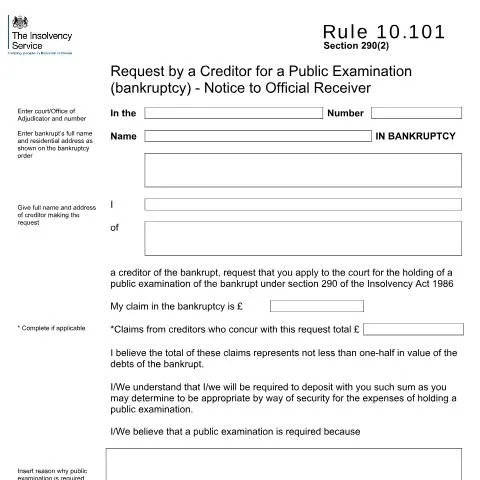
- Prepare the Request: Fill out the Rule 10.101 request form accurately, detailing the reasons for the public examination and including the necessary claims from supporting creditors.
- Deposit Requirements: Understand that you will likely need to deposit a specified sum with the official receiver to cover the expenses associated with holding the examination.
- Submission: Submit your request to the official receiver, ensuring that all necessary documents are included, such as a list of other creditors who concur with your request.
Key Considerations in Crafting Your Request
When drafting your request for a public examination, specific details are paramount. The clarity of your claim and the justification for the examination can significantly influence the outcome.
What to Include in Your Request
- Creditor Information: Clearly state your full name and address, alongside any relevant identification linked to your claim.
- Bankrupt Details: Include the full name and residential address of the bankrupt as required by the bankruptcy order.
- Reasons for Examination: Provide a comprehensive explanation as to why you believe a public examination is necessary, focusing on the need for clarity regarding the bankrupt’s financial situation.
The Importance of Supporting Claims
One crucial aspect of the Rule 10.101 request is the inclusion of supporting claims from other creditors. This aspect not only strengthens your request but also aligns with the legal requirement of collective creditor interest in the bankruptcy.
How to Collect and Present Supporting Claims
Gathering evidence of support from fellow creditors enhances the legitimacy of your request. Here’s how you can effectively present these claims:
- Documentation: Collect written confirmations from other creditors who concur with your request, ensuring that their claims are detailed and substantiated.
- Aggregate Claims: List the total value of claims from all supporting creditors, which should reflect a sum representing at least half of the bankrupt’s total debts.
Potential Pitfalls: Common Misinterpretations
While navigating the request process, creditors often encounter misinterpretations that can lead to delays or rejections of their applications.
Misunderstandings to Avoid
- Claim Threshold: Remember that the combined claims must equal at least 50% of the bankrupt’s total liabilities. Miscalculating this threshold can jeopardize your request.
- Security Deposits: Ensure you understand the financial implications of the required deposit. Neglecting this step can result in your application being deemed incomplete.
- Reason for Examination: Vaguely stating the rationale for the public examination may weaken your position. Articulate clear and concise reasons based on the bankrupt’s financial activities that warrant an investigation.
Interactions with Other Bankruptcy Documents
The Rule 10.101 request does not function in isolation; it interacts with various other documents within the bankruptcy process. Understanding these interactions can provide clarity and streamline your efforts.
Relevant Documents and Their Roles
| Document | Purpose | Relationship with Rule 10.101 |
|---|---|---|
| Bankruptcy Order | Formal declaration of bankruptcy status | Identifies the bankrupt and provides basic details for the request |
| Statement of Affairs | Overview of bankrupt’s financial situation | Essential for corroborating the need for a public examination |
| Creditor List | Details of all creditors and their claims | Serves as a basis for identifying supporting creditors in the request |
Understanding the Role of the Official Receiver
The official receiver plays a pivotal role in the public examination process. Their responsibilities encompass managing bankruptcy cases and overseeing the examination of the bankrupt.
Responsibilities of the Official Receiver
- Receiving Requests: The official receiver is tasked with accepting and processing Rule 10.101 requests from creditors.
- Arranging the Examination: Once the request is validated, they coordinate the logistics for the public examination, including scheduling and notifying the involved parties.
- Cost Management: They determine the appropriate security deposit amount required from creditors to facilitate the examination process.
After the Public Examination: Next Steps for Creditors
Upon completion of the public examination, creditors should be prepared to evaluate the information gleaned during the process. Understanding the implications of the findings can influence subsequent actions in the bankruptcy proceedings.
Utilizing the Examination Findings
- Follow-Up Claims: If discrepancies or issues are identified, creditors may need to pursue further claims against the bankrupt or engage in negotiations for potential settlements.
- Reporting to Fellow Creditors: Sharing the outcomes of the public examination with fellow creditors can foster collaboration and collective decision-making regarding future actions.
- Influencing Bankruptcy Proceedings: The insights gained may affect voting on critical decisions within the bankruptcy, such as proposals for repayment plans or alternate arrangements.
Conclusion: Empowering Creditors Through Knowledge
The power to request a public examination under Rule 10.101 is a vital tool for creditors. Equipped with an understanding of the process, legal requirements, and potential pitfalls, creditors can effectively navigate the complexities of bankruptcy proceedings. Ensuring that your request is thorough and well-supported not only enhances your position but also contributes to greater transparency within the bankruptcy process, ultimately fostering a fairer resolution for all parties involved.
Understanding the Rule 10.101 Process in Bankruptcy
Rule 10.101 of the Insolvency Rules 2016 provides a mechanism for creditors to request a Public Examination of a debtor's financial affairs during bankruptcy proceedings. This process not only serves to scrutinize the conduct of the bankrupt but also enables creditors to gather essential information that may assist them in recovering debts. It's crucial for creditors to be aware of the procedural steps and implications surrounding this request.
The process begins when a creditor submits a formal request to the official receiver, typically accompanied by a detailed explanation of why the examination is warranted. This request must include specific information about the creditor, such as their National Insurance number and any evidence supporting the claim of debt. The official receiver then assesses the reasons for the Public Examination request and determines whether to proceed.
Importantly, the request for a Public Examination is not a guaranteed right. The courts may exercise discretion in determining whether the examination should occur, often considering factors such as the potential outcomes and the relevance of the examination to the creditor’s claim. If the request is granted, the official receiver will notify the debtor and set a date for the examination, which is typically held in a public venue to ensure transparency.
Role and Responsibilities of the Official Receiver
The official receiver plays a pivotal role in the Public Examination process under Rule 10.101. As a representative of the Insolvency Service, the official receiver is responsible for managing the affairs of the bankrupt estate and ensuring compliance with relevant laws and regulations. When a Public Examination is requested, the official receiver must conduct a thorough examination of the circumstances surrounding the bankruptcy.
During the examination, the official receiver has the authority to question the bankrupt in detail regarding their financial dealings, asset disposal, and any other matters pertinent to the bankruptcy proceedings. This is an opportunity for creditors to obtain valuable insights into the bankrupt's financial history, including information that may not have been disclosed in prior communications or filings.
Furthermore, the official receiver is tasked with preparing a report following the examination. This report is crucial for creditors, as it outlines findings from the examination, including any indications of misconduct or financial mismanagement by the debtor. The transparency of this process serves to protect the interests of creditors and maintain the integrity of the bankruptcy system.
Implications of a Public Examination for Debtors
For debtors, undergoing a Public Examination can be a daunting experience, and it’s essential they understand the implications. The examination is public, which means that details of the debtor's financial situation may be disclosed to a broader audience, including other creditors and the media. This aspect can have a significant impact on the debtor’s reputation and future financial endeavors.
It is also important to note that debtors have the right to legal representation during the examination. Seeking legal advice can help them navigate this challenging process, as lawyers can provide guidance on how to respond to questions and protect their interests. They can also assist in preparing for the examination by reviewing financial documents and advising on potential outcomes.
Furthermore, the outcome of a Public Examination can have serious consequences for the debtor. If the official receiver uncovers evidence of misconduct, such as fraudulent activities or failure to comply with obligations, this may lead to further legal action, including the possibility of restrictions on the debtor’s future financial activities. Understanding these potential repercussions is crucial for debtors facing a Public Examination.