Understanding the Role of a Rule 7.99 Request in Company Winding-Up
When a company faces financial difficulties and enters the winding-up process, it is often creditors who must navigate the complexities of insolvency proceedings. One crucial document in this context is the Rule 7.99 request by a creditor for a Public Examination. This notice is a formal mechanism allowing creditors to seek judicial examination of a company's affairs, shedding light on its financial dealings and potentially facilitating recovery of debts owed to them.
A Deep Dive into Public Examinations: What You Need to Know
A public examination can be a vital tool for creditors during the winding-up process, enabling them to gather information regarding a company's assets and liabilities. Under Section 133(2) of the Insolvency Act 1986, creditors can request that the court holds a public examination of individuals associated with the company, such as directors or other significant figures.
Here are the primary facets involved:
- Purpose: The main aim is to scrutinize the activities of the company and ascertain why it has entered insolvency.
- Who can request: Any creditor who holds a claim can initiate this request, provided they meet certain conditions outlined in the Act.
- Eligibility Criteria: To qualify, the creditor must demonstrate that their claim, along with those of other requesting creditors, represents at least half the total debts of the company.
Who Should Consider a Rule 7.99 Request?
Identifying when to utilise a Rule 7.99 request is essential for creditors. Generally, it is pertinent for parties dealing with significant debts owed by the company. Here are some conditions when a creditor might consider making this request:
- If they suspect misconduct or mismanagement by company directors.
- When there is a lack of transparency regarding the company's financial situation.
- If they want to explore avenues for recovering debts more effectively.
- To hold accountable those responsible for the company’s insolvency.
The Process: Navigating the Rule 7.99 Request
Commencing a Rule 7.99 request involves several key steps, each of which must be followed meticulously to ensure compliance with legal requirements. The following outlines the process:
- Gathering Information: Creditors must compile essential information regarding their claims, including the amounts owed and details of other creditors who support the request.
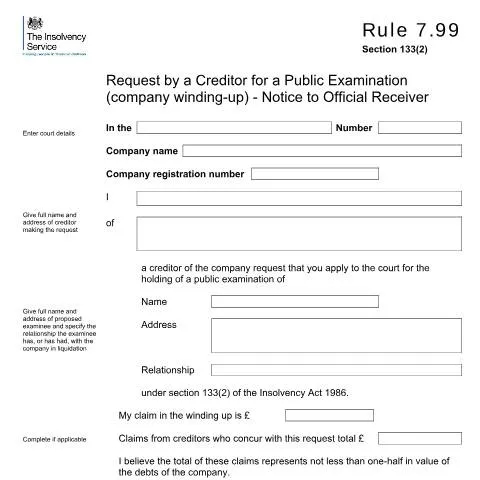
- Formulating the Request: The request must be drafted in accordance with the legal framework, specifying the name and address of the proposed examinee and the nature of their relationship with the company.
- Depositing Security: Creditors should prepare to deposit any amount stipulated by the official receiver as security for the expenses incurred during the public examination.
- Submitting the Request: The completed request must be submitted to the official receiver, with the added option of submitting it via email if authenticity requirements are met.
Key Elements of the Rule 7.99 Request Document
The Rule 7.99 request document contains several integral components that must be filled in correctly. Understanding these key elements is crucial for creditors:
| Section | Description |
|---|---|
| Company Details | Includes the name and registration number of the company in question. |
| Creditor Information | Details of the creditor making the request, including contact information. |
| Relationship Details | Information regarding the relationship between the proposed examinee and the company. |
| Claim Amount | Creditors must specify their claim amount and total claims from all creditors supporting the request. |
| Reason for Examination | A clear justification of why a public examination is necessary for the creditor’s interests. |
Exploring the Implications of a Public Examination
The implications of a public examination can be substantial, not only for creditors but also for the company and its directors. Here’s what to consider:
- Potential Recovery: A successful public examination could lead to recovery of funds for creditors if misconduct is uncovered.
- Accountability: Company directors may face scrutiny, and, if found responsible for wrongful trading, could be held accountable under insolvency laws.
- Public Record: Public examinations are conducted in a transparent manner; findings will be part of the public record, impacting the company’s reputation.
Limitations and Considerations of a Rule 7.99 Request
While the Rule 7.99 request is a powerful tool, it is not without limitations. Here are some considerations that creditors should keep in mind:
- Cost Implications: The requirement to deposit a security amount may deter some creditors from filing a request due to financial constraints.
- Complexity: The process can be legally intricate; creditors may require legal advice to navigate the complexities of the insolvency framework effectively.
- Time Constraints: It is crucial to act promptly as there are deadlines associated with the winding-up process, particularly concerning the timeframe for submissions.
Interplay with Other Insolvency Procedures
Understanding how a Rule 7.99 request interacts with other insolvency processes is vital for creditors. This request is closely related to several other key procedures, such as:
- Creditors' Meetings: The request might coincide with creditors' meetings, which provide further avenues for discussing the company's financial status.
- Liquidation Reports: Information gleaned from a public examination can influence the outcomes presented in a liquidator's report.
- Other Legal Actions: Results from the examination might lead to further legal actions against directors or other parties involved in the company’s financial mismanagement.
Final Thoughts on the Rule 7.99 Request
For creditors seeking to understand the intricacies of a company's financial dealings during the winding-up process, a Rule 7.99 request for a public examination serves as a critical tool. It empowers creditors to demand transparency and accountability, potentially leading to a pathway for recovering owed debts. Navigating this process requires meticulous attention to detail and an understanding of the legal framework surrounding insolvency, making it essential for creditors to be well-informed before proceeding.
Understanding the Context of Rule 7.99 Requests
To fully grasp the implications of a Rule 7.99 request, it's essential to understand the wider context of company winding-up procedures in the UK. The Insolvency Act 1986 governs these proceedings, which are often initiated when a company cannot pay its debts. When creditors feel that they have been unfairly treated or that there has been misconduct, they can petition for a public examination under Rule 7.99. This rule specifically enables creditors to request that an official receiver conducts a public examination of the company’s affairs.
The purpose of such an examination is not just to explore the financial position of the company, but also to investigate the actions of directors and other individuals involved in the management of the company. This can uncover previous misconduct, mismanagement, or fraudulent activities, thereby providing a pathway for potential recovery of funds for creditors. Understanding the specific circumstances under which a Rule 7.99 request may arise, and what subsequent actions may take place, can prove invaluable for creditors navigating this complex landscape.
Implications of a Public Examination on Stakeholders
A public examination conducted under Rule 7.99 can have significant implications for various stakeholders involved with the company. For creditors, the examination can provide critical insights into the company's financial dealings, potentially uncovering hidden assets that may be available for distribution. It may also reveal grounds for claims against directors or other responsible parties, which can lead to further legal actions such as disqualification proceedings or claims for wrongful trading under Section 214 of the Insolvency Act 1986.
For the directors of the company, facing a public examination can be daunting. They must prepare to justify their actions and decisions while under scrutiny. Legal representation may be advisable, especially if there is a risk of personal liability arising from their conduct. The findings from the examination can also affect their future business ventures, as inquiries into misconduct can lead to reputational damage and difficulties in securing financing or partnerships in the future.
Furthermore, employees and other stakeholders, such as suppliers and customers, may also experience indirect effects from the examination. For employees, job security can be jeopardized depending on the outcome of the winding-up and examination process. Suppliers may find their contracts adversely affected, while customers may experience delays or disruptions in service. Overall, the ramifications of a Rule 7.99 request and subsequent public examination extend far beyond the immediate financial issues, impacting the broader ecosystem surrounding the company.
Preparing for a Rule 7.99 Public Examination: Best Practices
For both creditors and company directors, preparation for a public examination under Rule 7.99 is crucial. Creditors should gather all relevant documentation pertaining to their claims, including contracts, invoices, and correspondence. It is advisable to create a clear narrative that explains their relationship with the company and how they have been impacted by its financial difficulties. Being systematic in gathering evidence not only strengthens their position but also highlights any misconduct that may necessitate further investigation.
Company directors, on the other hand, should be proactive in gathering all necessary financial records and any other documentation that could be pertinent to their defense during the examination. This includes board meeting minutes, financial statements, and correspondence with creditors. Engaging legal counsel early in the process can provide directors with guidance on best practices for navigating the examination process. Their lawyer can assist in preparing responses to potential questions and in formulating a strategy to mitigate any negative consequences that may arise from the examination.
Additionally, both parties should consider the potential for mediation or settlement prior to the examination. This can sometimes lead to an amicable resolution, reducing the burden on all stakeholders involved. It is vital to approach the public examination with a mindset focused on transparency and the willingness to resolve outstanding issues, ultimately fostering a collaborative rather than adversarial atmosphere.