Understanding the Notice and Grounds of Appeal Against a Sentence Review Decision in the UK
In the United Kingdom, the criminal justice system provides mechanisms for individuals to challenge decisions made by courts, including those related to sentences. The "Notice and grounds of appeal, or application for permission to appeal, against a sentence review decision" is a formal process that allows convicted persons, their representatives, or other interested parties to seek a review or challenge a sentence imposed or a decision made by the court. This guide aims to clarify the key aspects of this process, who it concerns, and the procedural requirements involved.
Scope and Purpose of the Notice
This official notice serves as a critical step in the appeal process for reviewing sentences or related decisions within the criminal justice framework. It ensures that appeals are lodged correctly and within the prescribed time limits, thereby safeguarding the rights of appellants and maintaining the integrity of judicial proceedings.
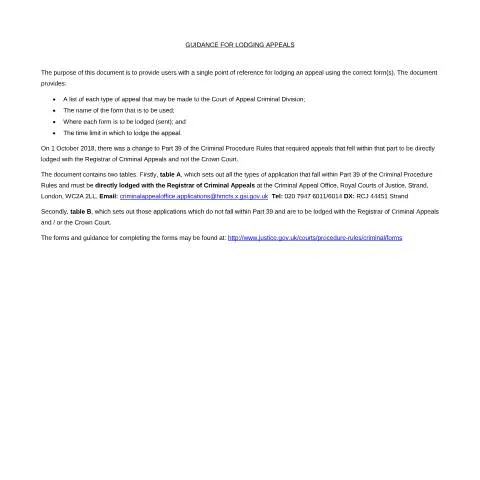
The document provides a comprehensive reference for parties wishing to challenge a sentence review decision, outlining the specific forms to be used, the appropriate authorities where appeals should be lodged, and the deadlines for submission. Proper adherence to these procedures is essential for the consideration of an appeal by the Court of Appeal Criminal Division.
Who Is Concerned?
This appeal process primarily concerns:
- Individuals convicted and sentenced by the courts.
- Legal representatives acting on behalf of convicted persons.
- Parties seeking to challenge review decisions made by the Crown Court under specific statutory provisions.
- Third parties involved in costs or other related orders against them.
It is important to note that different types of appeals and applications are subject to distinct procedures and timeframes, depending on the nature of the decision or order being challenged.
Key Points of the Appeal Process
Types of Appeals and Corresponding Forms
The guidance distinguishes between appeals that must be lodged directly with the Registrar of Criminal Appeals and those that do not. For example:
- Appeals against conviction or sentence: These are to be lodged using specific forms such as the NG (Conviction) or NG (Sentence) and must be sent directly to the Registrar at the designated address.
- Appeals against confiscation orders, review decisions, or serious crime prevention orders: These also follow a similar direct lodging process within 28 days of the relevant decision.
- Other applications, such as appeals at preparatory hearings or against prosecution rulings, are generally not lodged directly with the Registrar but follow different procedures.
Timing and Deadlines
Time limits are strictly enforced to ensure timely review of decisions:
- Appeals against conviction or sentence must be lodged within 28 days from the date of the decision or order.
- Applications related to confiscation orders, review decisions, or serious crime prevention orders also follow the 28-day rule.
- Third-party appeals or costs orders are to be made within 21 days of the order being issued.
Procedural Considerations
Parties must use the correct form and submit it to the appropriate authority within the specified timeframe. Forms and guidance are available online, and proper completion is essential for the appeal to proceed. Appeals against rulings made during preparatory hearings or prosecution decisions follow different procedures, often requiring oral applications or notices served within a few days of the ruling.
Fill in your form directly online
No printing: type your details into the boxes of the official form, tick, then download the PDF ready to send.
- 1Type into the form boxes
- 2Tick in one click
- 3Save and download the PDF
References and Further Guidance
The official forms and detailed guidance for lodging appeals are accessible through the UK Ministry of Justice's website. These resources provide step-by-step instructions to ensure compliance with procedural rules and to facilitate a smooth appeal process.
In summary, understanding the correct procedures, forms, and deadlines is vital for any party wishing to challenge a sentence review decision in the UK. Adhering to these guidelines helps uphold the principles of fairness and justice within the criminal justice system.