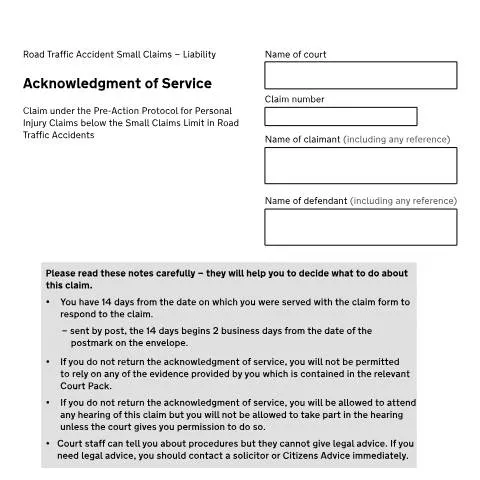
Understanding the Road Traffic Accident Small Claims – Liability Document
In the aftermath of a road traffic accident, navigating the legal landscape can be daunting, particularly when it comes to resolving liability disputes. The RTA Small Claims – Liability document plays a pivotal role in this process, serving as a formal acknowledgment of service for the defendant. This document is a crucial first step in responding to claims under the Pre-Action Protocol for Personal Injury Claims that fall below the small claims limit. Knowing how to effectively engage with this document is key to ensuring your rights are safeguarded and your case is presented properly.
Getting Started: Who Needs to Engage with This Document?
When a claim arises from a road traffic accident, the individual accused of causing the incident is referred to as the defendant. If you find yourself in this position, it's essential to respond promptly to the claim. Failure to do so could result in significant disadvantages, including the inability to present your evidence effectively or actively participate in hearings. This document must be filled out accurately and returned within 14 days from the date it was served. This timeline is crucial, especially if the claim was delivered by post, as the period effectively begins two business days after the postmark date on the envelope.
Understanding Your Responsibilities as a Defendant
- Prompt Response: You must acknowledge receipt of the claim form to protect your legal standing.
- Documentation: Accurate and honest completion of the document is necessary to avoid potential contempt of court issues.
- Legal Representation: While court staff can guide you on procedures, they cannot provide legal advice. Contacting a solicitor or organisations like Citizens Advice is advisable for legal counsel.
Navigating the Document: Key Sections Explained
The document is structured in a way that guides you through various aspects of your response, ensuring that all necessary information is captured. Here's a breakdown of the critical sections:
Section A: Addressing Liability
This section is fundamental in establishing your stance regarding the liability claim. Here, you can declare whether you dispute the liability in full and provide details of any other associated claims or counterclaims. It's essential to be thorough in this section, as any discrepancies might impact your case.
Section B: Evidence Submission
If you wish to rely on evidence that is not included in the initial Court Pack, this section allows you to detail that evidence. You must provide the reasons why this evidence was omitted previously and ensure that summaries are clear and concise. If applicable, you can also explain any constraints regarding attaching additional documents to this acknowledgment.
Section C: Statement of Truth
This is a crucial affirmation where you declare the truthfulness of your claims. Falsifying information can lead to severe legal consequences, including contempt of court charges. Ensure that you or your legal representative signs and dates this section accurately.
The Importance of Timeliness: What Happens Next?
Once you submit your acknowledgment of service, the court will take the necessary steps to move forward with your case. This includes referring your file to a judge, who will provide directions on how to address the claim. They will communicate the next steps to you, ensuring that you remain informed throughout the process.
Tracking Your Case: Staying Proactive
Engaging with this document is just the beginning. After submission, staying proactive about your case is paramount. Here are some steps you might consider:
- Keep Records: Maintain a copy of your acknowledgment and any correspondence related to the case.
- Follow Up: If you do not hear back within a reasonable timeframe, contacting the court for updates can be beneficial.
- Prepare for Hearings: If a hearing is scheduled, ensure you are prepared with all relevant evidence and documentation to support your case.
Challenges and Resolutions: Handling Disputes and Errors
It’s not uncommon to encounter challenges when dealing with a liability claim. If your acknowledgment is incomplete or if you receive a refusal from the court, understanding how to address these issues can save you valuable time and resources.
What to Do if You Encounter an Error
- Review Your Submission: Check for any missing information or errors in your acknowledgment of service.
- Contact the Court: Reach out to the court for clarity on the issues raised. They can provide guidance on correcting any mistakes.
- Submit Corrections Promptly: If corrections are necessary, ensure they are submitted as quickly as possible to avoid delays in your case.
Addressing a Refusal
If your acknowledgment is rejected, you must not panic. Understand the grounds for refusal and prepare your response accordingly. This may involve providing additional evidence or clarifying specific points that were questioned by the court.
Fill in your form directly online
No printing: type your details into the boxes of the official form, tick, then download the PDF ready to send.
- 1Type into the form boxes
- 2Tick in one click
- 3Save and download the PDF
Reflecting on the Process: Distinguishing Between Related Forms
The RTA Small Claims – Liability document is often confused with other related forms, such as those used for higher-value claims or personal injury disputes that do not fall under small claims. Understanding the distinctions between these forms can clarify your responsibilities and rights.
Comparative Table: Small Claims vs. Higher Value Claims
| Aspect | Small Claims (RTA) | Higher Value Claims |
|---|---|---|
| Claim Limit | £10,000 or less | Over £10,000 |
| Form Used | RTA Small Claims – Liability | Personal Injury Claims Form |
| Legal Representation | Often self-represented | Highly recommended |
| Court Procedures | Simplified | More complex, including potentially full trials |
Final Considerations: Preparing for the Road Ahead
In understanding and engaging with the RTA Small Claims – Liability document, you equip yourself with the knowledge needed to handle your case effectively. This understanding can significantly impact the outcome of your claim. Always remember that while the court provides a framework for resolving disputes, the responsibility lies with you to actively participate and follow through at each stage. Whether gathering evidence, communicating with the court, or preparing for hearings, your proactive approach can make all the difference in navigating the complexities of road traffic accident claims.
By taking these steps and utilizing the resources available to you, the journey through the claims process can become a more manageable and less intimidating experience. Your engagement in this process is not just a legal obligation but also a crucial part of advocating for your rights.