Navigating the Respondent’s Notice: A Guide for Legal Practitioners
In the complex realm of criminal law, understanding procedural documents is vital. The Respondent's Notice and Grounds of Opposition to Appeal serves as a key instrument for those opposing an appeal. This guide will delve into its components, highlight its significance, and provide practical insights on navigating its use effectively in legal proceedings.
Understanding the Purpose and Scope of the Document
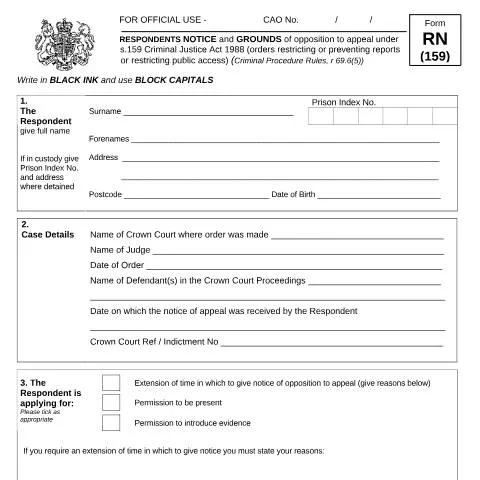
The Respondent's Notice addresses appeals made under the Criminal Justice Act 1988, particularly concerning restrictions on reporting or public access to court proceedings. This document must be meticulously prepared, as it outlines the respondent's stance against the appeal. It is not merely a formality; it is a critical tool that shapes the court's understanding of the respondent's position.
The scope of the document covers essential aspects such as:
- Identification of the respondent and their representation.
- Details of the appeal, including the court and judge involved.
- Grounds for opposition, where the respondent articulates their arguments.
- Certification of service to confirm all parties have been notified.
Each of these components is fundamental in contributing to a coherent and persuasive opposition to an appeal.
Key Components Explained: Breaking Down the Notice
To effectively utilise the Respondent's Notice, it is crucial to understand its various sections:
- Respondent Identification: This section gathers personal details, including the respondent's full name and address. If applicable, it also captures the prison index number for those in custody.
- Case Details: Here, the relevant Crown Court information, including the judge and case reference, is documented. This is critical for ensuring that all context surrounding the appeal is clear.
- Application Requests: Respondents may request extensions or permissions regarding their appearance in court. This section must be completed with precise reasons for any such requests.
- Grounds of Opposition: The heart of the notice, this section requires the respondent to list and explain each ground for opposing the appeal. Specificity is key here; each argument should be numbered and clearly outlined.
- Certificate of Service: The respondent must certify that all relevant parties have been served with the notice and supporting documents.
- Signature: Conclusively, the document must be signed, indicating the respondent’s confirmation of the information provided and their stance in the appeal.
Each of these elements not only serves a procedural purpose but also impacts the overall effectiveness of the respondent’s case.
Who Benefits from This Document?
This notice is primarily utilized by respondents in criminal proceedings where reporting restrictions or public access orders are contested. The following parties will find this document indispensable:
- Defendants in Custody: Those incarcerated have specific rights regarding their participation in appeals. The notice allows them to assert their position formally.
- Legal Representatives: Solicitors and barristers representing respondents use this document to articulate their clients' positions clearly and cohesively.
- Court Officials: Judges and court staff rely on the precise information contained within these notices to make informed decisions regarding ongoing appeals.
- Interested Third Parties: Media and public interest groups may also engage with the outcomes of these notices, as they relate to transparency in legal proceedings.
Understanding the audience for this document enhances its effectiveness and ensures that it is tailored to those who will engage with it.
Integrating the Notice into the Appeal Process
To harness the full potential of the Respondent’s Notice, it is important to integrate it seamlessly into the appeal process. Here’s a step-by-step approach:
- Review the Appeal Notice: Begin by thoroughly assessing the original appeal notice to identify the specific issues being contested.
- Draft Grounds of Opposition: Carefully construct your arguments, ensuring each point directly responds to the grounds outlined in the appeal. Use legal references and precedents where applicable.
- Complete All Sections: Ensure that every section of the Respondent’s Notice is filled out accurately. Incomplete information can lead to delays or dismissals.
- Check Compliance with Time Limits: Be mindful of deadlines for submitting the notice. The Criminal Procedure Rules dictate strict timelines, and adherence is crucial.
- Serve the Notice: After completion, ensure the notice is served to all relevant parties. Keep records of service for your files.
- Prepare for Court Appearance: Depending on your client’s request, prepare for the possibility of attending the appeal hearing, whether in person or via live link.
This structured approach not only ensures compliance with legal requirements but also enhances the persuasiveness of the opposition.
Interconnections with Other Legal Documents
The Respondent’s Notice does not exist in isolation; it is interconnected with several other legal documents and processes within the criminal justice system. Understanding these connections can provide clarity and context:
| Document | Relation to Respondent's Notice |
|---|---|
| Notice of Appeal | The foundation for the Respondent’s Notice; outlines the appellant's reasons for seeking an appeal. |
| Crown Court Judgment | Essential for context; informs the grounds of opposition and the specifics of the orders in question. |
| Evidence Submissions | Additional documents that may support or refute claims made in the Respondent’s Notice. |
| Legal Precedents | Referencing relevant case law can bolster arguments made within the grounds of opposition. |
This table highlights the importance of a holistic understanding of the legal landscape when preparing a Respondent’s Notice.
Critical Concepts to Grasp for Effective Use
To navigate the Respondent's Notice successfully, grasping key concepts is essential:
- Grounds of Appeal: Familiarity with the typical grounds on which appeals are made, such as procedural errors or perceived injustice, is crucial for formulating effective counterarguments.
- Public Access vs. Reporting Restrictions: Understanding the nuances between these two elements can significantly influence the respondent's strategy in opposition.
- Judicial Discretion: Judges have substantial discretion in these matters, making it important to present arguments that align with judicial expectations and precedents.
- Legal Representation: Engaging qualified legal counsel familiar with criminal appeals enhances the likelihood of a successful opposition.
These concepts form the backbone of a well-prepared and strategically sound Respondent's Notice.
Real-world Examples and Case Studies
In practical terms, the Respondent’s Notice has been pivotal in numerous cases. For instance, in a notable case concerning media reporting restrictions, a carefully constructed Respondent's Notice effectively argued against the appeal by presenting compelling reasons for maintaining the existing restrictions.
Legal practitioners can learn from such cases, studying the specific arguments that resonated with the court and considering how they might apply similar tactics when drafting their own notices.
Furthermore, understanding the outcomes of past cases provides insight into the court's rationale and may influence future strategies.
Final Considerations: Crafting Your Notice with Precision
In summary, the Respondent’s Notice and Grounds of Opposition serves a unique and critical role in the criminal appeal process. Legal practitioners must approach this document with a strategic mindset, ensuring all components are addressed with clarity and precision.
Fill in your form directly online
No printing: type your details into the boxes of the official form, tick, then download the PDF ready to send.
- 1Type into the form boxes
- 2Tick in one click
- 3Save and download the PDF
By understanding the intricacies of the notice and its interconnectedness with broader legal frameworks, practitioners can better position their clients' interests in the face of appeal. Remember, the effectiveness of a Respondent’s Notice can significantly impact the outcome of an appeal, making attention to detail and clear communication paramount.
Understanding the Respondent's Notice in Appeal Cases
The Respondent's Notice is a critical document in the appellate process, particularly when dealing with restrictions on reporting or public access. This notice allows the respondent, typically the party opposing the appeal, to formally outline their position regarding the appeal. It's crucial to submit this notice correctly, as it sets the stage for how the appeal will be addressed by the court. Failure to file a Respondent's Notice may result in the appeal proceeding without considering the respondent's arguments.
In the context of restrictions on reporting or public access, the Respondent's Notice must address specific grounds that justify maintaining these restrictions. These grounds often hinge on issues such as the protection of vulnerable individuals, the integrity of ongoing investigations, or the potential for prejudicing a fair trial. Therefore, understanding the legal framework surrounding public access and reporting restrictions is essential for drafting an effective Respondent's Notice.
When creating this notice, it's vital to reference relevant legislation and case law that supports the respondent's position. For instance, citing the Contempt of Court Act 1981 when discussing the potential implications of unrestricted reporting can bolster the argument. Additionally, including references to past rulings that have upheld reporting restrictions can provide a solid legal foundation for the opposition to the appeal.
Grounds of Opposition: Factors to Consider
When preparing the grounds of opposition to an appeal concerning reporting or public access restrictions, several factors must be considered. Each factor provides a unique angle that can significantly influence the court's decision. Here are some critical considerations:
- Legal Precedents: It's essential to review previous court decisions that have addressed similar issues. Courts often look to precedents to guide their rulings, so including relevant case citations can strengthen your argument.
- Impact on Individuals Involved: The potential harm to individuals—particularly vulnerable witnesses or victims—should be a primary consideration. Any argument made should clearly articulate how public access may lead to further victimisation or distress.
- Judicial Conduct and Fair Trial Rights: Highlight how unrestricted reporting might impinge on the right to a fair trial as outlined in Article 6 of the European Convention on Human Rights. Emphasising judicial conduct and the potential for bias can be a strong point of opposition.
- Public Interest Considerations: While the principle of public access is fundamental, it must be balanced against the public interest. Evaluate whether maintaining restrictions serves a greater public benefit, such as safeguarding the integrity of ongoing judicial processes.
Each of these factors should be thoroughly explored in the grounds of opposition, with concrete examples and legal references provided to support each point. This structured approach will not only provide clarity to the court but also ensure that the respondent’s position is compellingly articulated.
Practical Tips for Drafting a Respondent’s Notice
Drafting a Respondent's Notice requires a meticulous approach to ensure that all legal and procedural requirements are met. Here are some practical tips to consider:
- Adhere to the Civil Procedure Rules: Ensure that the notice complies with the relevant rules set out in the Civil Procedure Rules (CPR), particularly CPR 52. You should clearly identify the appeal, the parties involved, and the grounds for your opposition.
- Be Clear and Concise: Avoid jargon and legalese where possible. The court appreciates clarity, so present your arguments in straightforward language that explicitly states the basis for opposition. Break down complex arguments into easily digestible points.
- Include Evidence: Support your notice with relevant evidence. This may include affidavits, expert opinions, or any documents that reinforce your argument against the appeal. Attach these as appendices where appropriate.
- Timely Submission: Make sure to submit the Respondent’s Notice within the stipulated timeframes. Late submissions can result in the loss of the right to oppose the appeal.
- Seek Legal Advice: If you are unsure about any aspect of the process, consider seeking advice from a legal professional experienced in appellate matters. Proper guidance can make a significant difference in the outcome of the case.
By following these tips, practitioners can enhance their chances of effectively opposing the appeal concerning reporting or public access restrictions, ensuring that their arguments are heard and considered by the court.