Navigating the Request to Add Grounds to a Notice of Opposition
The world of intellectual property is complex and, for many, daunting. Particularly when it comes to trademark opposition processes, clarity is key. The Request to Add Grounds to a Notice of Opposition provides a structured way for opponents to expand their opposition claims in trademark applications. This guide will help you understand its contents, relevance, and application in real scenarios.
Deciphering the Document: Key Elements Explained
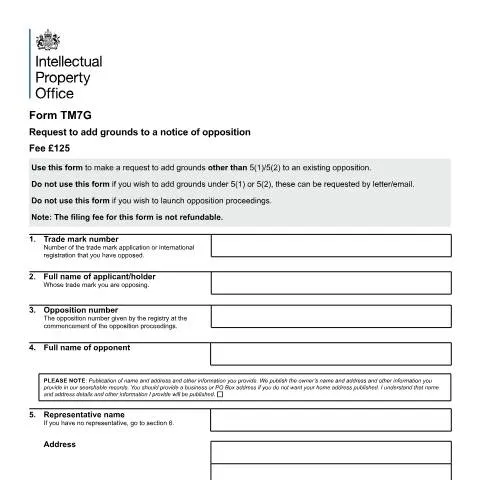
Understanding the nuances of the TM7G form involves breaking down its components. This request form is crucial for those who wish to introduce additional grounds to their existing opposition that were not included in the original notice. Here are the essential sections within the document:
- Trade Mark Number: This refers to the application number or international registration that is under opposition.
- Full Name of Applicant/Holders: Identifying the individual or entity whose trademark is being opposed.
- Opposition Number: The unique number assigned by the Intellectual Property Office (IPO) when the opposition proceedings commenced.
- Full Name of Opponent: This section requires the opponent's details, especially their address which will be published by the IPO.
- Representative Name: If applicable, this is where details of the legal representative are provided.
- Declaration: A statement affirming that the information provided is accurate, with space for a signature.
Scenarios Requiring the Use of TM7G
It is vital to understand when it is necessary to use the TM7G form. This document becomes indispensable in situations where:
- You have previously filed a notice of opposition and wish to strengthen your case with additional grounds that were initially overlooked.
- Your case has developed new facets that warrant further legal challenges.
However, if your additional grounds fall under sections 5(1) or 5(2), this form is not the proper vessel for your request. Instead, a simple letter or email to the IPO would suffice.
Understanding the Limitations of the TM7G
While the TM7G form seems comprehensive, it has defined limitations. Key points to keep in mind include:
- The fee of £125 is non-refundable, making it crucial to ensure that this request is necessary before proceeding.
- This form does not suffice for initiating a brand new opposition; it only supplements an existing one.
- Be prepared to justify why additional grounds were not initially included in your earlier submission.
Step-by-Step Guide to Using the TM7G
Using the TM7G requires careful attention to detail. Here is a straightforward breakdown of the steps involved:
- Gather Essential Information: Collect the trademark number, the name of the applicant/holder, and your opposition number.
- Complete the Form: Fill out the TM7G accurately, ensuring all required fields are addressed, including your justification for adding grounds.
- Make Payment: Decide on your payment method – credit/debit card, cheque, or bank transfer, and complete the payment section of the form.
- Submit the Form: You can submit digitally via email to [email protected] or in physical format to the IPO’s postal address.
- Await Confirmation: After submission, monitor your email for any correspondence from the IPO regarding your request.
Frequently Asked Questions and Clarifications
Many opponents have common questions about the TM7G process. Here are some clarifications:
- Can I add grounds if they relate to sections 5(1) or 5(2)? No, use a letter or email instead.
- What happens if I fail to provide justification for the added grounds? The IPO may reject your request, so it's crucial to provide a clear rationale.
- How can I ensure my personal details are protected? Consider providing a business address or a PO Box instead of your home address, as personal information is published in the IPO’s records.
Key Considerations Before Submitting the TM7G
Before you submit the TM7G, here are critical considerations to ensure a smooth process:
- Verify that all questions, including the declaration section, are answered fully and accurately.
- Ensure your payment method is clearly indicated to avoid processing delays.
- Remember that processing times for postal submissions take longer than electronic submissions, so factor this into your timing.
Final Thoughts on the TM7G Document
The Request to Add Grounds to a Notice of Opposition is a vital tool for those engaged in trademark disputes. A thorough understanding of the document's elements, limitations, and the procedural context will significantly enhance your chances of success. By following the outlined steps and considering key factors before submission, you can effectively navigate the complexities of trademark opposition in the United Kingdom.
Understanding the Process of Adding Grounds to a Notice of Opposition
When entering the realm of intellectual property disputes, particularly concerning trademarks, the ability to add grounds to a notice of opposition is a critical juncture. The UK Intellectual Property Office (IPO) allows parties to expand their opposition cases, but this is not without its complexities. Under the rules set forth by the Trade Marks Act 1994 and the Trade Marks Rules 2008, specific criteria must be adhered to in order to successfully amend a notice of opposition.
Initially, it's important to identify the core reason for adding additional grounds. These might include, but are not limited to, previously unconsidered marks that may affect the case, changes in the law that impact the validity of the trademark in question, or newly discovered evidence that could strengthen the opposition. The rationale for these additional grounds must be clearly articulated in the application process.
To start the process, you'll need to submit Form TM7, which serves as a formal request to amend your notice of opposition. It's crucial to ensure that your submission adheres to the guidelines provided by the IPO. This includes specifying the existing grounds alongside the new ones you wish to include, and clearly explaining how these new grounds relate to the original opposition. The IPO provides an online portal for submissions, which can streamline the process and allow for easier tracking of your request.
Another critical aspect to bear in mind is the timeline associated with these submissions. Generally, once an opposition has been filed, the applicant has a limited period to respond to any changes or additions proposed. Ensure you're aware of the deadlines involved in the opposition proceedings so that you can act promptly. Failing to meet these deadlines can result in the new grounds being dismissed, which could jeopardize your overall opposition.
Key Considerations When Preparing Your Submission
Preparing to add grounds to a notice of opposition involves several strategic considerations that can significantly affect the outcome of your case. First and foremost, familiarity with the relevant legal terminologies and procedures is essential. Understanding the nuances of trademark law in the UK can provide a strong foundation for your case. Engaging a legal professional who specializes in intellectual property can offer useful insights and guidance, particularly if the opposition concerns complex legal grounds.
Fill in your form directly online
No printing: type your details into the boxes of the official form, tick, then download the PDF ready to send.
- 1Type into the form boxes
- 2Tick in one click
- 3Save and download the PDF
Another vital consideration is the potential impact of your additions on the opposition's timeline. Each amendment could potentially delay proceedings, as the other party may request additional time to prepare their response to the new grounds. Effective communication with the IPO and the opposing party can help manage timelines and expectations. It might be beneficial to draft a preliminary letter outlining your intentions and any potential delays to maintain transparency throughout the process.
Furthermore, assess the strength of the new grounds you are proposing. The IPO will evaluate whether these grounds are relevant and substantial enough to warrant consideration. If the new grounds are weak or poorly substantiated, they may not only be rejected but could also undermine the existing opposition. Therefore, gathering robust evidence and presenting it clearly will strengthen your submission.
Consequences of Adding Grounds to a Notice of Opposition
The decision to add grounds to your notice of opposition can have significant repercussions on the legal landscape of your trademark dispute. Should your amendments be accepted, the opposition will enter a new phase of scrutiny where both parties must prepare for a more comprehensive evaluation of the case.
On the flip side, there is always the risk that adding grounds could inadvertently weaken your position. If the new grounds introduced are not compelling, or if they overlap with existing claims in a contradictory manner, this could lead to confusion or a lack of clarity in your opposition. Additionally, if the opposing party perceives the amendments as an act of desperation or a sign of a weak case, they may be emboldened in their response. Thus, careful planning and consideration are paramount.
Moreover, it is important to remain aware of any potential costs that may arise from expanding your notice of opposition. The IPO may impose additional fees based on the complexity of the amendments and the resources required to process your request. It is recommended to review the latest fee schedule on the IPO's official website to budget accordingly.
Lastly, once you have submitted your amendments, remain proactive in monitoring the progress of your opposition. The IPO will provide updates, but taking initiative by following up can ensure that your case stays on track. All communications should be documented meticulously, as they may serve as important references should the matter escalate to a more serious legal dispute.