Understanding the Official Guidance for Lodging Appeals in the UK Criminal Justice System
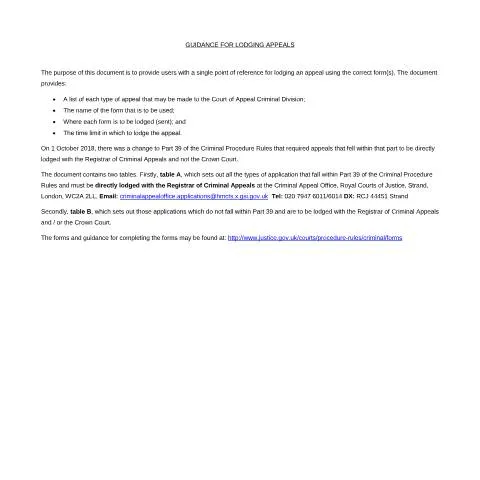
This article provides a comprehensive overview of the official guidance issued by the Criminal Procedure Rule Committee, part of the Ministry of Justice, regarding the process of lodging appeals related to criminal proceedings in England and Wales. It aims to clarify the procedures, relevant forms, and deadlines for individuals or legal representatives seeking to challenge decisions in criminal cases, especially in relation to compliance, restraint, or receivership decisions.
Scope and Purpose of the Guidance
The primary purpose of this official guidance is to serve as a single reference point for individuals and legal professionals involved in criminal appeals. It delineates the types of appeals permissible under the Criminal Procedure Rules (CrimPR), specifies the correct forms to use, and provides instructions on where and when to lodge these appeals. The guidance also highlights recent procedural changes introduced on 1 October 2018, which have impacted the process of lodging appeals directly with the Registrar of Criminal Appeals at the Royal Courts of Justice in London.
Types of Appeals and Their Specific Procedures
Appeals Requiring Direct Lodgement with the Registrar of Criminal Appeals
According to the guidance, certain appeals must be lodged directly with the Registrar of Criminal Appeals, located at the Criminal Appeal Office, Royal Courts of Justice, Strand, London. These include:
- Appeals against conviction (Form NG): This encompasses appeals related to findings of contempt of court, references from the Criminal Cases Review Commission (CCRC), and decisions regarding unfitness to plead or insanity verdicts.
- Appeals against sentence (Form NG): This includes challenges to various sentencing orders such as mandatory minimum sentences, sexual harm prevention orders, and orders related to terrorist offences.
- Appeals against confiscation orders (Form NG)
- Appeals against review decisions (Form NG (RD)): These relate to decisions made under the Serious Organised Crime and Police Act 2005 or concerning serious crime prevention orders.
- Appeals against the setting of minimum terms (Form NG (MT)): Specifically for prisoners sentenced before 18 December 2003 or those transferred to England and Wales.
All these appeals must be lodged within 28 days from the date of the order or decision that is being challenged.
Appeals Not Requiring Direct Lodgement with the Registrar
Other types of appeals, such as those against rulings at preparatory hearings or prosecution appeals against ruling dismissals, do not require direct lodging with the Registrar. Instead, they should be made through other procedural channels, often involving oral applications or notices served within specified timeframes, generally within five business days following the ruling.
Guidance on Form Usage and Lodgement Procedures
The official guidance provides detailed instructions on which forms to use for each appeal type and where to send them. Forms are available online at the official government website dedicated to criminal procedure forms. It is crucial for appellants to adhere strictly to the prescribed deadlines—most appeals must be lodged within 28 days of the relevant decision or order. Failure to meet these deadlines can result in the appeal being dismissed or delayed.
Fill in your form directly online
No printing: type your details into the boxes of the official form, tick, then download the PDF ready to send.
- 1Type into the form boxes
- 2Tick in one click
- 3Save and download the PDF
Implications for Legal Practitioners and Appellants
This guidance emphasizes the importance of understanding the specific procedural requirements for each type of appeal. It underscores the need for accurate completion of the relevant forms and timely submission to ensure that appeals are considered valid. For legal practitioners, familiarity with the official process can facilitate effective representation and help safeguard the rights of their clients within the criminal justice framework.
Conclusion
The official guidance from the Criminal Procedure Rule Committee provides essential clarity on the procedures for lodging appeals in criminal cases in England and Wales. By specifying the types of appeals, required forms, lodgement locations, and deadlines, it aims to streamline the process and uphold the integrity of the judicial review system. Whether you are a defendant, a legal representative, or a third party involved in a criminal matter, understanding these procedures is vital to ensuring your appeal is properly lodged and considered.