Understanding the Official Guidance on Appeals for Confiscation Orders under the Proceeds of Crime Act 2002
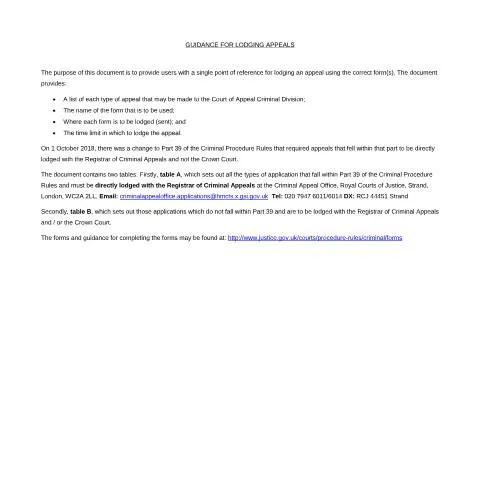
This article provides a comprehensive overview of the official guidance issued by the Criminal Procedure Rule Committee, part of the Ministry of Justice, concerning the process for lodging appeals related to confiscation orders made under section 31 of the Proceeds of Crime Act 2002 (POCA). It aims to clarify who is eligible to appeal, the correct procedures to follow, and the relevant legal and procedural references involved in such appeals within the UK criminal justice system.
Scope and Purpose of the Guidance
The document serves as a central reference point for legal professionals, defendants, and other interested parties involved in criminal proceedings where confiscation orders are issued. Its primary purpose is to ensure that appeals against confiscation orders are lodged correctly, within the stipulated timeframes, and through the appropriate channels. This guidance reflects recent procedural updates, notably the change introduced on 1 October 2018, which mandates that appeals falling within Part 39 of the Criminal Procedure Rules be lodged directly with the Registrar of Criminal Appeals, rather than the Crown Court.
Who Can Lodge an Appeal Against a Confiscation Order?
According to the official guidance, appeals against confiscation orders are classified under specific criteria and must be lodged within 28 days from the date the order was made. The appeal process is available to:
- The convicted individual or defendant who wishes to challenge the confiscation order.
- Legal representatives or third parties who have a vested interest or are affected by the order.
It is important to note that the appeal process is distinct from appeals against convictions or sentences, which follow different procedures and timeframes.
Procedural Steps for Lodging an Appeal
The guidance specifies that appeals against confiscation orders should be lodged directly with the Registrar of Criminal Appeals. The process involves:
- Completing the appropriate form: The specific form to be used for this type of appeal is the NG (Confiscation) form.
- Timing: The appeal must be submitted within 28 days of the date the confiscation order was made.
- Submission method: The appeal should be sent directly to the Registrar of Criminal Appeals at the Criminal Appeal Office, Royal Courts of Justice, Strand, London, WC2A 2LL. Contact details include email and telephone numbers for further assistance.
It is recommended that appellants include all relevant supporting documentation and clearly specify the grounds of appeal, which may relate to procedural errors, legal misinterpretations, or the proportionality of the confiscation order.
Legal and Procedural References
The guidance references several legal frameworks and procedural rules governing appeals, including:
- Part 39 of the Criminal Procedure Rules: The primary legal framework dictating the appeal process for confiscation orders.
- Section 31 of the Proceeds of Crime Act 2002: The statutory basis for confiscation orders following criminal convictions involving criminal assets.
- Criminal Procedure Rule Committee: The authority responsible for issuing procedural guidance and updates.
Additionally, the guidance emphasizes the importance of adhering to the specified deadlines and procedural requirements to ensure that appeals are valid and considered by the court.
Fill in your form directly online
No printing: type your details into the boxes of the official form, tick, then download the PDF ready to send.
- 1Type into the form boxes
- 2Tick in one click
- 3Save and download the PDF
Additional Considerations and Support
Parties intending to lodge an appeal are encouraged to consult the detailed forms and guidance available through the official government website. Legal professionals should ensure compliance with all procedural rules and consider seeking legal advice to strengthen their case.
In summary, this official guidance aims to streamline the appeal process for confiscation orders under POCA, ensuring clarity, consistency, and fairness within the criminal justice system. By following the outlined procedures and deadlines, appellants can effectively challenge confiscation decisions and uphold their legal rights.