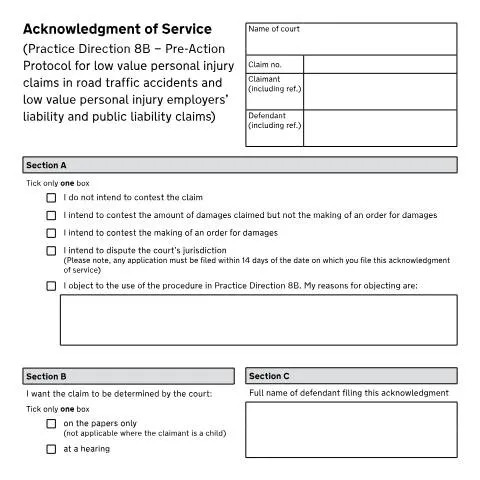
Understanding the N210B Form: A Crucial Step in Personal Injury Claims
In the aftermath of a road traffic accident, victims often find themselves navigating a complex web of legal and administrative processes to seek compensation for personal injuries. The N210B form, known as the "Respond to a road traffic accident (RTA) personal injury claim" form, is a pivotal document within this framework. Understanding its function, the nuances of its completion, and the implications of its submissions is crucial for defendants involved in personal injury claims.The Role of the N210B Form in Personal Injury Claims
The N210B form is not just a piece of paperwork; it represents a defendant's formal response to a personal injury claim initiated by a claimant. When a claimant files a claim with the court, the defendant is required to acknowledge receipt and respond within a specified timeframe. This form serves multiple purposes:- Acknowledgment of Service: It allows the defendant to formally acknowledge receipt of the court's claim form.
- Indicating Response Intentions: The form enables the defendant to state whether they contest the claim, the amount of damages, or the court's jurisdiction.
- Providing Case Directions: Upon submission, it helps the court determine the next steps in the claims process.
The Timeline: Key Dates and Deadlines
Timing is crucial in the legal world, and the N210B form is governed by strict deadlines. Defendants have 14 days from the date they are served with the claim form to complete and submit the N210B. Here's a breakdown of how the timeline works:| Method of Service | Start of 14-day Period |
|---|---|
| Post | 14 days begin 2 business days from the postmark date |
| Delivered or Left at Address | 14 days begin the second business day after delivery |
| Handed Personally | 14 days begin the second business day after it is handed |
Completing the N210B Form: A Step-by-Step Guide
Filling out the N210B form correctly is essential to ensure that the court understands the defendant's position clearly. Here's a detailed guide on the sections of the form:Section A: Contesting the Claim
In this section, the defendant must tick one box indicating their stance regarding the claim. The options include:- I do not intend to contest the claim
- I intend to contest the amount of damages claimed
- I intend to contest the making of an order for damages
- I intend to dispute the court’s jurisdiction
- I object to the use of the procedure in Practice Direction 8B
Section B: Hearing Preferences
This section allows the defendant to indicate how they wish the claim to be determined by the court. The choices typically are:- On the papers only (not applicable if the claimant is a child)
- At a hearing
Section C: Defendant Identification
Here, the defendant must print their full name, or the name of the entity they represent, if applicable. Accurate identification ensures the court can link the response to the correct case.Section D: Statement of Truth
This section is pivotal as it denotes the authenticity of the information provided. The defendant or their legal representative must sign the form, affirming that the details are true. Misrepresentation can lead to contempt of court proceedings, making this a crucial part of the form.Submission Channels: Where and How to Submit the N210B Form
Defendants have options when it comes to submitting the N210B form, each with its own nuances. The submission can typically occur via:- Online Submission: In certain jurisdictions, the court may allow electronic submissions. Check with the relevant court to verify if this option is available.
- Postal Mail: If submitting by post, ensure that the form is sent to the correct court address and consider using recorded delivery to confirm receipt.
- In-Person Submission: Delivering the form in person can be advantageous, as it allows immediate confirmation of receipt from court staff.
After Submission: What Happens Next?
Once the N210B form is submitted, the court will process the acknowledgment of service. Here are the subsequent steps typical in the process:- Court Review: The court will review the form and determine how to proceed with the claim based on the responses provided.
- Judge's Directions: The file will be passed to a judge who will issue directions for the next steps in the case. This may include scheduling a hearing or requiring further evidence.
- Notification: The defendant will receive instructions from the court regarding the next steps, which may include deadlines for filing further documents.
Unique Circumstances: Addressing Specific Situations
Certain situations may affect how a defendant approaches filling out and submitting the N210B form. Here are a few scenarios to consider:Minor Defendants
If the defendant is a minor, a litigation friend will need to complete the N210B on their behalf. This friend should be a responsible adult who can make decisions in the minor's best interest.Claims Involving Foreign Parties
In cases where a foreign defendant is involved, understanding the jurisdiction and any international legal considerations is essential. Legal counsel may be necessary to navigate these complexities adequately.Complex Cases
For defendants with more complicated circumstances, such as multiple claims or significant disputes regarding liability, seeking legal advice before completing the N210B form is advisable. The ramifications of misrepresentation or incorrect filing could be substantial.Conclusion: The Importance of Adherence to Procedures
Completing and submitting the N210B form is not just a bureaucratic exercise; it is a critical step that can shape the trajectory of any personal injury claim following a road traffic accident. An informed and timely response can significantly influence the outcome of the case, whether by facilitating a swift resolution or laying the groundwork for legal arguments in court. By being diligent and adhering to the specified procedures, defendants can ensure that their rights are protected, and they are afforded the opportunity to present their case effectively. The complexities of the legal system can be daunting, but understanding the role of the N210B form demystifies an essential part of the personal injury claims process.Understanding the Road Traffic Accident Claims Process
When navigating the complexities of a personal injury claim following a road traffic accident (RTA) in the UK, it is essential to understand the entire claims process. This begins with the decision to pursue a claim, which can be a daunting yet necessary step for those seeking compensation for injuries sustained due to someone else's negligence.
The first aspect of the process involves gathering evidence. This can include obtaining witness statements, photographs of the accident scene, police reports, and any available medical records that detail your injuries. The more comprehensive your evidence, the stronger your claim will be. It is important to act swiftly, as some evidence may become less accessible over time.
Once evidence is collected, the next step is to notify the responsible party’s insurance company, if applicable. This is typically done through a letter of claim, which outlines the particulars of the accident, the injuries sustained, and the compensation sought. Under the Pre-Action Protocol for Personal Injury Claims, both parties are encouraged to share information and settle matters amicably before heading to court.
If the insurance company disputes liability or fails to respond adequately, claimants can then proceed to issue a formal claim using the appropriate court forms, including Form N210B. This form is crucial as it initiates court proceedings. The claimant needs to fill it out accurately, specifying the details of the accident, the nature of injuries, and the compensation sought. Being thorough and precise in this initial filing can set the tone for the entire case.
Once the claim is issued, the defendant will be notified and given an opportunity to respond. If the case proceeds to court, both parties will present their arguments, and it is here that the claimant will benefit from having all their documentation and evidence in order. The court will ultimately decide on liability and the amount of compensation that may be awarded.
It is worth noting that the entire process can be lengthy, sometimes taking several months or even years to reach a resolution. Therefore, having realistic expectations about the timeline and potential outcomes is crucial for claimants.
Common Pitfalls to Avoid When Filing a Personal Injury Claim
While pursuing a personal injury claim after a road traffic accident can be daunting, being aware of common pitfalls can help streamline the process and enhance the likelihood of a successful outcome. Here are some critical areas where claimants often stumble:
1. Delaying the Claim: One of the most significant mistakes a claimant can make is to delay filing their claim. The Limitation Act 1980 generally allows for three years from the date of the accident to initiate a claim. However, waiting too long can result in lost evidence and witness testimonies, weakening your case.
2. Incomplete Documentation: Thorough documentation is essential for a successful claim. Failing to include crucial pieces of evidence or not providing enough detail in your Form N210B can result in delays or even dismissal of your case. It’s advisable to seek legal assistance if you’re unsure about what information to include.
3. Underestimating Compensation: Many claimants have unrealistic expectations about the compensation they are entitled to. It is vital to consider not just immediate medical expenses but also long-term impacts such as lost earnings, future medical care, and even emotional suffering. Consulting with a solicitor experienced in personal injury claims can help ensure you do not undervalue your claim.
4. Accepting the First Offer: Insurance companies often make initial offers that are considerably lower than what a claimant may be entitled to. It is crucial to evaluate any offer carefully and consider whether it adequately addresses your injuries and losses. Don’t rush into accepting any offers without understanding the full extent of your claim.
5. Ignoring Medical Advice: Following medical advice post-accident is important not only for your recovery but also for your claim. If you fail to attend scheduled medical appointments or dismiss treatment recommendations, it can undermine your claim by suggesting that your injuries are not as serious as you claim.
By avoiding these common pitfalls, claimants can enhance their chances for a successful personal injury claim, resulting in fair compensation and support for their recovery journey.
When to Seek Legal Assistance
Deciding whether to seek legal assistance after an RTA can be a critical factor in the outcome of your personal injury claim. While some individuals may feel confident in managing their claims independently, professional legal guidance can provide invaluable support, especially in complex situations. Here are key scenarios where seeking legal help is advisable:
Fill in your form directly online
No printing: type your details into the boxes of the official form, tick, then download the PDF ready to send.
- 1Type into the form boxes
- 2Tick in one click
- 3Save and download the PDF
1. Serious Injuries: If your injuries are severe, involving long-term treatment, rehabilitation, or potential loss of earnings, enlisting the help of a solicitor experienced in personal injury claims is wise. They can advocate for maximum compensation based on your specific needs, ensuring that all aspects of your suffering are considered.
2. Liability Disputes: If there is a dispute over who is at fault, having a legal expert can greatly assist in proving liability. They can navigate the legal complexities of your case, gathering evidence and witness statements to support your claim.
3. Insurance Company Issues: Should you face difficulties dealing with an insurance company, whether it's getting a timely response or navigating aggressive tactics, legal representation can protect your rights and negotiate on your behalf. Solicitors know the tactics used by insurers and can counter them effectively.
4. Court Proceedings: If your claim progresses to court, having a solicitor represent you can be crucial. They will be familiar with court procedures and can ensure that your case is presented compellingly and thoroughly, increasing your chances of success.
5. Understanding Your Rights: Legal professionals can clarify your rights and help you understand the claims process more thoroughly. They can also provide guidance on the different forms of compensation available, including general damages for pain and suffering and special damages for financial losses.
In summary, while it is possible to handle a personal injury claim independently, seeking legal assistance can provide many benefits, especially in more complicated scenarios. Experts can provide tailored advice, representation, and strategic guidance throughout the entire process.