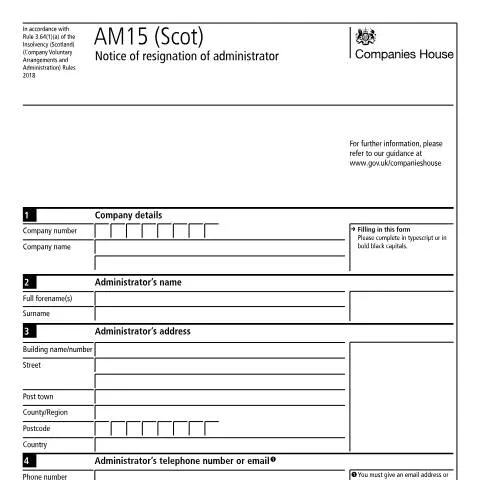
Understanding the AM15 (Scot): A Crucial Document for Administrators
The AM15 (Scot) form, officially recognized as the Notice of Resignation of Administrator for a Scottish company, plays an essential role in the administrative process of a company’s governance in Scotland. It is a legally significant document that enables an administrator to formally resign from their position, providing clarity and ensuring that the company’s records are accurate and up-to-date.
In the context of corporate governance, the resignation of an administrator can be a pivotal moment, often tied to significant changes within the company’s operational framework. This document not only serves to notify Companies House about the resignation but also helps in the smooth transition of responsibilities, ensuring all legal obligations are met.
Who Initiates the AM15 (Scot) Process?
The responsibility of submitting the AM15 (Scot) form lies with the administrator intending to resign. This individual is typically appointed to manage the affairs of a company, especially during periods of financial distress or insolvency. However, they may choose to resign for various reasons, including personal circumstances, conflicts of interest, or the completion of their mandate.
It is essential for administrators to understand the implications of their resignation. The company’s stakeholders, including creditors, directors, and potentially employees, should be kept informed. Transparency during this transition can help mitigate confusion and potential disputes.
A Comprehensive Breakdown of the AM15 (Scot)
Completing the AM15 (Scot) correctly is critical to avoid delays and ensure compliance with the regulations set by Companies House. Below is a detailed guide through the various sections of the form:
-
Company Details:
Accurate information about the company name and number must be provided. It is vital that this matches the details held in the public register to prevent rejection of the form.
-
Administrator’s Name:
Full name, including forenames and surnames, must be clearly entered. This is the individual resigning from their role, and their identity must match Companies House records.
-
Administrator’s Address:
Providing the correct address is fundamental. This should be the administrator's official place of residence or business, ensuring that any subsequent communication can be directed appropriately.
-
Contact Information:
While it may not be mandatory to include a phone number or email, doing so can expedite queries regarding the form. It’s important to keep this information current, as it will appear on the public record.
-
Date of Resignation:
Clearly state the date on which the resignation takes effect. This date is crucial for legal purposes and should reflect the last day of the administrator’s responsibilities.
-
Reason for Resignation:
Disclosure of the reason for resignation is not always required, but including it can provide context for interested parties and reduce potential misunderstandings.
-
Signature and Date:
The form must be signed and dated by the resigning administrator. This confirms the authenticity of the submission and is a necessary step for legal recognition.
Inaccuracies or omissions in any of these sections can lead to rejection of the form, resulting in complications for both the administrator and the company. Therefore, meticulous attention to detail is essential.
The Timeline: When to Submit the AM15 (Scot)
Understanding the timing associated with the resignation process is imperative. The AM15 (Scot) form should be submitted as soon as the decision to resign has been made. However, some key dates and timelines should be noted:
- Effective Date of Resignation: The date the administrator intends to cease their duties must be stated clearly on the form.
- Submission Deadline: While there is no explicit deadline for submission, it is advisable to submit the AM15 (Scot) promptly following the resignation decision to avoid any administrative issues.
- Processing Time: Companies House typically processes submissions within a few days, but it is wise to allow for longer periods during busy times or if there are issues with the submission.
Once submitted, the administrator’s resignation will be made public, allowing stakeholders to remain informed of any changes in management.
Distinguishing the AM15 (Scot) from Other Forms
The AM15 (Scot) is often confused with other documentation related to company administration and governance. Understanding its unique role is key:
| Form | Description | Key Differences |
|---|---|---|
| AM15 (Scot) | Notice of resignation of an administrator | Specifically for administrators resigning from their duties. |
| AM1 | Application for registration of a new company | Used for establishing a new company, not for resignations. |
| Form 4.10 | Notice of appointment of an administrator | Contrasts with AM15, as it concerns new appointments rather than resignations. |
This distinction is important for administrators, as using the wrong form can lead to significant complications, including delays in processing and potential legal ramifications.
What Happens After Submission of the AM15 (Scot)?
Once the AM15 (Scot) has been submitted to Companies House, several processes are set in motion:
- The resignation will be recorded and updated in the public register, providing transparency to all stakeholders.
- Companies House may reach out for additional information if there are any discrepancies or missing data, thus it is important to monitor any communications.
- Creditors and relevant parties will be informed of the resignation, allowing for adjustments in ongoing negotiations or dealings with the company.
Additionally, if there is an ongoing insolvency process, a new administrator will need to be appointed swiftly to ensure continuity of governance and management, further emphasizing the importance of timely submission.
Who Should be Informed of the Resignation?
The resignation of an administrator should not exist in isolation; several stakeholders should be informed to promote transparency and maintain trust in the company’s operations:
- Board of Directors: Members must be made aware of changes in management to facilitate smooth transitions.
- Creditors: Any creditors associated with the company should be notified to adjust their expectations and dealings accordingly.
- Employees: Depending on the context of the resignation, employees may need to be informed, particularly if it affects their roles or job security.
Effective communication with these parties can help to mitigate any potential fallout from the resignation and ensure ongoing cooperation during the transition period.
Final Steps and Best Practices for Administrators
For administrators who are navigating the resignation process, there are several best practices to consider:
- Documentation: Keep copies of all submitted forms and correspondence with Companies House for your records.
- Follow Up: After submission, it’s prudent to follow up with Companies House to confirm that the resignation has been processed and no further action is required.
- Maintain Professionalism: Regardless of the reasons for resignation, it is important to remain professional and respectful towards the company and its stakeholders throughout the process.
By adhering to these practices, administrators can ensure that their resignation process is as smooth as possible, protecting both their interests and those of the company.
Fill in your form directly online
No printing: type your details into the boxes of the official form, tick, then download the PDF ready to send.
- 1Type into the form boxes
- 2Tick in one click
- 3Save and download the PDF
Understanding the Resignation Process for Administrators in Scottish Companies
When an administrator resigns from their role in a Scottish company, it is essential to understand the implications of their resignation on the company's operations and the legal processes involved. Administrators play a crucial role in the management of a company, especially during financial distress or insolvency. Therefore, their resignation must be handled with care to ensure compliance with legal requirements and to protect the interests of creditors and shareholders alike.
Before proceeding with a resignation, the administrator should closely review the terms of their appointment, which are typically outlined in the company's articles of association or the specific agreement made at the time of their appointment. This initial review will help determine if there are any specific conditions, notice periods, or requirements for resignation. In Scotland, the resignation process may involve notifying the relevant authorities, such as the Accountant in Bankruptcy (AiB) or Companies House, depending on the circumstances of the company and the administrator's role.
The administrator must formally notify the appropriate parties of their intention to resign. This notification often includes submitting specific forms, including the AM15 (Scot) form. It is important to note that the resignation will only be effective once the relevant parties have acknowledged it. Therefore, timeliness and clear communication are paramount.
Another important aspect to consider is the potential need to appoint a replacement administrator. The company may require a new administrator to ensure continuity in management and compliance with legal obligations. The appointment of a new administrator will also follow formal procedures, typically involving filing the appropriate forms with Companies House and obtaining consent from creditors if necessary.
Legal Implications of Administrator Resignation
The legal implications surrounding the resignation of an administrator are significant and multifaceted. Upon resignation, the administrator must ensure that all financial and operational matters are adequately addressed. This includes settling any outstanding debts, ensuring compliance with any court orders, and maintaining transparent communication with creditors and stakeholders.
Should the administrator resign without fulfilling their duties, they may face legal repercussions, including claims of negligence, especially if their actions (or lack thereof) have adversely affected creditors or other stakeholders. Therefore, it is essential for the resigning administrator to ensure that all matters are resolved to the best of their ability before their departure.
In some instances, an administrator may resign due to conflicts of interest or personal reasons. In such cases, it is advisable for them to consult with legal counsel to navigate any complexities that may arise from their resignation. Being transparent about the reasons for resignation can also help in mitigating potential backlash from creditors or stakeholders who may feel abandoned or misled.
In Scotland, the law governing administration and the obligations of administrators is primarily derived from the Insolvency Act 1986, along with various amendments and regulations. Understanding these laws is crucial for administrators to ensure compliance and to properly manage the resignation process.
Best Practices for Administrators During the Resignation Process
To ensure a smooth transition during the resignation process, administrators should adopt best practices that will not only protect their interests but also that of the company and its stakeholders. Here are some essential best practices to consider:
- Document Everything: Accurate documentation is vital throughout the resignation process. This includes keeping records of communications with creditors, stakeholders, and regulatory bodies. Additionally, retaining copies of all submitted forms, including the AM15 (Scot), is important for future reference.
- Communicate Clearly: Transparency is key. The administrator should inform all relevant parties, including the company's board, employees, and creditors, about the resignation and the reasons behind it. This can help mitigate any concerns about the company's stability or operational integrity.
- Plan for Succession: If possible, the resigning administrator should work with the company's board to identify a suitable successor. This successor should be someone with the necessary qualifications and experience to manage the company effectively during the transition period.
- Provide Timely Updates: Keeping all parties updated throughout the resignation process is crucial. Regular updates can help maintain trust and confidence among creditors and stakeholders in the company's management.
- Seek Legal Advice: When in doubt, seeking legal counsel can provide clarity on complex issues surrounding resignation, compliance requirements, and potential liabilities. A legal expert can also assist in drafting resignation letters and other necessary communications to ensure everything is in order.
By adopting these best practices, administrators can navigate the resignation process more effectively and ensure that their departure does not adversely affect the company or its stakeholders.