A Vital Step in Company Administration: Understanding AM18 (Scot)
Following a death, the administrative processes surrounding a company can become complex, especially in Scotland. The AM18 (Scot) document is essential for notifying Companies House of a deceased administrator's status. Navigating the landscape of company administration is crucial for ensuring legal and operational clarity, and this guide will illuminate how to effectively utilize this notice.
Unpacking the AM18 (Scot) Document
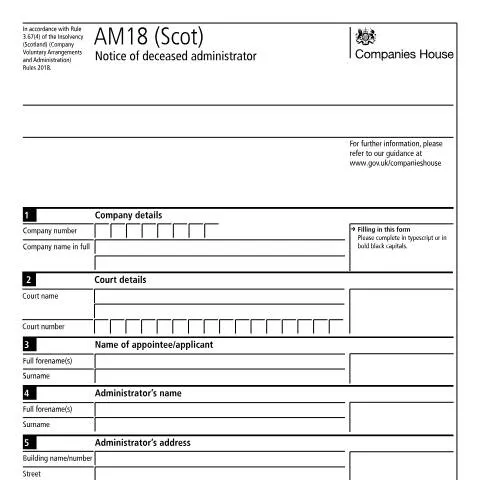
The AM18 (Scot) serves to formally notify Companies House that an administrator of a Scottish company has passed away. This document holds significant weight in the administration process and is governed by Rule 3.67(4) of the Insolvency (Scotland) (Company Voluntary Arrangements and Administration) Rules 2018. Understanding its contents is vital for any personal representative or surviving administrator tasked with managing the affairs of the deceased's estate.
Key Components of the AM18 (Scot)
This document includes crucial fields that need addressing:
- Company Details: Full company name and registration number to ensure proper identification.
- Administrator Information: Full name, address, and date of death of the deceased administrator.
- Appointee or Applicant Details: Name and contact information of the person delivering the notice, ensuring the line of communication remains clear.
- Date of Appointment: This date is pivotal as it relates to the administrative and legal context of the company’s affairs.
Why Timeliness Matters
Timeliness in submitting the AM18 (Scot) notice is critical. Companies House expects prompt notification to maintain an accurate public register. This ensures that any necessary changes in company management are effectively communicated, thereby avoiding complications in the estate and operational functions of the company.
Implications of Delay
Failure to submit the notification promptly can lead to several challenges:
- Legal complications regarding company governance.
- Potential issues in the distribution of the deceased's estate.
- Increased scrutiny from regulatory agencies, which may question the company's compliance status.
Understanding the Role of Personal Representatives
Personal representatives have the legal authority to act on behalf of the deceased administrator. Their role becomes pivotal when dealing with the AM18 (Scot) as they must ensure that the document is accurately filled out and submitted without delay.
The Responsibilities of a Personal Representative
Here are some key responsibilities:
- Gathering Necessary Information: They must collect all relevant details, including the date of death and company specifics.
- Communication with Companies House: Ensuring that Companies House is notified in a timely manner, including handling any follow-up inquiries.
- Assisting in the Transition: Helping facilitate the transition to a new administrator or acting as an interim representative until a new appointment is made.
Linking the AM18 (Scot) with Other Official Documents
The AM18 (Scot) does not exist in isolation; it interacts with several other documents throughout the company management process. Understanding these connections is crucial for a seamless transition in administration.
Complementary Documents
| Document | Purpose | Relation to AM18 (Scot) |
|---|---|---|
| Form AM01 | Change of registered office | May be required if the company address needs updating after the administrator's death. |
| Form AM02 | Change of director details | Necessary if a new administrator is appointed following the death. |
| Form AD01 | Appointment of a new administrator | Follows the submission of AM18 (Scot) to officially appoint new management. |
Common Misunderstandings Regarding the AM18 (Scot)
As with many legal documents, there are common areas of confusion that can lead to errors in the notification process. Addressing these misunderstandings can save time and potential legal challenges.
Misinterpretations To Avoid
- Assuming the Submission is Optional: It is critical to understand that submitting the AM18 (Scot) is not merely a formality; it is a legal requirement that must be fulfilled.
- Believing Any Delay is Acceptable: Any delay can have significant repercussions, as highlighted earlier; therefore, immediate action is advisable.
- Overlooking the Importance of Accurate Information: The details provided must match the records with Companies House to avoid rejection of the notice.
Practical Steps for Completing the AM18 (Scot)
Filling out the AM18 (Scot) is not overly complex, but it requires attention to detail and an understanding of the necessary steps.
A Step-by-Step Guide
- Gather Required Information: Compile the deceased administrator’s full name, date of death, and details about the company.
- Fill Out the Document: Use clear, bold black capital lettering to ensure legibility. This includes the company name and number.
- Provide Your Details: Include your name and contact information on the notice, even though it is optional; this aids in clarifying any queries from Companies House.
- Sign and Date: Make sure to sign the document and include the date of your signature to validate the submission.
- Submit the Document: Send the completed AM18 (Scot) to Companies House at the designated address in Edinburgh.
The Importance of Record-Keeping
Once you have submitted the AM18 (Scot), keeping records of your submission is vital. Documentation can serve multiple purposes, especially if discrepancies arise later.
Key Records to Maintain
- Copy of the Submitted Notice: Always keep a copy of the AM18 (Scot) you have submitted for your records.
- Correspondence with Companies House: Document any communication, including emails or letters received confirming receipt.
- Related Legal Documentation: Maintain records of any other administrative changes made during this period as they may be relevant to the overall company compliance.
Final Considerations: Navigating the Complexities Ahead
The process of notifying Companies House through the AM18 (Scot) can be intricate, but understanding its purpose and significance can ease the burden during a challenging time. This document plays a vital role in ensuring the proper transition in the administration of a Scottish company following the death of an administrator.
Recognizing the necessity of accurate information, timely submission, and maintaining a clear line of communication with Companies House will streamline this process. Ultimately, clear awareness of the roles and responsibilities involved ensures that personal representatives and surviving administrators can navigate the complexities of company administration smoothly.
Understanding the Importance of AM18 (Scot) in the Scottish Corporate Framework
The AM18 (Scot) form is pivotal in the dissolution process of a Scottish company, particularly when dealing with the death of a company administrator. In Scotland, company governance diverges from other parts of the UK, influenced by the unique Legal Personality concept. Notably, when an administrator passes away, it does not invalidate the company’s operations on its own. The AM18 (Scot) facilitates a seamless transition in the management of the company, ensuring that the business can continue to adhere to legal requirements while addressing the unfortunate demise of key individuals.
Filing the AM18 (Scot) form is more than simply a procedural step; it reflects the company's commitment to transparency and compliance with Scottish law. This form, when completed correctly, notifies the appropriate authorities, including Companies House, of the change in administration, thus averting potential legal challenges. The necessity to provide clear information, including the deceased's full name, date of birth, and National Insurance number, is critical as it serves to verify the identity of the individual and their role within the company, ultimately guiding the appointment of a new administrator.
Furthermore, understanding the implications of submitting the AM18 (Scot) also encompasses the responsibilities of the remaining administrators or shareholders. They are legally obliged to ensure continuity in filing annual returns and maintaining financial records. Failure to do so may lead to penalties or further legal ramifications. Thus, the filing of this form symbolizes a proactive step in safeguarding the company's integrity and operational continuity in the wake of an unexpected loss.
Dealing with Outstanding Obligations and Liabilities During the Transition
One essential aspect of notifying a deceased administrator through the AM18 (Scot) form is the handling of any outstanding obligations or liabilities that the company may have accrued prior to the administrator's passing. This phase is crucial, as it often determines the future financial health of the business and ensures that the transition does not disrupt ongoing operational capacities.
Fill in your form directly online
No printing: type your details into the boxes of the official form, tick, then download the PDF ready to send.
- 1Type into the form boxes
- 2Tick in one click
- 3Save and download the PDF
Once the AM18 (Scot) form is filed, it is vital to conduct a comprehensive audit of the company's current financial status. This includes reviewing unpaid debts, outstanding taxes due to HMRC, and any pending employee wages or benefits that may be owed. Understanding these obligations can provide the remaining administrators or shareholders with insight into the company’s financial landscape, allowing them to make informed decisions about the next steps.
The remaining company directors may also need to engage with HMRC regarding any tax implications following the administrator's death. For instance, if the company had plans for expansion or new projects, they may need to reassess their financial commitment based on the available resources post-transition. Keeping an open line of communication with HMRC can facilitate a smoother process in ensuring that all liabilities are settled and that future tax filings, such as the SA100 tax return, can continue without interruptions.
Additionally, it may be prudent to seek legal consultations to navigate any potential disputes that may arise from creditors or shareholders regarding the transition. Effective legal guidance can help clarify responsibilities and reduce the risk of any claims that could jeopardize the company’s ongoing viability. By taking these steps, the company can better assure stakeholders that they are maintaining their obligations while transitioning leadership smoothly.
Implications for Corporate Governance Post-Notification
Corporate governance is a fundamental aspect of any organisation, and the death of an administrator creates a significant moment for reflection and revitalisation. After filing the AM18 (Scot) form, it is essential to reassess the governance structure and procedures in place. Evaluating the current state and identifying areas for improvement can foster resilience in leadership and ensure the company remains adept at overcoming challenges.
The transition period following the completion of the AM18 (Scot) allows companies to consider appointing new administrators who align with the company’s strategic vision. This moment presents an opportunity to infuse the board or management team with fresh perspectives that can drive growth and innovation. Potential candidates should not only possess the requisite skills and experience but also resonate with the company's culture and values.
Moreover, organisations should take this opportunity to review their governance policies and make amendments as required. This may include updating company articles or bylaws to ensure they reflect the current operational environment and any changes in leadership. Such adjustments can enhance transparency and delineate roles and responsibilities more clearly, thus preventing future conflicts and ensuring a well-functioning team.
Lastly, it is prudent for companies to enhance their succession planning strategies in light of the recent loss. Solid succession planning can lessen the impact of future unexpected changes and provide a clear roadmap for how the company should respond if a similar situation arises. By proactively preparing for such events, businesses can maintain continuity and encourage confidence among employees, investors, and customers alike.