Navigating the AM13 (Scot): A Practical Guide to Rescission or Amendment of Disclosure Limits
In the realm of corporate governance in Scotland, specific procedures can often feel overwhelming. Among these is the AM13 (Scot), a crucial document for companies seeking to rescind or amend an order that limits the disclosure of their financial statements or proposals during administration. Understanding this process is vital for administrators, directors, and any stakeholders involved in a company’s administration. This guide will walk you through the necessary steps and considerations required for successful completion and submission of the AM13 form.
Understanding the Context: When and Why You Need the AM13 (Scot)
The AM13 (Scot) form comes into play following circumstances where a Scottish company has been placed in administration. An order limiting disclosure typically arises in scenarios characterized by sensitive financial information or when there’s a potential risk to the company’s competitive position. The need for a rescission or amendment of such orders may arise from:
- A change in the status of the company's financial health
- Resolutions passed by creditors
- New business decisions requiring transparency for stakeholders
Understanding the reason for filing the AM13 is essential, as it aligns with the regulations set forth by the Insolvency (Scotland) (Company Voluntary Arrangements and Administration) Rules 2018. This context sets the stage for the form’s completion and subsequent approval by Companies House.
Who Is Responsible for Filing the AM13 (Scot)?
The primary person responsible for filling out and submitting the AM13 is the administrator appointed to the company. The administrator acts on behalf of the company and its creditors, ensuring compliance with regulatory requirements. However, there are critical considerations regarding the profile of the administrator:
Profile of the Administrator
Administrators may come from various backgrounds, typically including:
- Licensed insolvency practitioners
- Accountants with specific expertise in corporate finance
- Legal professionals specializing in corporate law
However, in some cases, other individuals may have the authority to submit the AM13. This could include directors or appointed representatives, provided they have been granted the necessary powers or authorizations under the company’s governance framework.
Special Cases and Exceptions
While many companies will follow the standard protocol for submission, certain unique situations may arise:
- International Companies: Foreign corporations operating in Scotland will need to ensure their submission complies with both UK regulations and any pertinent international laws.
- Companies Under Investigation: If a company is under investigation for fraud or other financial misconduct, additional scrutiny may apply, potentially complicating the submission process.
- Changes in Administration: Should the appointed administrator change mid-process, the new administrator will need to review prior filings and ensure that the AM13 is completed accordingly.
Key Dates: Understanding the Timeline for Submission
Timeliness is crucial in the administration process. Once an administrator decides there’s a need to amend or rescind disclosure limits, several factors dictate the timeline:
Important Dates to Keep in Mind
| Event | Date or Deadline |
|---|---|
| Start of Administration | As of appointment date |
| Decision to Amend/Rescind | As circumstances dictate, ideally within a few months |
| Submission of AM13 | Within 14 days of the decision to amend/rescind |
| Review by Companies House | Up to 28 days from submission |
Failure to adhere to these timelines could result in complications, including delays in processing or additional inquiries from Companies House. Therefore, it's advisable for administrators to prepare the AM13 form promptly after the decision to amend is made.
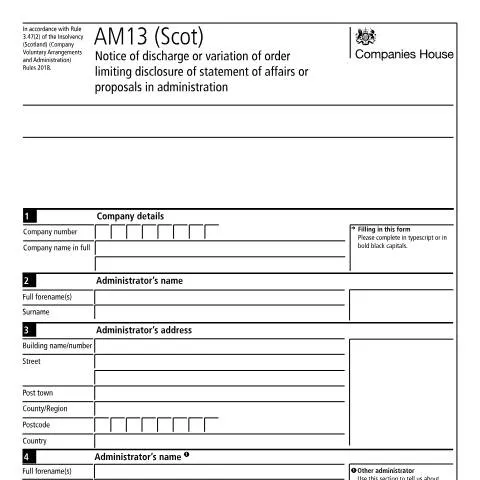
Decoding the Form: Step-by-Step Guide to Completing the AM13
Completing the AM13 form requires precision and clarity. Each section serves a specific purpose, and it’s crucial to provide accurate and complete information to avoid delays or rejections. Below is a breakdown of the form’s sections:
Section 1: Company Details
This section requires the company name and registration number. Ensure that this information matches the records held at Companies House to prevent any discrepancies.
Section 2: Administrator’s Name and Address
In this part, the administrator must provide their full name and address. It is vital to complete this in typescript or bold black capitals for legibility. Any errors here may lead to confusion during the processing of your application.
Sections 3 and 4: Additional Administrators
If there are other administrators involved, their details must also be included. This is often overlooked, but including all administrators ensures clarity in responsibility and authority.
Section 5: Date of Court Order
Indicate the date when the original order limiting disclosure was issued. This is crucial for the context of the AM13 submission.
Section 6: Attachments
It is necessary to attach supporting documentation, including:
- A copy of the court order
- The statement of affairs
- Any proposals discussed with creditors
- Statements of concurrence
All documents should be accurately referenced to ensure they correspond with the details provided in the AM13 form.
Final Steps: Signature and Submission
Ensure that the administrator signs and dates the form. This final step confirms that all information is correct and that the administrator stands by the submission. Non-compliance here may result in the form being returned or processed incorrectly.
Consequences of Non-compliance: What Happens If You Forget?
Failing to submit the AM13 in a timely manner or providing incorrect information can lead to significant consequences:
- Legal Repercussions: The administrator may face scrutiny from creditors or regulatory bodies for failing to comply with financial regulations.
- Impact on Company Status: The company's administration status may be adversely affected, possibly leading to the extension of the disclosure limit.
- Delayed Proceedings: Lengthening the administration process could complicate matters for all stakeholders involved.
For these reasons, it is essential to treat the completion and submission of the AM13 form with the utmost seriousness and diligence.
Comparative Analysis: AM13 vs. Similar Forms
The AM13 form is often confused with other forms related to company administration. Understanding the distinctions can save time and streamline processes:
| Form | Purpose | Key Distinctions |
|---|---|---|
| AM13 (Scot) | Rescission or amendment of disclosure limits | Specifically for Scottish companies in administration |
| AM14 (Scot) | Notice of discharge of administrator | Focuses on terminating the role of the administrator, not disclosure limits |
| Form 600 | Notice of appointment of administrator | Used when appointing an administrator, not for amending disclosures |
Being aware of these differences ensures that you submit the correct documentation to Companies House, helping to prevent delays in your company’s administration process.
Final Thoughts: The Importance of Diligence and Accuracy
Completing the AM13 (Scot) form is a significant responsibility, and understanding the nuances involved can make a critical difference in ensuring compliance and expedient processing by Companies House. Administrators must pay close attention to detail, adhere to timelines, and ensure that all relevant documentation is accurately attached.
Fill in your form directly online
No printing: type your details into the boxes of the official form, tick, then download the PDF ready to send.
- 1Type into the form boxes
- 2Tick in one click
- 3Save and download the PDF
Engaging with the AM13 process not only keeps administrative duties in check but also upholds the integrity of corporate governance in Scotland. By following the detailed guidelines laid out in this article, administrators can navigate the complexities of the AM13 form with confidence.
Understanding Rescission and Amendment Procedures in the Context of AM13 (Scot)
The process of rescission or amendment of an order limiting disclosure is crucial for Scottish companies under the jurisdiction of the Companies Court. This typically involves requests for changes to restrictions previously imposed on the disclosure of certain documents. Types of documents that might be restricted include shareholder agreements, internal communications, or financial statements that could expose sensitive business information. Understanding the legal framework and procedural nuances surrounding this process is essential for company directors and legal representatives
When a company seeks to rescind or amend such an order, it must present a compelling case. This can include demonstrating that the need for confidentiality has diminished or that the information is necessary for fulfilling statutory obligations or protecting the rights of shareholders. Additionally, the court examines whether the amendment serves the public interest, especially in cases involving investor rights or corporate governance.
The application must be submitted to the appropriate court with supporting documentation. This includes the original order, the proposed amendments, and a detailed affidavit outlining the reasons for the application. Upon receipt, the court may schedule a hearing where both parties can present their arguments. The judge will then consider the merits of the application before making a decision. It’s worth noting that the time frame for such proceedings can vary significantly depending on the court's schedule and case complexity.
The Role of Legal Representation in AM13 (Scot) Applications
Legal representation plays a vital role in navigating the complexities of the AM13 (Scot) process. Companies are encouraged to engage solicitors who specialize in corporate law, particularly those with experience in handling disclosure limitations. The intricacies of Scottish law and company regulations necessitate expert knowledge, as any misstep can lead to prolonged litigation or unfavorable court rulings.
Solicitors can assist in drafting the application, ensuring that all necessary legal terminology is correctly employed and that the application adheres to the procedural requirements set forth by the Companies Court. They can also prepare the affidavit, strategically highlighting aspects that favour the company's position, such as changes in business circumstances or heightened public interest in disclosure.
Moreover, legal representatives can provide invaluable advice on presenting the case effectively during hearings. They can anticipate counterarguments from opposing parties, thereby equipping the company to respond comprehensively. A well-prepared representation significantly enhances the chances of success in obtaining either a rescission or an amendment to the disclosure limitation order.
Consequences of Failing to Rescind or Amend Disclosure Orders
Failing to successfully rescind or amend an order limiting disclosure can have serious implications for a Scottish company. Such orders can obstruct the company's operational transparency, limiting access to crucial information for shareholders, investors, and regulatory bodies. This lack of transparency may lead to several adverse effects, including diminished investor confidence, potential legal repercussions, and challenges in fulfilling corporate governance obligations.
Moreover, if a company is required by law to disclose particular information—such as during a statutory audit or in response to regulatory inquiries—failure to amend disclosure limitations could result in non-compliance with legal requirements. This can trigger penalties from regulatory bodies like the Financial Conduct Authority (FCA) or even lead to litigation from shareholders seeking to enforce their rights.
Additionally, if the company is engaged in any merger or acquisition discussions, limited access to data due to a stringent disclosure order could hinder negotiations or lead to unfavorable terms adversely impacting the company’s future. Ultimately, the ramifications underline the importance of timely and strategic approaches to the rescission or amendment process as part of a broader corporate governance strategy.