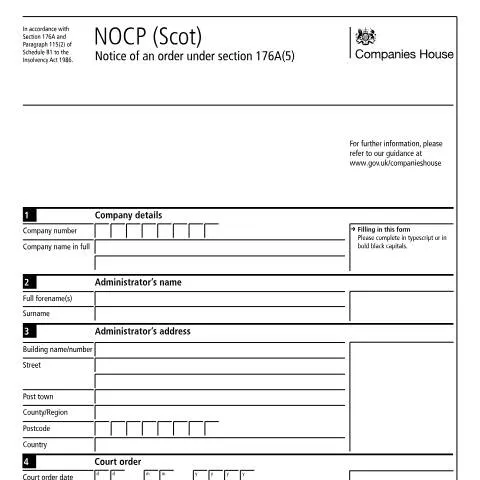
Understanding the NOCP (Scot) Document: A Vital Step in Insolvency Proceedings
The NOCP (Scot), or Notice of a Court Order under Section 176A(5), plays a crucial role for Scottish companies navigating through the complexities of insolvency. This document is not just another piece of paperwork; it is a pivotal notice that signals the beginning of certain legal processes concerning a company's financial distress. The importance of this notice cannot be overstated for administrators and stakeholders who seek to maintain compliance with the Insolvency Act 1986.
The Intersection of the NOCP with Other Key Documents
To fully grasp the significance of the NOCP (Scot), it’s essential to understand how it interrelates with other documents within the insolvency framework. The NOCP is particularly associated with court orders issued under the Insolvency Act 1986.
Key Connections to Other Documents
- Insolvency Practitioner Reports: Before serving the NOCP, an insolvency practitioner may need to prepare a report detailing the company's financial situation. This report sets the stage for any court proceedings.
- Notice of Intention to Appoint Administrators: Often, the NOCP follows the filing of a Notice of Intention, which indicates the company's impending administration.
- Final Administrators Report: Following the issuance of the NOCP, the appointed administrator must eventually file a report summarising the administration outcome, which integrates the findings of the NOCP.
Understanding these connections helps administrators navigate the insolvency landscape more effectively, ensuring all necessary documents are submitted in a timely and coherent manner.
Practical Steps to Utilizing the NOCP (Scot)
When faced with the need to submit a NOCP, administrators must follow a series of structured steps to ensure compliance. This process can often be overwhelming, but breaking it down can help ease the burden.
Step-by-Step Guide
- Identify the Need for a Court Order: Only specific situations require the issuance of a NOCP. Common scenarios include instances where the company is undergoing administration and a court order has been made to facilitate this process.
- Gather Required Information: Collecting all pertinent details about the company, including its full name and registration number, as well as court order specifics are essential.
- Complete the NOCP (Scot) Document: Using black typeface or bold capital letters, ensure to fill in the required fields accurately. Important information includes the court order date and details about the administrator.
- Attach Supporting Documentation: A copy of the court order must accompany the NOCP. Missing documents can lead to delays or rejections.
- Submit the NOCP: While this document can be sent to any Companies House address, sending it to the designated address in Edinburgh is advisable for expedience.
Following these steps can significantly reduce the risk of errors and streamline the process of notifying Companies House of a court order.
Common Misinterpretations of the NOCP (Scot)
Despite its straightforward nature, various interpretations surrounding the NOCP can lead to confusion. Understanding these common pitfalls can assist administrators in their quest to ensure compliance.
Common Misinterpretations
- Confusing the NOCP with Other Notices: The NOCP should not be mistaken for the Notice of Intention to Appoint Administrators. Each document serves different purposes and follows its own set of rules.
- Omitting Required Attachments: Failure to attach the court order can result in rejection. Administrators must ensure that they submit all necessary documents together.
- Misreporting Company Details: The company name and number must precisely match the records held by Companies House. Any discrepancies can cause delays in processing.
By addressing these common misunderstandings, administrators can ensure that their submissions are accurate and complete, thereby facilitating a smoother process.
What the NOCP (Scot) Covers and Its Limitations
The NOCP serves specific functions within the insolvency process, but it is essential to recognize its limitations. Understanding what this notice encompasses assists stakeholders in making informed decisions.
Scope of the NOCP
- Legal Acknowledgment: It serves as an official recognition of a court order regarding a Scottish company's insolvency.
- Public Record: Information provided in the NOCP becomes part of the public record, promoting transparency in the insolvency process.
- Foundation for Further Actions: It lays the groundwork for further administrative actions and communications with creditors.
Limitations of the NOCP
- Not a Full Resolution: The NOCP does not resolve the insolvency itself; it merely indicates that a court order has been made.
- Requires Additional Documentation: The NOCP is not sufficient on its own; it must be accompanied by supporting documentation and may lead to subsequent filings.
- Public Nature of Information: As it becomes part of the public record, sensitive information may be accessible to creditors and competitors.
Understanding both the coverage and limitations of the NOCP is vital in navigating the insolvency journey without unnecessary complications.
Frequently Overlooked Procedural Elements
While the NOCP (Scot) may seem straightforward, certain procedural elements are often overlooked, leading to potential issues. Being aware of these can save administrators from avoidable pitfalls.
Key Procedural Points
- Signature Requirements: Ensure that the document is signed by an authorized individual, typically the insolvency practitioner. Unsigned or incorrectly signed documents will not be accepted.
- Timeliness: The NOCP should be submitted promptly following the court order to avoid complications with compliance.
- Contact Information: While not mandatory, including contact information can expedite any queries or clarifications from Companies House.
Being vigilant about these procedural elements can facilitate smoother interactions with Companies House and reduce the likelihood of errors.
Understanding the Audience: Who Needs the NOCP (Scot)?
The NOCP is not a document that every company will require; its use is specific to certain contexts. Understanding the audience for this document can clarify its application.
Primary Audience for the NOCP
- Insolvency Practitioners: These professionals are responsible for completing and submitting the NOCP on behalf of the company in distress.
- Directors and Company Officers: These individuals must be aware of the implications of the NOCP and support the administrator in the process.
- Creditors: They should be informed about the NOCP as it signals their rights concerning the company's assets and outstanding debts.
Recognizing who the NOCP impacts helps direct attention to the specific responsibilities and actions required from each stakeholder involved.
Final Considerations: The Path Forward
The path of insolvency can be complex and fraught with challenges, but effectively utilizing the NOCP (Scot) can significantly ease the burden. This document is an essential tool for administrators managing the financial difficulties of a Scottish company.
The NOCP, when approached with clarity and precision, can facilitate better communication with Companies House, ensure compliance with legal requirements, and pave the way for effective resolution strategies. By adhering to procedural elements, understanding the document's nuances, and recognizing its implications, stakeholders can navigate the insolvency landscape with confidence.
For further guidance and detailed information, stakeholders are encouraged to visit the Companies House official website or consult with legal professionals specializing in insolvency law.
Understanding the Importance of Section 176A(5) Notices
Section 176A(5) of the Insolvency Act 1986 is significant for Scottish companies as it pertains to the notification requirements related to certain court orders. These notices ensure that all relevant parties are aware of the implications of a court decision affecting a company’s financial status or operational capacity. Issuing a notice under this section not only helps in maintaining transparency but also aids in compliance with the legal frameworks governing corporate insolvency. It’s essential to understand that the purpose of this notice is to protect the interests of creditors and other stakeholders who may be affected by the court’s order.
When a company is subjected to a court order, it has ramifications on its ability to conduct business, settle debts, and manage assets. The notice under section 176A(5) must be communicated effectively to ensure that all stakeholders—including shareholders, creditors, and employees—are kept informed. This is critical especially in the context of potential insolvency proceedings, where failing to notify affected parties could result in legal repercussions or claims of negligence against the company’s directors.
In practical terms, the issuing of this notice should follow specific protocols, including clear wording and distribution to all relevant parties within a set timeframe, which is typically suggested to be issued promptly following the court's decision. While the exact details can vary based on the circumstances surrounding the court order, adhering to the guidelines set forth by the Insolvency Act is non-negotiable.
Procedure for Issuing the Notice
Issuing a notice of a court order under section 176A(5) involves several key steps that must be meticulously followed to ensure compliance with Scottish law. The first step is to obtain the official court order, which will provide the necessary details regarding the order itself—such as its effects, any stipulations set by the court, and deadlines for compliance.
Fill in your form directly online
No printing: type your details into the boxes of the official form, tick, then download the PDF ready to send.
- 1Type into the form boxes
- 2Tick in one click
- 3Save and download the PDF
Once the court order is received, the company must prepare the notice. This document should clearly state the nature of the order, its implications for the company and its stakeholders, and the timeline for compliance or action. Importantly, the notice must be written in plain English, avoiding legal jargon to ensure that all recipients can easily understand its content.
After drafting the notice, it needs to be circulated to all relevant parties. This includes shareholders, creditors, employees, and possibly other interested parties, depending on the specifics of the order. It is advisable to send this notice via registered mail or another verifiable method to ensure that there is a record of receipt. This is particularly important in the event that disputes arise later concerning the notification process.
Finally, documenting the entire process is crucial. The company should keep copies of the notice sent, along with any correspondences related to the court order and the notifications issued. This documentation will serve as evidence of compliance should the need arise to demonstrate adherence to legal protocols under the Insolvency Act.
Potential Consequences of Non-Compliance
Failure to issue a notice under section 176A(5) can lead to significant consequences for a Scottish company. Non-compliance may result in legal penalties, including fines or sanctions imposed by regulatory authorities. Additionally, directors could face personal liability if it is found that they neglected their duty to inform stakeholders about the implications of a court order, which could undermine their positions and affect the company's reputation.
One major risk associated with non-compliance is that creditors may not be adequately informed of the company’s status, leading to uninformed decisions that could worsen the company's financial situation. This not only affects the immediate stakeholders but can also have far-reaching consequences on the company’s business relationships and ongoing operations.
Moreover, the lack of communication might incite distrust among shareholders and employees, potentially leading to unrest or even resignations. Trust is fundamental in business, and failing to communicate critical information can damage the credibility and integrity of the company's leadership.
In severe cases, the non-issuance of a court order notice could lead to court action against the company or its directors by aggrieved stakeholders. Such actions could complicate the company’s insolvency proceedings, resulting in longer resolution times and possibly higher costs associated with legal representation and remedial action.
Therefore, understanding and adhering to the requirements of section 176A(5) is paramount for any director or officer within a Scottish company facing a court order. The potential repercussions of ignoring these obligations underscore the necessity of diligence and transparency in corporate governance.