When Mental Health Tribunals Meet Patient Rights: The T129 Request Framework
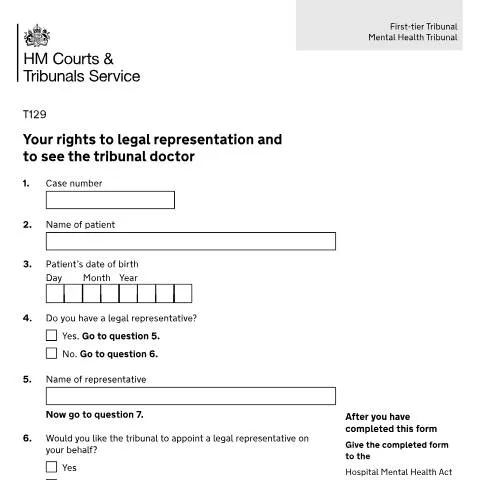
In the complex landscape of mental health law, where individual liberty intersects with clinical necessity, the Form T129 serves as a crucial gateway for patients detained under the Mental Health Act 1983 to exercise two fundamental rights: access to legal representation and consultation with an independent medical examiner. This seemingly straightforward document carries significant weight in ensuring fair hearings before First-tier Tribunal (Mental Health) panels, yet its completion and submission often occur during periods of considerable personal distress.
The T129 form emerges at a critical juncture in mental health proceedings—typically following a patient's application to a Mental Health Tribunal or when such a hearing has been scheduled. Unlike many administrative forms that deal with routine matters, this document addresses active rights that can materially affect the outcome of tribunal proceedings and, consequently, a patient's path to discharge or continued detention.
Legal Representation: From Self-Advocacy to Appointed Counsel
The form's primary focus on legal representation reflects the tribunal system's recognition that mental health law operates within a highly specialised framework where unrepresented patients face significant disadvantages. The T129's structure acknowledges three distinct scenarios that commonly arise in practice.
Patients who already have secured private legal representation—perhaps through family arrangements or prior legal relationships—simply confirm this arrangement in section 5. This pathway typically involves solicitors specialising in mental health law, though the form accepts any qualified legal representative. The key advantage lies in continuity: established representatives often possess detailed knowledge of the patient's case history and previous tribunal appearances.
For patients without existing representation, section 6 opens the door to tribunal-appointed counsel. This system, funded through legal aid provisions, ensures that financial constraints don't prevent access to professional advocacy. The appointed representatives, drawn from panels of qualified practitioners, bring specialist expertise in mental health tribunal procedures, though they may lack the extended case familiarity that private representatives offer.
The form's binary approach—"Yes" or "No" to tribunal appointment—masks the nuanced considerations patients face. Some may prefer to represent themselves, particularly in cases involving personality disorder detentions where patients feel strongly about articulating their own experiences. Others may initially decline representation but later recognise the complexity of medical evidence and legal procedures they'll encounter.
Timing Considerations for Legal Representation Requests
The T129's effectiveness depends critically on when it reaches the tribunal. Late requests for representation can delay hearings, as appointed solicitors require adequate preparation time to review medical records, interview the patient, and formulate their case strategy. Hospital Mental Health Act Administrators often advise completing the form immediately upon learning of a scheduled hearing, even if the patient remains uncertain about their preferences.
| Stage of Proceedings | Optimal T129 Submission | Potential Consequences of Delay |
|---|---|---|
| Application submitted | Within 7 days | Adequate preparation time |
| Hearing scheduled | Immediately upon notification | May require adjournment |
| Less than 2 weeks to hearing | Emergency submission | Limited preparation, possible postponement |
Medical Examination Rights: The Independent Assessment Option
Section 7's inquiry about seeing "the tribunal doctor" addresses a lesser-known but potentially crucial right. This independent medical examiner, distinct from the patient's treating clinical team, provides the tribunal with an objective medical assessment that may differ significantly from the responsible clinician's recommendations.
The tribunal doctor's role extends beyond simple medical evaluation. They examine the patient's current mental state, review treatment responses, and crucially, assess whether the criteria for continued detention remain satisfied. Their report often carries substantial weight, particularly in cases where the treating team's evidence appears inconsistent or where medication changes have occurred since the initial detention.
Patients may request this examination for various strategic reasons. Those who feel their progress isn't adequately reflected in hospital records often benefit from fresh medical perspective. Similarly, patients experiencing medication side effects or those whose condition has stabilised significantly may find the independent assessment supports their case for discharge or conditional discharge.
The Independent Medical Assessment Process
When a patient requests to see the tribunal doctor, the examination typically occurs several days before the hearing, allowing time for the doctor to prepare their report. The assessment encompasses mental state examination, review of case notes, and discussion of treatment compliance and future care arrangements. Unlike treating clinicians who focus on ongoing care, tribunal doctors specifically evaluate whether detention criteria continue to apply.
The independent medical examiner's findings don't guarantee a particular outcome, but they frequently influence tribunal decisions, especially in borderline cases. Patients should understand that this examination may either support or challenge their case, depending on their current presentation and the medical evidence available.
Navigating Hospital Administrative Pathways
The T129's completion represents only the initial step in a process that relies heavily on hospital administrative systems. The form identifies two primary submission routes: through the Hospital Mental Health Act Administrator or via the patient's Care Co-ordinator. Each pathway offers distinct advantages and potential complications.
Mental Health Act Administrators, present in all detaining hospitals, possess specialised knowledge of tribunal procedures and maintain direct communication channels with HM Courts & Tribunals Service. They typically process T129 forms as priority documents, understanding the time-sensitive nature of tribunal preparations. However, their availability may be limited in smaller units or during weekends and bank holidays.
Care Co-ordinators, while more accessible to patients, may lack detailed familiarity with tribunal administrative requirements. They serve as valuable intermediaries, particularly for patients who struggle with direct administrative contact, but their primary focus on clinical care means tribunal paperwork might receive lower priority during busy periods.
Direct Postal Submission: When Hospital Channels Fail
The form's provision for direct postal submission to the Leicester processing centre acknowledges that hospital-based submission isn't always feasible. Patients in private hospitals, those experiencing difficulties with hospital administration, or individuals who prefer direct communication may choose this route.
Direct submission requires careful attention to timing, as postal delays can significantly impact hearing preparations. The PO Box 11231, Leicester, LE1 8FR address serves as the central processing point for Mental Health Tribunal communications, but patients should allow adequate time for both postal delivery and administrative processing.
Case Number Significance and Administrative Tracking
The T129's opening requirement for a case number reflects the tribunal system's reliance on precise administrative identification. This number, typically generated when a patient's application is first registered, serves as the primary tracking mechanism throughout the proceedings. Patients who submit T129 forms without accurate case numbers may experience processing delays or misfiled documents.
Case numbers follow specific formatting conventions that vary depending on the tribunal centre handling the case. Patients should obtain this information from their initial tribunal acknowledgement letter or through the Hospital Mental Health Act Administrator. In cases where the number is unknown or uncertain, patients should include as much identifying information as possible, including full name, date of birth, and hospital details.
The administrative significance extends beyond simple filing. Case numbers link the T129 to the patient's broader tribunal file, ensuring that requests for representation and medical examination are processed in coordination with hearing scheduling and other procedural requirements.
Rights Exercise in Practice: Strategic Considerations
While the T129 appears mechanically simple, its completion involves strategic considerations that can influence tribunal outcomes. Patients must weigh the benefits of legal representation against potential delays, consider whether independent medical assessment might help or harm their case, and navigate complex timing requirements within often challenging personal circumstances.
The decision to request tribunal-appointed representation carries implications beyond simple legal support. Appointed solicitors bring expertise but may have limited time for extensive case preparation compared to privately instructed representatives. Patients should consider their case complexity, the strength of hospital evidence against them, and their own ability to articulate their position effectively.
Similarly, the choice to see the tribunal doctor requires careful evaluation. Patients whose mental state has improved significantly since detention may benefit from independent assessment, while those experiencing ongoing symptoms might find the examination challenging. The timing of medication changes, recent incidents, or treatment compliance issues all factor into this decision.
Coordination with Broader Tribunal Strategy
The T129 operates within a broader framework of tribunal preparation that includes witness statements, medical evidence review, and hearing logistics. Patients should consider how their choices regarding representation and medical examination align with their overall case strategy and the evidence they wish to present.
Legal representatives, once appointed, often advise on whether independent medical examination would strengthen the patient's case. This coordination between different aspects of tribunal preparation highlights the interconnected nature of the rights the T129 facilitates.
Administrative Processing and Follow-up Mechanisms
Once submitted, T129 forms enter the tribunal's administrative processing system, where they're matched to existing case files and actioned according to hearing schedules. The processing typically occurs within several working days, though urgent cases may receive expedited handling.
Patients should expect acknowledgement of their T129 submission, either through direct tribunal communication or via their legal representative once appointed. The absence of such acknowledgement within a reasonable timeframe—typically one week for standard cases—may indicate processing problems requiring follow-up.
The tribunal's response to T129 requests varies depending on the services requested. Legal representation appointments generate formal notification letters including solicitor contact details and initial meeting arrangements. Medical examination requests result in scheduling communications specifying the examination date, time, and location within the hospital.
Patients who change their minds after T129 submission—perhaps deciding they no longer want legal representation or medical examination—should communicate these changes promptly. While the tribunal accommodates such modifications, late changes may affect hearing scheduling and preparation timelines, potentially disadvantaging the patient's case presentation.
Understanding the Role of Legal Representatives in Tribunal Proceedings
When considering whether to request a legal representative through Form T129, it's crucial to understand the distinct roles these professionals play within the tribunal system. Unlike solicitors in traditional court settings, legal representatives at tribunals often focus on navigating the specific procedural requirements and presenting evidence in formats that tribunal panels find most accessible.
The tribunal system recognises several categories of legal representation. Qualified solicitors and barristers can represent applicants, but the system also accommodates other legal professionals, including those specialising in welfare benefits law or immigration matters. Some representatives hold accreditation from organisations like the Law Society or are members of specialist bodies such as the Immigration Law Practitioners' Association.
Your request on Form T129 should specify the type of representation you're seeking. If you have complex medical evidence to present, you might request a representative with experience in disability benefits appeals. For employment matters, someone familiar with workplace discrimination law would be more appropriate. The tribunal will consider not only your stated preference but also the availability of suitable representatives within their approved network.
Fill in your form directly online
No printing: type your details into the boxes of the official form, tick, then download the PDF ready to send.
- 1Type into the form boxes
- 2Tick in one click
- 3Save and download the PDF
The appointment process typically involves an initial assessment where the representative reviews your case files, identifies key legal issues, and determines the most effective approach for your hearing. They'll examine whether procedural requirements have been met, assess the strength of your evidence, and identify any additional documentation needed to support your position.
It's worth noting that legal representatives appointed through this system operate under specific constraints. They cannot take on cases where there might be conflicts of interest with their other work, and they must adhere to tribunal-specific protocols that may differ from standard legal practice. For instance, they may be required to submit position statements in particular formats or within tighter timeframes than typical court proceedings.
Medical Assessments and the Tribunal Doctor's Examination Process
The option to request a tribunal doctor examination represents a significant aspect of Form T129's provisions, particularly relevant for cases involving health-related benefits, fitness for work assessments, or disability discrimination claims. Understanding when and how to make this request can substantially impact your case outcome.
Tribunal doctors are qualified medical professionals, typically holding relevant specialist qualifications, who are independent of both the Department for Work and Pensions and your treating physicians. Their role differs fundamentally from the healthcare professionals who may have conducted previous assessments for benefit purposes. Where DWP-appointed assessors focus on functional capacity for work, tribunal doctors examine your condition within the specific legal framework governing your appeal.
The examination process follows structured protocols designed to ensure consistency across cases. The doctor will typically review your medical records, including GP notes, consultant reports, and any previous assessment reports, before conducting a physical examination. This examination focuses on objective findings relevant to the legal criteria your case must meet, rather than providing ongoing medical care or treatment recommendations.
Timing considerations are crucial when requesting a tribunal doctor. The examination should ideally take place close to your hearing date to ensure the findings reflect your current condition. However, requesting an examination may extend your case timeline, as tribunal doctors have limited availability and examinations must be scheduled around both your availability and the tribunal's hearing schedule.
The doctor's report becomes part of your case evidence, accessible to all parties including the respondent department or organisation. This report carries significant weight in tribunal decisions, often more so than written medical evidence from your own healthcare providers. The doctor will focus on functional limitations, observed symptoms, and consistency between your reported difficulties and clinical findings.
You should prepare for this examination by gathering all relevant medical documentation, including recent test results, medication lists, and detailed accounts of how your condition affects daily activities. The examination may include mobility assessments, cognitive tests, or specialist examinations depending on your condition and the nature of your appeal.
Strategic Considerations and Case Preparation Following Form T129 Submission
Once you've submitted Form T129, your approach to case preparation should adapt to accommodate the additional support or evidence you've requested. The period between submission and receiving confirmation of your requests' approval represents a critical phase where strategic decisions can significantly influence your hearing outcome.
If you've requested legal representation, use the waiting period to compile comprehensive case documentation. Organise medical records chronologically, gather witness statements from family members or colleagues who can speak to your condition's impact, and prepare a detailed personal statement outlining how your circumstances relate to the legal criteria your case must satisfy. This preparation ensures your appointed representative can quickly understand your case's key elements and develop an effective presentation strategy.
For those requesting tribunal doctor examinations, this interim period offers opportunities to document your condition's progression. Keep detailed symptom diaries, photograph visible symptoms where relevant, and request updated reports from treating clinicians. This documentation provides context for the tribunal doctor's findings and demonstrates how your condition affects you over time rather than just at a single examination point.
Consider the interaction between your different requests when developing your strategy. If you've requested both legal representation and a medical examination, discuss with your representative how the doctor's findings might be integrated into your overall case presentation. They may suggest specific areas for the doctor to focus on or recommend additional medical evidence to complement the examination.
The tribunal's response to your Form T129 requests may not be immediate, and partial approvals are possible. You might receive confirmation for legal representation while your medical examination request remains under review, or vice versa. Maintain flexibility in your preparation approach and be prepared to proceed with modified support arrangements if not all requests are approved.
Budget considerations may also arise during this phase. While tribunal-appointed representatives typically work within the system's funding arrangements, there may be circumstances where additional legal costs could arise. Similarly, if your medical examination request is declined but you believe such evidence is crucial, you may need to consider obtaining an independent medical report, though this would be at your own expense.
Keep detailed records of all communications with the tribunal following your Form T129 submission. This includes confirmation letters, scheduling communications, and any requests for additional information. These records become particularly important if any disputes arise about the support arrangements or if you need to demonstrate compliance with tribunal directions.