When Legal Aid Clients Need Someone Else to Speak on Their Behalf
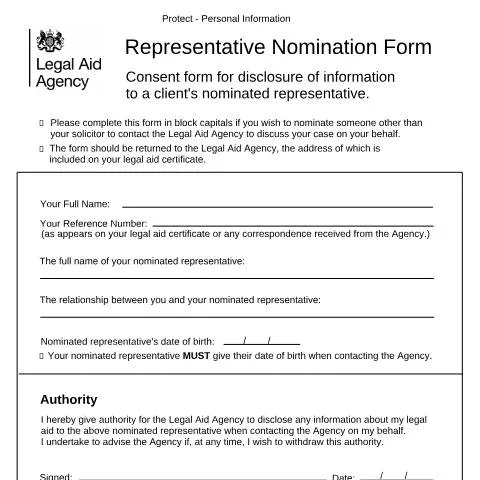
Legal aid recipients in England and Wales occasionally find themselves unable to handle communications with the Legal Aid Agency directly. Whether due to physical incapacity, language barriers, or simply the complexity of ongoing proceedings, clients may need to formally designate someone other than their solicitor to liaise with the Agency. The Legal Aid Agency's representative nomination form serves this precise function, creating an official channel for third-party advocacy whilst maintaining strict data protection standards.
This consent mechanism becomes particularly crucial when family members, support workers, or friends need to make enquiries about funding decisions, payment authorisations, or case progress. Without proper nomination procedures in place, the Agency cannot lawfully disclose confidential information about a client's legal aid arrangements, even to well-intentioned relatives or carers.
The Legal Framework Behind Third-Party Disclosure Controls
The representative nomination form operates within the stringent requirements of the Data Protection Act 2018 and UK GDPR, which govern how public bodies handle personal information. The Legal Aid Agency, as a data controller, bears responsibility for ensuring that sensitive financial and legal information reaches only authorised recipients.
Under the Legal Aid, Sentencing and Punishment of Offenders Act 2012, the Agency maintains detailed records of each client's means assessment, funding decisions, and case expenditure. This information encompasses bank statements, benefit entitlements, family circumstances, and often highly personal details about criminal charges or civil disputes. Unauthorised disclosure could constitute a serious data breach, potentially exposing the Agency to regulatory action by the Information Commissioner's Office.
The nomination process creates a lawful basis for disclosure under Article 6(1)(a) of UK GDPR—explicit consent from the data subject. However, this consent must be freely given, specific, informed, and unambiguous, which explains the form's emphasis on clear identification of both the nominated representative and the scope of authority granted.
Distinguishing Solicitor Representation from Lay Advocacy
Importantly, the form explicitly states its purpose as nominating "someone other than your solicitor". Qualified legal representatives already possess inherent authority to discuss their clients' cases with the Agency, derived from their professional relationship and regulatory framework. The nomination form addresses situations where clients need additional or alternative advocacy channels.
This distinction matters because solicitors operate under professional indemnity insurance and regulatory oversight by the Solicitors Regulation Authority. Lay representatives, by contrast, act purely as the client's chosen intermediary without professional qualifications or insurance coverage.
Identifying When Nomination Becomes Necessary
Several circumstances commonly trigger the need for representative nomination. Vulnerable clients may struggle with telephone communications due to learning difficulties, mental health conditions, or sensory impairments. The Agency recognises that some individuals require support to navigate complex legal aid procedures effectively.
Language barriers present another frequent scenario. While the Agency provides interpretation services, clients may prefer having a trusted bilingual family member handle routine enquiries rather than booking formal interpretation for every contact.
Physical incapacity can also necessitate nomination. Clients hospitalised for extended periods, those with mobility restrictions, or individuals in custody may find it impractical to communicate directly with the Agency during critical stages of their cases.
Family Dynamics and Care Arrangements
Adult children frequently seek nomination to assist elderly parents navigating legal aid applications for residential care disputes or inheritance matters. Similarly, parents of young adults may require continued involvement in their children's legal affairs, particularly in mental health or criminal proceedings where family support remains crucial.
The form accommodates various relationship types, from immediate family members to professional carers, friends, or advocacy workers. The key requirement is that the client retains capacity to make the nomination decision and understands its implications.
Completing the Nomination Form: Essential Details and Common Pitfalls
The form's apparent simplicity masks several critical requirements that frequently cause processing delays. The client's full name must match exactly the name recorded on their legal aid certificate. Minor variations in spelling, inclusion of middle names, or different arrangements of hyphenated surnames can prevent the Agency from locating the correct file.
The reference number field requires the unique identifier from the client's legal aid certificate or Agency correspondence. This alphanumeric code typically begins with letters indicating the funding type (such as 'CIV' for civil legal aid or 'CRM' for criminal defence) followed by numerical sequences. Clients sometimes confuse this with their solicitor's reference number or court case numbers, leading to misdirected forms.
| Required Information | Format | Common Errors |
|---|---|---|
| Client's full name | Block capitals, as per certificate | Informal names, spelling variations |
| Legal aid reference | Agency code (e.g., CIV/12345678) | Solicitor reference, court numbers |
| Representative's name | Full legal name | Nicknames, partial names |
| Relationship description | Specific role (daughter, carer, friend) | Vague terms like 'helper' |
| Date of birth | DD/MM/YYYY format | Incorrect format, missing digits |
The Critical Importance of Date of Birth Verification
The form emphasises that nominated representatives must provide their date of birth when contacting the Agency. This security measure prevents unauthorised individuals from impersonating legitimate representatives. Agency staff will refuse to discuss case details with anyone unable to provide the correct date of birth, regardless of other identifying information they may possess.
Clients should ensure their nominated representatives understand and remember this requirement. Some elderly relatives or those with memory difficulties may struggle to recall their date of birth under pressure during telephone calls, potentially causing frustration and delays in obtaining needed information.
Submission Procedures and Agency Processing
The completed form must be returned to the Legal Aid Agency at the address specified on the client's legal aid certificate. Different funding types and geographical areas may have distinct processing centres, making it crucial to use the correct address rather than a generic Agency contact point.
The Agency typically processes nomination forms within 10 working days of receipt, though complex cases or periods of high demand may extend this timeframe. Clients receive no formal acknowledgement of successful processing—the first indication that nomination has taken effect usually comes when the representative successfully contacts the Agency and receives case information.
Maintaining Current Records
The form includes a crucial undertaking whereby clients commit to advising the Agency if they wish to withdraw the representative's authority. This provision protects both clients and the Agency in situations where relationships deteriorate or circumstances change.
Clients should notify the Agency immediately if their nominated representative becomes unavailable, moves away, or if the client no longer trusts them with confidential information. Failure to revoke outdated nominations could result in sensitive information reaching inappropriate recipients.
Understanding the Scope and Limitations of Representative Authority
The nomination form grants authority for information disclosure but does not empower representatives to make decisions on the client's behalf. Representatives can enquire about case progress, payment schedules, and procedural requirements, but cannot authorise additional work, change solicitor arrangements, or make binding commitments affecting the client's legal aid.
This limitation often surprises family members who assume nomination provides comprehensive decision-making power. The Agency maintains strict boundaries between information sharing and substantive decision-making, requiring direct client involvement for any material changes to funding arrangements.
What Representatives Can and Cannot Do
Permitted activities include checking whether payments have been authorised to solicitors, enquiring about the status of means assessments, requesting copies of certificates or correspondence, and seeking clarification about Agency decisions or requirements.
Prohibited activities encompass signing funding applications, agreeing to additional assessment requirements, authorising exceptional funding requests, or providing updated financial information on the client's behalf. These actions require direct client involvement, often with formal documentation.
Navigating Complications and Disputes
Representatives occasionally encounter difficulties when Agency staff question their authority or request additional verification. Common issues include situations where the client's legal aid reference has changed due to case transfers, where multiple nominations exist for different aspects of the same case, or where the client's capacity to make nominations becomes disputed.
In such circumstances, representatives should request to speak with a supervisor or ask for written confirmation of the Agency's position. The Data Protection Act 2018 provides mechanisms for challenging inappropriate refusals to disclose information where valid consent exists.
When Professional Advocacy Becomes Necessary
Some disputes require intervention beyond the scope of lay representation. If the Agency consistently refuses to recognise a properly completed nomination, or if complex procedural issues arise affecting the client's funding, professional advocacy from Citizens Advice, Law Centres, or specialist legal aid advisers may become necessary.
The Legal Aid Agency operates an internal complaints procedure for handling disputes about information disclosure, though this process can be lengthy and may not provide interim access to needed information. In urgent situations, clients may need to contact the Agency directly despite the difficulties that prompted the original nomination.
Strategic Considerations for Effective Representation
Successful representative relationships typically involve clear communication about expectations and boundaries. Clients should brief their nominees thoroughly about ongoing legal proceedings, key dates, and specific information they may need to request from the Agency.
Representatives benefit from understanding basic legal aid terminology and procedures before contacting the Agency. Familiarity with concepts like means assessments, statutory charges, and funding certificates helps representatives ask appropriate questions and understand the information they receive.
The most effective nominations often involve representatives who maintain regular contact with both the client and their solicitor, creating a coordinated approach to case management. This triangular communication structure helps prevent misunderstandings and ensures that all parties remain informed about significant developments.
Ultimately, the representative nomination form serves as a vital bridge between vulnerable legal aid clients and the administrative machinery of state-funded legal services. While its bureaucratic nature may seem burdensome, the form's requirements reflect genuine efforts to balance accessibility with data protection in an increasingly complex regulatory environment. Properly completed and strategically deployed, it can significantly enhance clients' ability to navigate the legal aid system effectively while maintaining appropriate safeguards for sensitive personal information.
Common Challenges and How to Navigate Them
Completing a legal aid representative nomination form can present several hurdles, particularly for first-time applicants or those unfamiliar with the legal aid system. Understanding these potential pitfalls beforehand can save considerable time and prevent delays in your case progression.
One frequent issue arises when applicants fail to provide sufficient detail about their financial circumstances. The Legal Aid Agency requires comprehensive information, not just basic income figures. This includes irregular income patterns, seasonal work variations, and any benefits received intermittently. For instance, if you receive Universal Credit but also undertake occasional freelance work, both income streams must be documented with supporting evidence spanning the required assessment period.
Documentation gaps represent another significant challenge. Many applicants underestimate the breadth of evidence required to support their nomination form. Beyond standard bank statements and payslips, you may need to provide tenancy agreements, utility bills, council tax statements, and correspondence from benefits agencies. Self-employed individuals face additional complexity, requiring business accounts, VAT returns where applicable, and detailed profit and loss statements covering the assessment period.
The means test calculations often confuse applicants, particularly regarding what constitutes disposable income. The Legal Aid Agency applies specific deductions and allowances that may not align with your personal understanding of available funds. For example, certain essential living expenses are recognised as legitimate deductions, while others are not. Housing costs, dependent allowances, and employment-related expenses follow precise calculation methods that can significantly impact your eligibility determination.
Geographic variations in legal aid provision create additional complications. While the nomination form itself remains standardised across England and Wales, the availability of legal aid providers varies considerably between regions. Rural areas particularly suffer from limited provider networks, potentially affecting your choice of representative. Urban areas may offer more options but could have longer waiting lists for popular specialists.
Fill in your form directly online
No printing: type your details into the boxes of the official form, tick, then download the PDF ready to send.
- 1Type into the form boxes
- 2Tick in one click
- 3Save and download the PDF
Time-sensitive cases present unique challenges when completing nomination forms. If your legal matter has urgent deadlines – such as immigration tribunal hearings or criminal proceedings – the standard processing timeframe for legal aid applications may prove insufficient. In such circumstances, you may need to request exceptional funding or emergency legal aid, which involves additional documentation and potentially different nomination procedures.
Rights, Appeals, and Dispute Resolution
Understanding your rights throughout the legal aid nomination process empowers you to challenge decisions and seek appropriate remedies when issues arise. The Legal Aid Agency operates within strict regulatory frameworks that provide multiple avenues for dispute resolution and appeal.
If your legal aid application is refused, you possess the right to request a review of the decision. This initial review process allows the Legal Aid Agency to reconsider your application based on additional evidence or clarification of circumstances that may not have been adequately addressed in the original submission. The review request must typically be submitted within specific timeframes, usually 21 days from the date of the refusal notification.
The Independent Funding Adjudicator (IFA) provides an additional layer of appeal for complex cases or disputed decisions. The IFA operates independently from the Legal Aid Agency and can overturn decisions where procedural errors occurred or where the original assessment failed to properly consider relevant factors. This process involves submitting detailed grounds for appeal, supported by comprehensive evidence demonstrating why the original decision was incorrect.
Data protection rights under UK GDPR and the Data Protection Act 2018 extend to all information processed during your legal aid application. You have the right to access copies of all data held about you, request corrections to inaccurate information, and understand how your personal data is being used throughout the nomination process. These rights become particularly relevant if you believe incorrect information influenced the assessment of your application.
Quality assurance mechanisms within the legal aid system provide additional protection for applicants. The Legal Aid Agency conducts regular audits of provider performance and maintains complaint procedures for issues related to service quality. If your nominated representative fails to meet required standards, you can request a change of representation or seek redress through formal complaint channels.
Exceptional circumstances provisions allow for departure from standard eligibility criteria where compelling reasons exist. These might include cases involving significant public interest, novel legal points requiring clarification, or situations where refusal of legal aid would breach human rights obligations. Accessing exceptional funding requires detailed justification and often involves higher-level decision-making within the Legal Aid Agency.
The Citizens Advice network and similar independent advisory services provide valuable support for individuals navigating disputes with legal aid decisions. These organisations can offer guidance on appeal procedures, help interpret complex legal aid regulations, and provide advocacy support where appropriate. Their involvement can be particularly beneficial for vulnerable applicants who may struggle to navigate the system independently.
Integration with Other Government Services
The legal aid nomination form intersects with numerous other government services and databases, creating a complex web of information sharing and verification processes. Understanding these connections helps applicants prepare more effectively and avoid potential complications arising from inconsistent information across different government systems.
HM Revenue and Customs (HMRC) data plays a crucial role in verifying financial information provided on legal aid applications. The Legal Aid Agency has access to Real Time Information (RTI) systems that track employment income and can cross-reference declared earnings with PAYE records. Self-employed applicants should ensure their Self Assessment returns align with income declared on legal aid forms, as discrepancies may trigger additional verification requirements or delay processing.
The Department for Work and Pensions (DWP) maintains extensive records of benefit entitlements and payments that directly impact legal aid eligibility assessments. Universal Credit, Employment and Support Allowance, and other benefit awards are automatically accessible to legal aid assessors. However, recent changes in circumstances that haven't yet been reflected in DWP systems may require additional documentation to ensure accurate assessment.
Immigration status verification through Home Office databases affects legal aid eligibility for non-UK nationals. The Legal Aid Agency must confirm immigration status and any restrictions on access to public funds before approving applications. This process can be particularly complex for asylum seekers, individuals with pending immigration applications, or those with limited leave to remain.
Local authority housing records may be consulted to verify accommodation costs and housing benefit entitlements. Council tax records also provide corroborating evidence for residence and financial circumstances. Applicants should ensure consistency between information provided to local authorities and declarations made on legal aid forms.
Court service databases track ongoing and historical legal proceedings, which may impact both eligibility and the scope of legal aid coverage. Previous legal aid grants, outstanding court orders, and related proceedings all influence current applications. The Legal Aid Agency's case management systems maintain comprehensive records that follow individuals across multiple legal matters.
NHS records may be relevant in cases involving medical evidence or where health conditions affect an individual's capacity to engage with legal proceedings. Mental health assessments, disability determinations, and medical reports often form crucial supporting evidence in legal aid applications, particularly for vulnerable client categories.
The integration extends to enforcement agencies where legal aid may be required for regulatory proceedings or appeals. Whether dealing with trading standards, environmental health, or other regulatory bodies, the interconnected nature of government systems means information flows between agencies in ways that can impact legal aid determinations.
Data sharing protocols ensure that relevant information reaches decision-makers while maintaining appropriate privacy protections. However, applicants should be aware that information provided for legal aid purposes may be accessible to other government departments where legitimate purposes exist, such as fraud prevention or public safety considerations.