The Shifting Landscape of Legal Representation in Civil Proceedings
Civil litigation in England and Wales operates on a fundamental principle: every party has the right to change their legal representation at any stage of proceedings. This flexibility, whilst essential for ensuring access to justice, creates administrative challenges for the courts system. When a solicitor withdraws from a case, or when a litigant decides to switch legal teams, the court must be formally notified to ensure documents reach the correct recipient and procedural deadlines are properly managed.
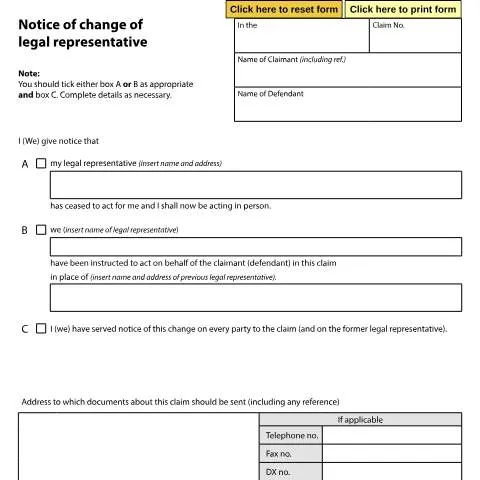
Form N434 serves as the official mechanism for communicating these changes to HM Courts & Tribunals Service. This deceptively simple document plays a crucial role in maintaining the integrity of court communications and ensuring that no party loses touch with ongoing proceedings due to administrative confusion.
The form addresses two distinct scenarios that commonly arise in civil litigation: when a represented party chooses to act as a litigant in person, and when legal representation transfers from one firm to another. Each situation carries different procedural implications and requires careful handling to avoid disrupting the litigation timetable.
Regulatory Framework Governing Changes in Legal Representation
The requirement to notify courts of changes in legal representation stems from the Civil Procedure Rules (CPR), specifically CPR Part 42, which governs change of solicitor. These rules establish that legal representatives cannot simply cease acting without proper notice, nor can new representatives assume responsibility without formal notification.
Under CPR 42.2, a solicitor who wishes to stop acting must serve notice on the client, all other parties, and the court. The notice must state whether the client intends to act in person or has instructed new representatives. This procedural safeguard prevents situations where a party might inadvertently miss crucial court communications or deadlines.
The Solicitors Regulation Authority (SRA) Code of Conduct also influences this process. Solicitors have professional obligations regarding client care and case management that extend beyond the simple filing of Form N434. They must ensure smooth transition of files, account for client funds appropriately, and maintain confidentiality throughout the handover process.
For litigants in person taking over from solicitors, additional considerations apply. The court may need to adjust case management directions, extend certain deadlines, or provide additional guidance on procedural requirements that would normally be handled by legal representatives.
Operational Mechanics of Representative Change Notification
Form N434 operates through a checkbox system that captures the essential information courts require to update their records. The form distinguishes between two primary scenarios through its Box A and Box B structure:
| Scenario | Box Selection | Required Information | Court Response |
|---|---|---|---|
| Solicitor ceasing to act | Box A | Previous solicitor details | Updates records to litigant in person |
| New solicitor appointed | Box B | New and previous solicitor details | Transfers correspondence address |
| Both scenarios | Box C (mandatory) | Confirmation of service on all parties | Proceeds with record update |
The mandatory nature of Box C reflects a crucial procedural requirement: all parties to the litigation must be informed of the change. This ensures that opposing parties can adjust their own records and continue serving documents at the correct address. Failure to tick Box C or provide false confirmation can result in the court rejecting the form.
The form requires comprehensive contact details for the new arrangement, including traditional postal addresses, telephone numbers, and increasingly important email addresses. Courts now routinely communicate electronically, making accurate email details essential for timely receipt of orders and directions.
Digital Integration and Electronic Filing
Modern court administration increasingly relies on electronic case management systems. When Form N434 is processed, the change triggers updates across multiple databases, including the court's case management system and any relevant electronic filing platforms.
For cases proceeding through Money Claim Online or other digital channels, representative changes require additional technical considerations. Access permissions must be transferred or revoked, and electronic signatures may need updating. The court's administrative staff coordinate these technical aspects, but delays can occur if the submitted information is incomplete or unclear.
Navigating the Completion Process: Section-by-Section Analysis
The header section of Form N434 demands precise case identification details. The claim number serves as the primary identifier and must match exactly with court records. Even minor discrepancies in formatting can cause processing delays or misfiling.
When completing the claimant and defendant names, use the exact format appearing on the original claim form. Variations in spelling, punctuation, or the inclusion of titles can create confusion in court records. For corporate defendants, ensure the legal entity name matches Companies House records precisely.
Box A Completion: Transitioning to Litigant in Person Status
Selecting Box A indicates that legal representation is ending without replacement. This section requires the full name and address of the departing solicitor or firm. Include the complete registered address, not merely a correspondence address, as this information may be needed for future reference.
Parties choosing to act in person should understand the implications beyond simple form completion. Courts may require confirmation that the former solicitor has properly accounted for any client funds, returned original documents, and provided the client with complete case files.
The phrase "I shall now be acting in person" creates a formal record of the party's intention to self-represent. This declaration can influence how courts manage future procedural steps, potentially leading to more detailed explanations of requirements or adjusted timetables.
Box B Completion: Appointing New Legal Representatives
Box B scenarios involve more complex information requirements. The form must identify both the new representatives and their predecessors. For the new solicitor entry, provide the firm name, individual solicitor name if relevant, and complete contact details including any reference numbers the new firm wishes to use.
The previous representative section should mirror the information provided to that firm when they originally commenced acting. This creates a clear audit trail for the court's records and helps prevent confusion about responsibility for different stages of the proceedings.
When law firms merge or rebrand, particular care is needed to explain the relationship between old and new entities. A brief explanatory note can prevent administrative complications and ensure smooth transition of case responsibilities.
Mandatory Service Confirmation in Box C
Box C represents more than a simple checkbox—it constitutes a formal declaration to the court. The person signing Form N434 confirms that all parties to the claim have been notified of the representative change. This includes not only opposing parties but also any third parties who have been joined to the proceedings.
Service of the change notice typically occurs simultaneously with filing Form N434 with the court. The most reliable approach involves serving copies by first-class post and email where addresses are known, retaining proof of posting and delivery receipts.
Former legal representatives should also receive notice, particularly when they are being replaced rather than simply ceasing to act. This professional courtesy helps prevent confusion and ensures smooth file transfer between representatives.
Submission Pathways and Administrative Processing
Form N434 can be submitted through multiple channels, each with distinct advantages and processing timeframes. Electronic submission through the court's online portal offers the fastest processing, typically updating records within 24-48 hours during business days.
Postal submission remains widely used, particularly by litigants in person who may lack access to electronic filing systems. Courts process postal submissions within 5-7 working days under normal circumstances, though complex cases or peak periods may extend this timeframe.
Hand delivery to court offices provides immediate receipt confirmation but does not necessarily accelerate processing times. Court staff must still input the information into electronic systems and coordinate any necessary communications with other parties.
Court Registry Processing Procedures
Upon receipt, court administrative staff verify the form's completeness and accuracy. This initial review checks that all mandatory sections are completed, signatures are present, and case details match court records. Incomplete forms are typically returned with specific guidance on required corrections.
The court then updates its case management system, changing the official address for service and any relevant contact details. This update triggers automatic notifications to court staff handling the case, ensuring that future communications reach the correct recipient.
For cases with active case management directions or upcoming hearings, the court may issue a short administrative order confirming the representative change. This formal acknowledgment becomes part of the case file and provides definitive proof of when the change took effect.
Post-Submission Implications and Case Management Considerations
The immediate effect of processing Form N434 is the redirection of all court communications to the new address for service. This includes routine administrative correspondence, court orders, hearing notices, and judgments. Parties should monitor their new contact arrangements carefully to ensure nothing is missed during the transition period.
When representation changes from solicitor to litigant in person, courts often review existing case management directions. Some requirements that were appropriate for represented parties may need adjustment for self-representing individuals. This might include extended deadlines for filing documents or additional explanatory material about procedural requirements.
Fill in your form directly online
No printing: type your details into the boxes of the official form, tick, then download the PDF ready to send.
- 1Type into the form boxes
- 2Tick in one click
- 3Save and download the PDF
Conversely, when new solicitors are appointed, they inherit all existing obligations and deadlines from the date they commence acting. There is no automatic extension of time limits simply because new representatives have been instructed. New solicitors must quickly familiarize themselves with case chronology and any imminent procedural requirements.
Impact on Existing Court Orders and Directions
Existing court orders remain fully binding despite changes in representation. New solicitors become responsible for compliance with all outstanding directions, while litigants in person must understand and fulfill these requirements without professional guidance.
Some orders may reference specific solicitors or firms by name, particularly costs orders or undertakings given during previous hearings. Form N434 does not automatically transfer these personal obligations—separate applications may be needed to clarify responsibility or seek appropriate variations.
Case management conferences and other hearings scheduled before the representative change remain binding. New representatives must attend or, if unavoidable conflicts arise, apply promptly for adjournments with full explanations of the circumstances.
Troubleshooting Common Processing Difficulties
Rejection of Form N434 most commonly occurs due to incomplete case identification details or missing signatures. Courts cannot process forms where the claim number is incorrect, illegible, or missing entirely. Similarly, unsigned forms are automatically returned as legally invalid.
Discrepancies between the information provided and existing court records create processing delays. This frequently occurs when parties have moved offices or changed contact details without previously notifying the court. Resolving these discrepancies may require additional documentation or statutory declarations.
Complex corporate structures can complicate Form N434 completion, particularly when parent companies, subsidiaries, or associated entities are involved. Clear identification of the specific legal entity and its relationship to previous representatives helps prevent administrative confusion.
Remedying Defective Submissions
When courts identify defects in Form N434, they typically issue standard rejection letters highlighting specific problems. These communications include guidance on corrections needed and usually provide 14 days for resubmission of corrected forms.
Persistent problems with form completion may prompt court staff to request telephone contact or attendance at the court office for clarification. This personal intervention helps resolve complex situations but can significantly delay the representative change process.
In urgent situations where immediate representative changes are essential—such as when solicitors become unexpectedly unavailable close to hearings—courts may accept informal notification pending proper completion of Form N434. However, this flexibility is reserved for genuinely exceptional circumstances with compelling explanations.
Strategic Timing and Procedural Coordination
The timing of representative changes can significantly impact litigation strategy and case progression. Changes immediately before key deadlines or hearings create risks of procedural default if not managed carefully. Experienced practitioners typically plan representative changes well in advance of critical case milestones.
Form N434 should ideally be submitted before the departing solicitor's final day of acting, ensuring seamless transition of communications. However, practical constraints sometimes necessitate retrospective notification, particularly in emergency situations or when clients provide inadequate notice of their intention to change representation.
Coordination with opposing parties' representatives can smooth the transition process. Professional courtesy calls alerting counterparts to impending changes help prevent confusion and maintain positive working relationships that benefit all parties to the litigation.
The administrative burden of representative changes extends beyond simple form completion. File transfers, client account reconciliations, and handover meetings require substantial time investment from both departing and incoming solicitors. Form N434 represents only the formal notification component of this broader professional transition process.