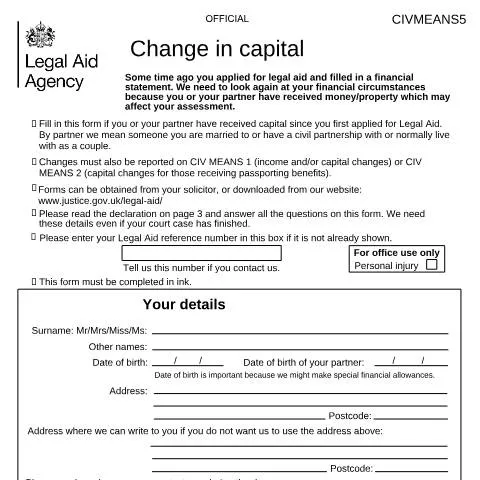
Navigating the CIV MEANS 5 Form: A Comprehensive Guide
When financial circumstances change significantly for clients already approved for legal aid in the UK, a pivotal form comes into play: the CIV MEANS 5. Understanding this document and its implications can make the difference in maintaining eligibility for legal aid assistance. This guide will delve into the practical aspects of the CIV MEANS 5 form, detailing what clients need to know to ensure compliance and continuation of their support.
The Importance of Reporting Changes in Financial Circumstances
Every time you apply for legal aid, you provide a thorough financial statement. However, life is unpredictable, and changes in your financial situation—such as receiving additional capital—may affect your aid assessment. The need to submit the CIV MEANS 5 arises when you or your partner receives money or assets that could potentially impact your financial eligibility.
The Legal Aid Agency (LAA) requires this information to review your case and make necessary adjustments to your legal aid status. Failure to report changes can lead to serious consequences, including the revocation of your legal aid certificate and the obligation to repay costs incurred during your legal proceedings.
Who Should Complete the CIV MEANS 5 Form?
This form is specifically designed for individuals who are currently receiving legal aid but have experienced a change in their financial situation. The term "partner" refers to anyone you are married to, in a civil partnership with, or live with as a couple. It’s essential to understand that this form must be completed even if your court case is finished, as changes in capital can affect any ongoing obligations.
Understanding Financial Changes
- Received Money: This includes any unexpected financial gain, such as compensation payouts, inheritance, or gifts.
- Other Assets: This can encompass property, vehicles, or valuable collectibles that you may have acquired recently.
- Spending of Funds: If you have already utilized some of the newly received funds, you will need to specify how and when.
By carefully assessing your circumstances, you can determine if you are required to fill out the CIV MEANS 5 form. If any capital changes have occurred since your initial legal aid application, this document is crucial for ensuring you remain compliant with legal aid regulations.
Detailed Breakdown of the CIV MEANS 5 Form
Completing the CIV MEANS 5 form requires precise attention to detail. Each section is significant, and understanding what is required can prevent costly mistakes. Here’s a breakdown of the key sections you will encounter:
Your Personal Information
The initial part of the form requests basic personal data. Here’s what you need to provide:
- Surname and Other Names: Ensure the name matches official identification documents.
- Date of Birth: This is essential, as age may influence certain financial allowances.
- Current Address: Include any alternative address where correspondence may be sent.
- Contact Information: Provide a reliable phone number for LAA communications.
Details of Your Solicitor
It’s also crucial to include the details of your solicitor as they will be your point of contact throughout the legal aid process. This section typically asks for:
- Name of Solicitor: The legal professional representing you.
- Firm Address: The location of your solicitor’s office.
- Reference Number: Any relevant case reference number that may help in identifying your application.
Reporting Capital Changes
One of the most critical sections of the form focuses on the specifics of any received capital. Here, you will detail:
- Amount Received: Clearly state the sum received, including any funds held by your solicitor.
- Date Received: Specify when the funds came to you.
- Source of Funds: Detail where the money originated, such as an inheritance or settlement.
Failure to provide accurate and thorough information in this section could delay the processing of your application or lead to further complications down the line.
Documenting Your Financial Activities
As you fill out the form, it's vital to keep a clear record of how the new funds are managed:
- Spent Money: If you have disbursed any of the funds, detail how much, what it was spent on, and the reasons for these expenses.
- Future Spending Plans: If you anticipate needing to spend some of the funds in the future, outline these expenditures along with your rationale.
- Supporting Documentation: This includes bank statements, receipts, or estimates related to any expenditures mentioned.
All supporting documents must be submitted alongside the CIV MEANS 5 form to ensure a smooth review process.
Submission Process: Ensuring a Smooth Review
Once the form is completed, it’s time to submit it. You can return the form through your solicitor, who can help ensure it reaches the LAA promptly. Alternatively, individuals can send it directly. Here are a few tips to keep in mind:
- Double-Check for Completeness: Ensure all sections are filled out accurately, and all necessary documents are attached.
- Use a Reliable Mailing Method: Choose a secure and traceable method to send your form if submitting independently.
- Keep Copies: Always maintain copies of your submitted form and any supporting documents for your records.
Follow-Up: Monitoring the Status of Your Submission
After submitting your CIV MEANS 5 form, staying proactive is crucial. The LAA will review your submission, and it’s essential to keep lines of communication open:
- Contacting the LAA: If you haven't received confirmation of your application within a reasonable time frame, don’t hesitate to reach out to the LAA for an update.
- Responding to Queries: Be prepared to answer any follow-up questions the LAA may have regarding your financial circumstances.
- Understanding Time Frames: The processing times can vary, but knowing the typical wait time can help manage expectations.
Implications of Non-Compliance
It is crucial to understand the legal ramifications of failing to report changes accurately. Clients must be aware that:
- Possible Revocation of Aid: If the LAA determines that changes were not reported, your legal aid may be revoked.
- Repayment Obligations: You could be liable for repaying any legal costs incurred during the time your aid was improperly granted.
- Legal Consequences: Providing false information can lead to serious legal repercussions, including prosecution.
Therefore, transparency and accuracy in completing the CIV MEANS 5 are paramount for ensuring continued support from the LAA.
Final Notes on Managing Changes in Financial Circumstances
As you navigate these changes, remember that the LAA's aim is to assist you with your legal needs. Being well-prepared and informed about the CIV MEANS 5 form can significantly affect your case's outcome and maintain your eligibility for legal aid. While changes in capital can be daunting, keeping thorough records and communicating openly with your solicitor and the LAA can streamline the process.
In summary, the CIV MEANS 5 form serves a critical role in the legal aid process, ensuring that clients accurately represent their financial situations as they evolve. By following the guidelines set forth in this document, clients can avoid pitfalls and ensure that they receive the full legal support to which they are entitled.
Understanding Client Capital Changes Under CIV Means 5
In the context of the United Kingdom’s legal and financial landscape, the term “CIV Means 5” refers to a specific aspect of assessment for clients whose capital circumstances have changed. This situation often arises when a client’s financial conditions shift, affecting their eligibility for certain benefits or legal aid provisions. Understanding how these changes are assessed and documented is crucial for both clients seeking support and professionals assisting them.
The CIV Means 5 assessment is particularly relevant for individuals who may have experienced sudden changes in their capital assets. This could include receiving an inheritance, selling property, or any other event that significantly alters their financial situation. It’s essential for clients to report these changes promptly to the appropriate authorities, such as the Legal Aid Agency (LAA) or the Department for Work and Pensions (DWP). Failure to do so may result in penalties or a reassessment of their eligibility for financial assistance.
The critical factor in the CIV Means 5 assessment is the timing of these capital changes. For instance, if a client’s capital exceeded the threshold set by the LAA at any point during the assessment period, they could be deemed ineligible for certain forms of support. This assessment typically takes into account a defined period, often coinciding with financial reporting or assessment windows established by governing bodies. Clients must provide comprehensive documentation concerning their financial history, including bank statements, property valuations, and any relevant legal documents that can substantiate their current financial standing.
Moreover, understanding the nuances of capital types is vital. For the assessment, capital can include cash, investments, property, and other assets. However, different types of capital may be treated differently; for example, certain assets may be disregarded depending on their nature or purpose. For instance, if a client owns a vehicle essential for their employment, this may fall under exemptions that protect certain assets from being counted towards their capital total.
Documenting Capital Changes: Essential Forms and Processes
When a client experiences a change in capital that might affect their eligibility under CIV Means 5, it is crucial to follow the correct documentation processes. This involves filling out the appropriate forms and providing evidence to substantiate the capital changes. Clients should be prepared to provide details that include, but are not limited to:
- Form Submission: Clients need to complete and submit specific forms associated with their change in financial status. This could involve forms such as the SA100 tax return for income assessment or forms related to Universal Credit if applicable.
- Evidence of Capital: Documentation such as bank statements, investment account summaries, property valuations, and legal documents (such as Wills or sale agreements) should accompany form submissions. This evidence must clearly outline the nature of the capital changes and provide a complete picture of the client's financial status.
- Notification of Changes: It is essential to notify the relevant authority, such as the Legal Aid Agency or DWP, as soon as changes occur. This obligation is not merely a procedural formality; it is a legal requirement under the Data Protection Act 2018, which governs how personal data must be managed and reported in the UK.
Furthermore, maintaining clear records of all submitted documents and communications with authorities is highly advisable. This can help clients to quickly resolve any disputes or questions that may arise regarding their eligibility. In cases where clients may find this process overwhelming, seeking assistance from a legal professional or an advisor at a local advice centre can be beneficial.
Challenges and Considerations in the CIV Means 5 Assessment
Clients navigating the complexities of the CIV Means 5 assessment often face several challenges that can complicate their financial and legal situations. Understanding these challenges can empower clients and advisors to better prepare and respond effectively.
One major challenge involves the fluctuating nature of capital values. For instance, property values can vary significantly based on market conditions, and clients may find that the value of their assets fluctuates drastically within a short period. As such, timing becomes crucial: a client might be eligible for support one day due to a lower asset value, only to become ineligible the next due to an increase. It's vital for clients to provide timely, accurate valuations of their assets and to engage in regular reviews of their financial standing.
Another consideration is the emotional impact of changing capital circumstances. Clients facing financial difficulties may also be dealing with significant life events that contribute to stress, such as the loss of a loved one or a divorce. These emotional factors can cloud judgment and lead to mistakes in reporting or assessing their financial situation. Supporting clients through these changes often requires a compassionate approach, encouraging them to take the necessary steps without becoming overwhelmed.
Finally, the regulations surrounding CIV Means 5 assessments can be complex and may change. Clients must stay informed about any changes in eligibility criteria or financial thresholds set by the LAA or DWP. Regularly checking updates on official government websites or consulting with a financial adviser can greatly enhance a client's understanding of their rights and obligations under UK law.