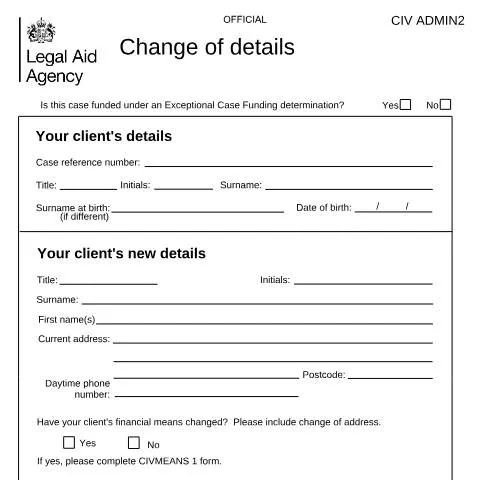
Navigating the CIV ADMIN 2: Understanding Your Client's Change of Details
When dealing with legal proceedings, keeping accurate information is crucial. The CIV ADMIN 2 form, officially titled Client's Change of Details, serves a significant role within the Legal Aid Agency's (LAA) framework by ensuring that personal information about clients remains current and correct. Whether it's a change in address, a name alteration, or a shift in financial circumstances, accurately updating these details can affect the provision of legal aid and the overall management of a client's case.
The Context of the CIV ADMIN 2 Form in Legal Aid Processes
Understanding the place of the CIV ADMIN 2 form in the broader legal aid landscape is essential. The form is not merely a standalone document; it is part of a more extensive chain of processes aimed at facilitating legal assistance for individuals in need. Whenever a client’s circumstances change, the submission of this form is necessary to inform the LAA, which may hold financial implications or affect the eligibility for ongoing support.
The Legal Aid Agency requires accurate information to administer public funds effectively, ensuring that those entitled to legal aid receive it without unnecessary delays or complications. This context underscores the importance of submitting the CIV ADMIN 2 in a timely and accurate manner.
Unpacking the Details: Each Section of the CIV ADMIN 2 Form
Completing the CIV ADMIN 2 form requires attention to detail. Each section is designed to gather specific information that impacts the client’s legal aid status. Here’s a breakdown of the form’s sections and insights into potential pitfalls:
Case Reference Number and Personal Identification
- Case Reference Number: Ensure this is filled out correctly, as it links the update to the specific legal aid application.
- Surname and Initials: It’s crucial that these details match the information originally submitted to avoid discrepancies.
- Date of Birth: This section helps to verify the client’s identity and should be input accurately to prevent delays.
- Surname at Birth: Include this only if different from the current surname, as it can establish familial or historical ties relevant to the case.
New Personal Details
Updating personal details is often the primary purpose of this form. The following areas require careful consideration:
- Current Address: If a client has moved, this is essential. An outdated address can lead to important documents being misplaced.
- Financial Means: A yes/no question regarding changes to financial circumstances requires an immediate follow-up on the CIVMEANS 1 form if 'yes' is selected. This is crucial for assessing eligibility for legal aid.
Contact Information
Providing a daytime phone number is imperative for the LAA to reach the client or their legal representative when further information is needed. This section is often overlooked, leading to communication gaps that can hinder the progression of a case.
Timeline: When to Submit the CIV ADMIN 2 Form
Timing matters significantly when it comes to submitting the CIV ADMIN 2 form. Ideally, it should be submitted as soon as a change in details occurs. This proactive approach helps prevent potential issues related to financial assessments and eligibility for ongoing legal aid. Here’s how the timeline typically unfolds:
- Trigger Event: A change of circumstances, such as moving homes, receiving a new financial assessment, or other life changes.
- Form Completion: As soon as the change is confirmed, filling out the CIV ADMIN 2 form should take priority.
- Submission: Submit the form promptly to avoid any disruption in legal aid services.
- Response: The LAA will process the change, and clients should remain alert for any requests for additional documentation or confirmation.
Channels for Submission: Online, Paper, and In-Person Options
The method of submitting the CIV ADMIN 2 form can vary based on the preferences of the client and the requirements of the case. Here’s a breakdown of the available channels:
| Submission Channel | Advantages | Considerations |
|---|---|---|
| Online | Quick processing, immediate confirmation of submission. | Requires internet access; possible technical issues. |
| Paper | Can be completed without technology; good for those uncomfortable online. | Longer processing time; risk of postal delays. |
| In-Person | Direct assistance available; immediate feedback. | Limited by location; potential waiting times. |
How to Choose the Right Channel
Clients should consider their own circumstances when choosing a submission channel. For instance, those who may be less tech-savvy or without reliable internet access may prefer paper forms or in-person submissions. However, for clients who are comfortable with digital processes, online submission may provide the fastest route to ensure updates are recorded.
A Step-By-Step Journey: From Submission to Outcome
The process of updating a client's details through the CIV ADMIN 2 form can seem daunting, but by following a structured approach, it can be navigated smoothly. Here's a chronological sequence of the steps involved:
- Identify Need for Update: Recognise any changes in personal circumstances that necessitate an update.
- Complete the CIV ADMIN 2 Form: Fill out all sections thoroughly, ensuring accuracy.
- Select Submission Channel: Choose the method that suits the client’s situation best.
- Submit the Form: Send the completed form through the chosen channel, ensuring any deadlines are adhered to.
- Await Acknowledgement: The LAA will process the update and provide confirmation. Clients should be prepared for any follow-up queries.
- Ongoing Communication: Maintain an open line of communication with the LAA for updates or further information required.
Implications of Inaccurate Information: Understanding the Stakes
Providing incorrect details on the CIV ADMIN 2 form can have significant implications. Here’s what can happen:
- Delays in Legal Aid: If the LAA cannot reach a client due to an outdated address or incorrect contact information, it may lead to missed deadlines or incomplete applications.
- Financial Reassessments: Reporting changes in financial circumstances is essential for accurate legal aid calculations. Delays or inaccuracies could lead to funding being halted or incorrect contributions being demanded.
- Legal Complications: Outdated or incorrect information could complicate legal proceedings, creating barriers in representation or access to services.
Ultimately, accuracy and timely updates are paramount in ensuring that clients receive the legal aid they are entitled to without unnecessary hindrances.
Final Considerations: Maintaining an Efficient Process
As a legal representative or client, understanding the importance of the CIV ADMIN 2 form is essential for smooth legal proceedings. By diligently updating any changes and submitting the form promptly, all parties can contribute to a more efficient legal aid process. Clients are encouraged to keep a record of submitted forms and any correspondence with the LAA, which can help in future dealings and ensure that nothing falls through the cracks.
Engaging with the process effectively allows clients to focus on the legal matters at hand rather than administrative complications, ultimately aiding in the pursuit of justice.
Understanding the Importance of Reporting Changes in Personal Details
In the UK, reporting changes to your personal details is not just a bureaucratic requirement; it is essential for ensuring that you receive the correct benefits, tax assessments, and legal recognition of your status. The HMRC, DVLA, and DWP all require up-to-date information to process your claims accurately and to maintain your records correctly.
For instance, changes in your name due to marriage or divorce, changes in your address, or alterations in your marital status can impact your taxation, driving license, and benefit entitlements. Failing to update your personal information can lead to complications, including overpayments or underpayments of tax, which can incur penalties.
Each of these authorities has its own mechanisms for reporting changes:
- HMRC: You need to notify them through your self-assessment account or by calling their helpline if you are not registered for online services. It's crucial to do this promptly to avoid issues with your tax return.
- DVLA: Changes can be made online, by post, or in person at a DVLA local office. This is particularly important if you have recently changed your address, as your driving license and vehicle tax must reflect your current location.
- DWP: Notify them through your online Universal Credit account or by calling their helpline. They need to know about any changes in your circumstances that may affect your benefits.
In each case, make sure you have your National Insurance number handy, as this will serve as your key identifier in any correspondence or transactions.
Common Scenarios and How to Handle Them
In the realm of civil administration, situations arise where clients may need to update various details due to life events. Here are some common scenarios and guidance on how to navigate them effectively:
Marriage or Civil Partnership
After tying the knot or entering into a civil partnership, updating your details is essential. This affects not only your surname but may also impact tax status and benefit claims. You’ll need to:
- Update your details with HMRC to ensure your tax code reflects your new marital status, which may allow for more tax relief.
- Notify the DVLA if you change your surname, as this will require a new driving license reflecting your updated name.
- Inform the DWP about your new marital status as it could influence your entitlement to benefits such as Universal Credit.
Change of Address
Moving homes can be stressful, but it’s crucial to inform the relevant authorities. A change of address can impact your tax rate, driving license validity, and benefit eligibility:
- HMRC requires you to update your address to ensure that all correspondence, including tax notifications and bills, reaches you. Use the online service or call them directly.
- The DVLA needs to be updated to ensure that your driving records are accurate and that you receive notifications regarding vehicle tax and regulations.
- The DWP must be informed about your new address to correctly assess your benefits, especially if your new locality alters your eligibility.
Change in Employment Status
Changing your job or becoming self-employed introduces significant changes to your tax circumstances:
- If you leave your job or start working for yourself, notify HMRC to adjust your tax code and ensure correct National Insurance contributions.
- For those transitioning to self-employment, you must register for self-assessment and report your income accurately by the deadline (31 January following the end of the tax year).
- Inform the DWP if your employment status changes, particularly if you are receiving any benefits that depend on your earnings.
Tips for Efficiently Managing Change Notifications
Efficiently managing the process of updating your personal details can save you time and potential headaches down the line. Here are some practical tips:
Keep Organized Records
Maintain a dedicated folder—either physical or digital—for all documents related to your identity and personal circumstances. This should include:
- Marriage or civil partnership certificates
- Proof of address change (e.g., utility bills, tenancy agreements)
- Employment contracts or termination letters
Having these documents on hand will simplify the process when it’s time to notify different authorities.
Utilize Online Services
Make the most of the online services provided by HMRC, DVLA, and DWP. These platforms are designed to facilitate quicker and more efficient updates to your personal details:
- HMRC allows you to manage your tax account online, where you can easily update your address and marital status.
- DVLA has an online portal for changes to driving licenses and vehicle registrations, reducing the need for postal applications.
- DWP’s Universal Credit online account is user-friendly for reporting any changes in circumstances, including address and employment status.
Set Reminders for Updates
When significant life events occur, set reminders for yourself to follow up on notifying the relevant authorities. For instance, if you move or change jobs, mark a week or two in your calendar to complete these updates.
Special Considerations for Vulnerable Groups
Specific groups may face additional challenges in updating their details. It is important to recognize these challenges and navigate them effectively:
Individuals with Disabilities
For individuals with disabilities, the process of updating personal details can be daunting. If you require assistance in managing your interactions with HMRC, DVLA, or DWP:
- Seek support from local advocacy groups or charities that specialize in assisting individuals with disabilities in navigating administrative processes.
- Consider appointing a trusted individual to help facilitate communication with these agencies, especially if you face difficulties in understanding the requirements.
Caregivers and Dependents
If you are a caregiver for a dependent adult or child, be aware that their personal details may also require updates:
- Ensure that you have authorisation to act on their behalf when notifying HMRC, DVLA, or DWP about changes.
- Keep comprehensive records of all correspondence related to their updates to facilitate continuity and transparency.
Non-native English Speakers
For those who are not fluent in English, it can be particularly challenging to navigate the bureaucratic landscape:
- Look for community organisations that offer language assistance and support in understanding the requirements of HMRC, DVLA, and DWP.
- Utilize translation services if necessary to ensure that all communication is clear and that you fully understand the implications of any changes.
Final Steps After Reporting Changes
Once you have successfully notified the relevant authorities about your change of details, it’s important to take additional steps to ensure everything is in order:
Confirmations and Acknowledgments
After submitting your changes, always look for confirmation from the respective agencies:
- HMRC will send an acknowledgment when your tax details have been updated, so keep an eye on your online account or physical mail.
- For DVLA, you should receive a new driving license within a few weeks if your name or address was changed.
- DWP will also notify you of any adjustments to your benefits following the update.
Keep these confirmations in your records as they provide proof of your updates should any disputes arise later.
Review Your Records Regularly
Every few months, it’s beneficial to review your personal records to ensure that all information is still current. If you’ve recently experienced a change that requires an update, proactively manage these changes rather than waiting until the last minute.
Seek Professional Advice if Needed
If your changes are complex or involve multiple agencies, consider seeking professional advice from a qualified advisor or solicitor. They can assist in ensuring that all aspects of your changes are managed correctly, which is particularly important for complicated cases such as significant financial changes or legal recognitions.