Understanding the Recognizance of Defendant's Surety: A Critical Component of Your Appeal
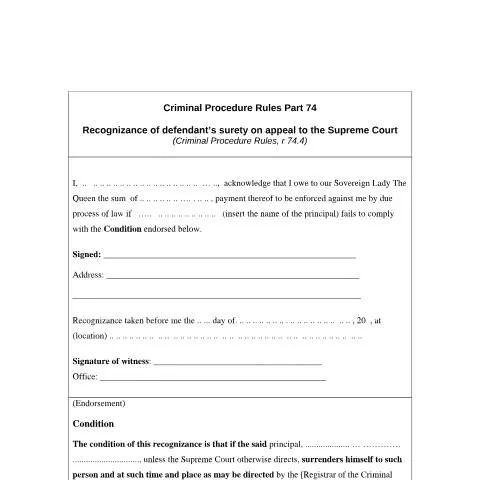
When navigating the complexities of the UK legal system, especially in criminal cases, understanding the procedural requirements is crucial. One such requirement is the Recognizance of Defendant's Surety on Appeal to the Supreme Court, a document that plays an essential role in the appeal process. This form is not merely a formality; it serves as a safety net ensuring that defendants adhere to the conditions set forth by the Supreme Court during the appeal process. This article delves deep into this recognizance, offering insights into its function, filling out the form, and the administrative processes involved.
Decoding the Recognizance: Key Components Explained
The Recognizance of Defendant's Surety encompasses several critical sections that must be carefully completed. Each part plays a vital role in the overall validity of the form. Let’s break down these components:
Principal Information
The first area requires the name of the principal—the defendant appealing their case. This must be the full name, as any discrepancy could invalidate the recognizance.
Amount Owed
Next, the form calls for the sum that the surety is acknowledging they owe to the Crown, should the principal fail to comply with the conditions outlined. This amount is not arbitrary; it should reflect the seriousness of the case and is often determined during the initial hearings.
Witness Signatures
Every recognizance must be signed by a witness. This is a crucial step, as the witness bears responsibility for vouching for the surety’s commitment. The witness must also include their office or position, lending credibility to the recognizance.
Conditions Endorsed
The conditions attached to the recognizance—such as the requirement for the principal to surrender themselves at a specified time and place—must be explicitly stated. Failure to comply with these conditions renders the recognizance void, while adherence is essential for its continued validity.
The Role of Recognizance within the Appeal Process
The Recognizance of Defendant's Surety is integral to the appeal framework established by the Criminal Procedure Rules (Part 74). This document serves as a binding agreement that ensures the defendant acts in accordance with judicial expectations. Upon filing the appeal, if a recognizance is not submitted, the appeal may face delays or even dismissal.
Why is the Recognizance Necessary?
- Protection of Court Resources: Ensures that the court’s time and resources are not wasted on absconded defendants.
- Public Confidence: Maintains public confidence in the legal system by ensuring defendants are accountable.
- Clear Communication: Provides clear conditions under which the recognizance is valid, reducing ambiguity.
Filing the Recognizance: A Step-by-Step Guide
Filing the Recognizance of Defendant's Surety requires attention to detail and adherence to specific procedures. Here’s a structured approach for ensuring a smooth submission:
1. Prepare the Recognizance Form
Ensure all required fields are filled in accurately. Double-check the spelling of names and the amount recorded. This is the foundation of a valid submission.
2. Seek Witness Verification
Once the form is completed, the surety must find a qualified witness to sign. This is often a practicing solicitor, a commissioner for oaths, or another legal professional familiar with the process.
3. Submission Channels
Depending on the case, the form can be submitted through various channels:
- Online Submission: Some courts may provide online portals where documents can be uploaded.
- In-Person Filing: Delivering the recognizance directly to the court can be beneficial, allowing immediate confirmation of receipt.
- Postal Submission: If submitting by mail, ensure it is sent via recorded delivery to verify its arrival.
What Happens After Submission?
After filing the recognizance, the surety must remain vigilant. The court will review the submission, and if everything is in order, it will confirm acceptance of the recognizance. This step is crucial, as any delays could jeopardize the appeal process.
Monitoring the Status of Your Recognizance
It's advisable to keep track of the recognizance status through the court's official channels. This can typically be done via:
- Direct Contact: Reach out to the clerk of the court for updates.
- Online Court Systems: Utilize any online tracking systems if available.
Collaborating with Legal Professionals
While filling out the Recognizance of Defendant's Surety may seem straightforward, legal nuances make it vital to collaborate with a legal professional. An experienced solicitor can ensure all aspects are addressed, safeguarding against potential pitfalls.
Understanding Potential Exceptions
There are scenarios where the recognizance process might differ:
- For Vulnerable Defendants: Additional support may be provided to ensure they understand their obligations.
- Judicial Discretion: In certain cases, a judge may waive the requirement for a recognizance based on specific circumstances.
Preparing Supporting Documentation
In some instances, additional documentation may be required alongside the recognizance. This can include:
- Proof of Identity: Such as a passport or driving licence.
- Financial Documentation: To substantiate the surety's ability to meet the financial conditions.
Ready Reference for Document Preparation
| Type of Document | Purpose | Who Needs It? |
|---|---|---|
| Recognizance Form | Acknowledge financial responsibility | Surety |
| Proof of Identity | Validate the identity of the surety | Surety |
| Financial Documents | Ensure ability to meet obligations | Surety |
The Impact of the Recognizance on the Appeal Process
Ultimately, the Recognizance of Defendant's Surety is a cornerstone of the appeal process within the UK’s criminal justice system. Its timely and accurate submission not only facilitates the smooth continuation of the judicial process but also underscores the importance of accountability in the legal realm.
By understanding the intricacies of this document, defendants and their sureties can navigate their obligations with confidence, paving the way for a fair and just appeal. Keeping abreast of all requirements and ensuring compliance with legal protocols will serve to uphold the integrity of the judicial process.
Understanding the Role of Sureties in Court Appeals
In the context of the UK legal system, a surety plays a critical role when a defendant is appealing a decision made by lower courts, such as a Crown Court or a Magistrates' Court. A surety, typically a friend or family member of the defendant, undertakes the responsibility of ensuring that the defendant adheres to the conditions set by the court during the appeal process. This may include attending court hearings, obeying curfews, or refraining from contacting witnesses. The concept of recognizance further solidifies this agreement, as it legally binds the surety to the commitments made in support of the defendant.
When filing for an appeal to the Supreme Court, the recognizance of the surety is particularly crucial. The appeal process can be lengthy, and there is a risk that the defendant may abscond or fail to comply with the conditions. To mitigate this risk, the court usually requires the surety to pledge a certain amount as a financial guarantee. This amount is not a fine but rather a form of collateral that remains forfeitable should the defendant fail to meet the court's requirements.
The procedure for submitting a surety recognizance involves several steps, including the completion of specific forms and the provision of personal information about both the defendant and the surety. This can often feel overwhelming, especially for those unfamiliar with legal proceedings. However, it is critical to understand that the role of a surety is designed to protect the rights of the defendant while ensuring compliance with judicial orders.
Criteria for Accepting a Surety in a Supreme Court Appeal
The acceptance of a surety during an appeal to the Supreme Court is not arbitrary; there are specific criteria and considerations that the court evaluates. Firstly, the court must assess the financial stability of the surety. This involves reviewing the surety's income, savings, and overall financial circumstances, as the court aims to ensure that the surety can fulfill their obligations without jeopardizing their financial security.
Moreover, the court considers the surety's relationship with the defendant. A close familial bond or a long-standing friendship may be viewed more favorably, as it indicates a higher likelihood that the surety will remain engaged and committed to the defendant's compliance with court orders. The court may also evaluate the surety’s understanding of the responsibilities and the potential consequences of failure to comply, such as forfeiting the pledged amount.
Additionally, past behavior and reliability of the surety can impact the court's decision. If the surety has previously acted in this capacity or has a history of responsible behavior, such factors can positively influence the acceptance of their recognizance. Finally, the court takes into account any potential risks associated with the defendant's case, such as the severity of the charges or the potential for flight, which can further delineate the need for a more stringent surety arrangement.
The Impact of Surety Recognizance on Appeal Outcomes
The recognizance of a surety can greatly influence the outcome of an appeal to the Supreme Court. When a surety is accepted, it not only allows the defendant to remain free while their appeal is processed, but it often reflects the court's confidence in the defendant's commitment to the legal process. This can positively sway the overall perception of the defendant's case.
Moreover, the presence of a surety can contribute to the emotional and psychological wellbeing of the defendant. Being released on recognizance can alleviate some of the stresses associated with incarceration, enabling the defendant to prepare more effectively for the appeal. This factor could be particularly significant when preparing legal arguments or gathering evidence for the appeal.
However, the surety's recognizance is not without its challenges. If a defendant fails to comply with the court's conditions, not only does the surety risk financial loss, but it can also negatively impact the appeals process itself. The court may interpret non-compliance as an indication of the defendant’s lack of respect for the judicial system, which can lead to adverse decisions regarding the appeal. Therefore, the relationship between the surety and the defendant is vital, as both parties must understand the potential repercussions of the recognizance agreement.