Navigating the Respondent's Notice: Understanding Form FP162 for Family Division Appeals
In the intricate landscape of family law in the UK, the ability to effectively present your case in court is paramount. The Respondent's Notice for Appeals to the Family Division of the High Court, known as Form FP162, serves as a crucial document for parties responding to appeals. This notice is not merely a formality; it is a structured opportunity to articulate your position in the face of an appeal. Understanding its contents, and procedures surrounding it, is essential for anyone engaged in legal proceedings within the Family Division.
Deciphering the Structure of Form FP162
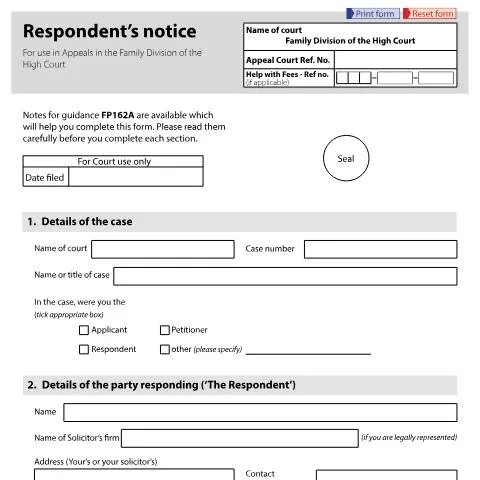
Form FP162 is meticulously designed to guide respondents through the complex process of appealing decisions made in the Family Division. The document is segmented into several clear sections, each aimed at gathering pertinent information needed for the appeal process. Here’s a breakdown of the significant components:
- Case Information: This begins with the basic details including the name of the court, case number, and the title of the case. It is crucial to specify your role in the case (Applicant, Respondent, Petitioner, etc.) to ensure clarity.
- Respondent Details: Listing your name, legal representation, and contact details allows the court to maintain clear communication throughout the appeal.
- Details of the Order: This section requires you to specify the order(s) you intend to appeal, including the judge's name and the date of the order. This information directly impacts the proceedings and must be accurately reported.
- Permission to Appeal: Highlighting whether permission has been granted or sought forms a critical aspect of the appeal framework.
- Grounds for Appeal: Here, you must articulate the reasons for your appeal or your intention to uphold the original order, providing a clear pathway for your argument.
- Arguments in Support: You’ll need to outline the legal arguments that will support your case, which may involve referencing witness statements or skeleton arguments.
- Desired Outcome: It’s essential to clearly state what decision you are asking the appeal court to make, whether it involves setting aside the original order or varying its terms.
- Supporting Documents: The final part details the necessary documents that must accompany the notice, ensuring that your submission is robust and well-supported.
Understanding the Legal Context and Importance of the Respondent's Notice
The Respondent's Notice is governed by specific procedural rules laid out in the Family Procedure Rules (FPR). This means that the information provided must adhere strictly to these guidelines to be considered valid. Understanding this legal framework is crucial for navigating the appeal successfully. Here's why Form FP162 is indispensable:
- The notice positions you as a participant in the appeal, enabling you to voice your concerns and responses to the court.
- Filing this notice correctly can significantly influence the outcome of the appeal, as it lays the groundwork for your arguments and stance.
- It ensures compliance with court rules, reducing the likelihood of procedural errors that could jeopardize your case.
Common Pitfalls When Using the Respondent's Notice
While Form FP162 is structured to assist respondents, several common pitfalls can arise during its completion. Awareness of these can help prevent costly mistakes:
- Incomplete Information: Omitting vital details such as case numbers or the judge’s name may lead to delays or dismissal of your notice.
- Failure to Indicate Permission Status: Incorrectly indicating whether permission has been granted or is required can complicate the appeal process.
- Vague Grounds for Appeal: Providing a lack of clarity in your grounds for appeal or supporting arguments can weaken your position. Specificity is crucial.
- Insufficient Documentation: Failing to include necessary supporting documents can lead to the rejection of your notice. Check the list thoroughly before submission.
The Role of Legal Representation in Filing Form FP162
Engaging a solicitor when dealing with appeals can significantly enhance your chances of success. The complexities of family law are profound, and legal representation can aid in comprehensively understanding and navigating these intricacies. Here are some reasons legal representation is beneficial:
- Expert Guidance: A solicitor can provide the necessary expertise to ensure that the notice is completed accurately and comprehensively, adhering to all legal requirements.
- Strategic Advice: Legal professionals can advise on the most effective grounds for appeal and strengthen your arguments based on precedent and legal frameworks.
- Document Preparation: Solicitors are adept at gathering and presenting supporting documents in a manner that bolsters your case, ensuring that your submissions are complete.
Specific Scenarios Requiring the Use of FP162
The Respondent's Notice is not a one-size-fits-all document; its application varies widely depending on the nature of the appeal. Here are specific situations where filing FP162 is essential:
- Child Custody Disputes: If an appeal is made regarding custody arrangements, the respondent must file a notice to assert their position and potentially counter the appeal.
- Financial Orders: In cases involving financial settlements or orders of maintenance, responding to an appeal can significantly impact the financial outcome.
- Adoption Cases: If an adoption decision is being appealed, the respondent, often a biological parent, must address the appeal through this notice to protect their rights.
Linking the Respondent's Notice to Other Essential Documents
Form FP162 does not exist in isolation; it interacts with several other forms and documents that are crucial in family law appeals. Understanding these connections can enhance the effectiveness of your appeal:
| Document | Purpose |
|---|---|
| Skeleton Argument | Outlines your legal arguments and supports your grounds for appeal. |
| Witness Statements | Provides evidence in support of your argument, showing factual backing for your appeal. |
| Part 18 Application Notice (FP244) | Files additional applications alongside your appeal where necessary, enhancing the scope of your notice. |
| Legal Aid Certificates | Confirms your eligibility for legal aid, which may impact the representation in your appeal. |
Final Steps: Submitting Your Respondent’s Notice
Once you have thoroughly completed Form FP162, the submission process is the final step. This process requires attention to detail:
- Filing Locations: Submit your completed notice to the Family Division Appeals Office, ensuring it reaches the designated address:
- Timeliness: Ensure that your notice is submitted within the specified timeframe to avoid delays in proceedings.
- Document Copies: Remember to submit the required number of copies of your notice and supporting documents for all parties involved in the case.
Family Division Appeals Office, Floor 1M, Queen’s Building, Royal Courts of Justice, Strand, London, WC2A 2LL
Filing a Respondent's Notice (Form FP162) is a pivotal step in the appeal process within the Family Division of the High Court. By understanding its structure, importance, and the associated processes, you can effectively advocate for your position and navigate the complexities of family law appeals.
Understanding the Role of the Respondent in Family Law Appeals
In family law proceedings, the respondent plays a critical role, especially during appeals made to the Family Division of the High Court. The respondent is generally the party who disagrees with a previous decision and is thus responding to an appeal made by the appellant. Understanding this role is essential for both legal practitioners and individuals navigating the complexities of family law.
When completing Form FP162, the respondent must provide clear and comprehensive information about their position regarding the appeal. This includes not only the factual context but also legal arguments that may counter the appellant's claims. It's crucial that the respondent approaches this process with a well-prepared strategy, often necessitating legal advice to ensure their notice is as robust as possible.
Moreover, the respondent should be aware of the timelines associated with submitting their notice. The Family Division expects specific adherence to deadlines, and missing these could result in the dismissal of the appeal. Typically, the respondent must submit their notice within 14 days of receiving the notice of appeal, but this can vary depending on the nature of the appeal and the court's directions.
In addition to the content of Form FP162, the respondent should be prepared to provide supporting documents that may include prior court judgments, witness statements, or any additional evidence that supports their position. The court may also require the respondent to attend a hearing where both parties will present their cases. Understanding procedural requirements and being organized is paramount for a respondent seeking a favorable outcome.
Court Procedures Following Submission of Form FP162
Once the respondent's notice has been submitted via Form FP162, the appeal process continues with various procedural steps that parties must navigate. Understanding these steps can significantly impact the outcome of an appeal.
The first step typically involves the court reviewing the notice to ensure it meets the necessary criteria. If the form is incomplete or improperly filled, the court may issue a notice requiring the respondent to rectify any issues. This is where attention to detail is critical; missing information can lead to delays or complications in the appeal process.
After verification, the court will issue directions regarding how the appeal will proceed. These directions may include deadlines for the submission of additional evidence, the scheduling of hearings, and the requirement for the parties to exchange witness statements. The court usually sets a timetable to ensure that the matter proceeds efficiently, and adherence to this timeline is essential.
Fill in your form directly online
No printing: type your details into the boxes of the official form, tick, then download the PDF ready to send.
- 1Type into the form boxes
- 2Tick in one click
- 3Save and download the PDF
It's also important to note that the respondent and appellant may be encouraged to engage in alternative dispute resolution (ADR) before a hearing is scheduled, particularly in family law cases. Mediation and other forms of dispute resolution can offer parties the opportunity to resolve their differences without the need for a lengthy court process. Understanding ADR options and their potential benefits can greatly assist the respondent in navigating the complexities of family law appeals.
Potential Outcomes of the Appeal Process and Next Steps
The outcome of an appeal to the Family Division of the High Court can significantly affect the lives of those involved, particularly in family law cases where sensitive issues such as custody, financial arrangements, and welfare of children are at stake. After the court hears the appeal, there are several potential outcomes that the respondent should be prepared for.
1. Dismissal of the Appeal: If the court finds that the appellant has not provided sufficient grounds for their appeal, it may dismiss the appeal outright. In such cases, the original decision remains in effect, and the respondent may find closure in knowing that the matter is resolved.
2. Variation of the Original Decision: The court may choose to modify the existing order, which can occur if the judge believes that the original ruling was flawed or did not adequately consider certain facts. The respondent should be prepared for a range of variations, from minor adjustments to significant changes that may impact their responsibilities or rights.
3. Remitting the Case for Reconsideration: In some instances, the court may determine that the case requires further examination. This may involve sending the case back to the original judge or a different judge for a fresh consideration. The respondent must remain engaged during this process, as they may have further opportunities to present their case.
After the appeal decision is made, the respondent should also be aware of any further steps that may be necessary. If the appeal is dismissed, the respondent may need to consider enforcement of the original order if it requires action on their part. Conversely, if the appeal is upheld, the respondent should familiarize themselves with the new order and any implications it may have.
In conclusion, navigating the appeal process in family law can be intricate and demanding. Utilizing resources such as legal representation and understanding procedural requirements can help ensure the respondent's interests are effectively represented and defended.