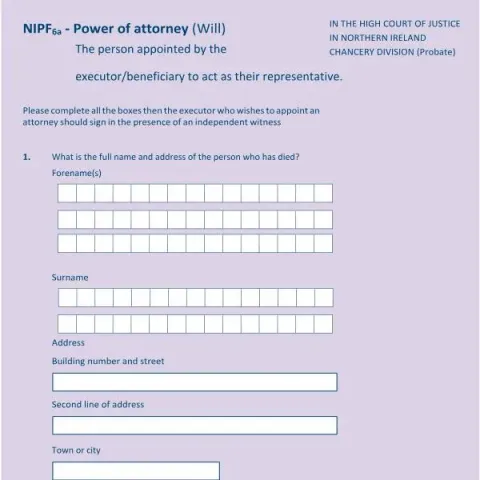
Understanding the NIPF6a Form: Power of Attorney for Will in Northern Ireland
The NIPF6a form is an official legal document used within the jurisdiction of the High Court of Justice in Northern Ireland, specifically in the Chancery Division (Probate). Its primary purpose is to appoint an attorney to act on behalf of an executor or beneficiary in relation to the estate of a deceased person. This form is essential when the appointed individual wishes to delegate authority to another person or Trust Corporation to handle specific legal or administrative tasks concerning the deceased’s estate, particularly in obtaining Letters of Administration with the will annexed.
Purpose and Scope of the NIPF6a Form
The NIPF6a form facilitates the appointment of a lawful attorney for the purpose of managing estate matters following the death of an individual. It is typically used when:
- An executor or beneficiary cannot personally handle all estate affairs and needs to delegate authority.
- There is a requirement to obtain Letters of Administration with the will annexed, which grants legal authority to the appointed attorney to deal with the estate.
This form ensures that the legal process of estate administration proceeds smoothly, especially in complex cases or where the appointed individual is unable to act directly.
Who Can Use the NIPF6a Form?
The form is intended for individuals involved in the administration of a deceased person’s estate, specifically:
- Executors named in the will or beneficiaries who are acting as their representatives.
- Individuals appointed to act as attorneys to assist or undertake estate-related tasks.
Applicants must be either the executor or a beneficiary of the estate, and they must have a clear understanding of their role and responsibilities in managing the estate’s affairs.
Steps for Completing the NIPF6a Form
1. Providing Details of the Deceased
The form begins by collecting essential information about the deceased, including:
- Full name and address, including building number, street, town or city, county (optional), country (optional), and postcode.
- Date of death, which is crucial for legal proceedings.
- Date of the will and, if applicable, the date of any codicil (amendment to the will).
2. Details of the Applicant (Executor or Beneficiary)
The next section requires the applicant's full name and address, along with their role in the estate (either as an executor or a beneficiary). This information confirms their authority to act and their relationship to the estate.
3. Appointment of the Attorney(s)
The applicant must specify the person or Trust Corporation being appointed as the attorney. Details include:
- Full name or name of the Trust Corporation.
- Address, including building number, street, town or city, county (optional), country (optional), and postcode.
If more than one attorney is appointed, the form allows for details of a second attorney to be provided, ensuring clarity on who will act on behalf of the applicant.
Legal Signatures and Witnessing
Once all relevant sections are completed, the applicant must sign the form in the presence of an independent witness. This step is vital to validate the document and ensure its legal enforceability. The witness must be impartial and not related to the applicant or the deceased to prevent conflicts of interest.
Fill in your form directly online
No printing: type your details into the boxes of the official form, tick, then download the PDF ready to send.
- 1Type into the form boxes
- 2Tick in one click
- 3Save and download the PDF
Post-Submission Process
After completing and signing the NIPF6a form, it should be submitted to the appropriate probate registry within the jurisdiction. The registry reviews the document to confirm its accuracy and legality before granting Letters of Administration with the will annexed to the appointed attorney.
It is important to retain copies of the completed form and the associated legal documents for record-keeping and future reference. The appointed attorney then has the authority to act on behalf of the estate, including handling assets, paying debts, and distributing the estate according to the will and legal requirements.
Conclusion
The NIPF6a form plays a crucial role in estate administration within Northern Ireland, providing a formal mechanism for appointing attorneys to manage estate affairs. Accurate completion and proper witnessing are essential to ensure the legal validity of the appointment, enabling the estate to be administered efficiently and in accordance with legal procedures.