When an Attorney Walks Away: Understanding the Formal Process of Disclaiming LPA Appointments
The moment arrives unexpectedly for many families: an appointed attorney under a lasting power of attorney decides they can no longer fulfil their responsibilities. Whether due to personal circumstances, health issues, or simply the realisation that the role demands more than anticipated, attorneys have the legal right to step down from their appointment. The LPA005 form serves as the official mechanism for this withdrawal, creating a formal record that protects all parties involved whilst ensuring the donor's interests remain safeguarded.
This disclaimer process represents more than mere paperwork—it triggers a cascade of legal and practical consequences that can fundamentally alter how someone's affairs are managed. From the perspective of family dynamics, financial institutions, and healthcare providers, the formal disclaimer of an attorney appointment creates immediate questions about who holds decision-making authority and how existing arrangements must be restructured.
The Legal Framework Behind Attorney Disclaimers
Under the Mental Capacity Act 2005, attorneys appointed through lasting powers of attorney possess significant legal authority, but this power comes with the corresponding right to renounce the appointment. The disclaimer mechanism provides a structured pathway that ensures the withdrawal occurs transparently and with proper notification to all affected parties.
The LPA005 form distinguishes between two critical scenarios: disclaiming by a proposed attorney (before the LPA is registered or activated) and disclaiming by an acting attorney (after they have begun exercising their powers). This distinction matters enormously because the timing affects the immediate impact on the donor's capacity to manage their own affairs.
When an attorney disclaims their appointment, they effectively sever their legal relationship with the donor regarding the specific LPA. This severance is permanent and irreversible—once disclaimed, the same person cannot be reappointed to the same LPA without creating an entirely new lasting power of attorney document.
Distinguishing Property and Financial Affairs from Health and Welfare LPAs
The form requires clear identification of whether the disclaimer relates to a property and financial affairs LPA or a health and welfare LPA. This classification determines the urgency and practical implications of the disclaimer. Financial LPAs often involve ongoing transactions, direct debits, and investment management that require immediate attention when an attorney steps down. Health and welfare LPAs, conversely, may only become critical during specific medical situations, though the disclaimer still requires prompt processing to avoid gaps in decision-making authority.
Navigating the Completion Requirements: Section-by-Section Analysis
The LPA005 form's structure reflects the Office of the Public Guardian's systematic approach to managing attorney appointments. Each section serves specific legal and administrative purposes that extend beyond simple data collection.
Donor Details and Notification Requirements
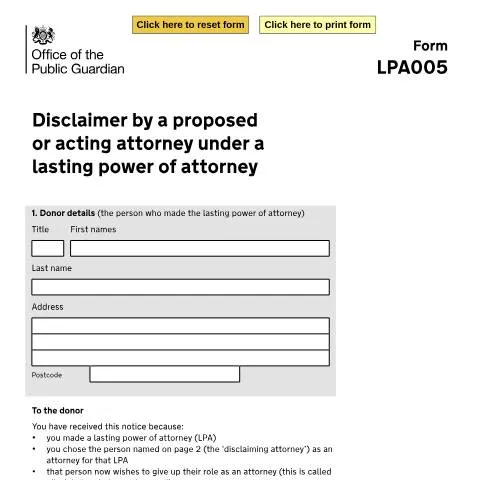
Section 1 captures the donor's details precisely as they appear on the original LPA document. Any discrepancies between the disclaimer form and the registered LPA can delay processing or create confusion about which document is being disclaimed. The form explicitly states that the donor receives notification because someone they trusted with significant legal authority is withdrawing from that responsibility.
This notification serves multiple purposes: it alerts the donor to seek alternative arrangements, provides them with an opportunity to understand why the attorney is stepping down, and creates a formal record of when the disclaimer occurred. For donors who retain mental capacity, this notification enables them to make informed decisions about appointing replacement attorneys or creating new LPA arrangements.
LPA Registration Status and Reference Numbers
Section 2 requires detailed information about the LPA's registration status, including specific dates and the OPG reference number. This information enables the Office of the Public Guardian to locate the correct LPA record within their system and update the registration accordingly.
| LPA Status | Impact of Disclaimer | Required Actions |
|---|---|---|
| Registered and Active | Immediate loss of legal authority | Notify OPG, return LPA copies, inform financial institutions |
| Registered but Dormant | Prevents future activation of attorney powers | Notify OPG, update registration records |
| Unregistered | Prevents future registration under current appointment | Notify donor and co-attorneys only |
The registration date becomes particularly important when determining whether the disclaimer affects ongoing legal transactions. Banks, investment firms, and other institutions rely on OPG records to verify attorney authority, making the formal update of these records essential for preventing unauthorised access to the donor's accounts.
Distribution Requirements: Managing Multiple Stakeholders
The disclaimer process extends far beyond completing the form itself. The distribution requirements reflect the complex web of relationships and legal responsibilities that surround lasting power of attorney arrangements.
Mandatory Recipients and Timing
Every disclaimer must reach specific recipients within reasonable timeframes, though the form does not specify exact deadlines. The original form goes to the donor, creating the primary legal record of the disclaimer. This original serves as proof that the attorney formally renounced their appointment and provides the donor with documentary evidence for their own records.
Copies must reach all remaining attorneys named in the LPA, ensuring that co-attorneys understand the change in their collective responsibilities. When multiple attorneys were appointed to act jointly, the disclaimer of one attorney may prevent the others from acting at all, depending on the specific terms of the original LPA. Alternatively, if attorneys were appointed jointly and severally, the remaining attorneys can continue acting independently.
In cases where the disclaiming attorney was the sole appointment, copies must reach any replacement attorneys named in the original LPA. This notification enables replacement attorneys to understand that their appointment may now become active, subject to the specific conditions outlined in the LPA document.
Office of the Public Guardian Notification Process
For registered LPAs, the Office of the Public Guardian requires both a copy of the disclaimer form and the return of any LPA copies held by the disclaiming attorney. This dual requirement serves important administrative and security purposes: the disclaimer copy updates the official record, whilst the return of LPA copies prevents unauthorised future use of the documents.
The OPG's Birmingham processing centre handles all disclaimer notifications, updating their central database to reflect the change in attorney status. This update cascades through various verification systems used by banks, solicitors, and other professionals who may need to confirm attorney authority in future transactions.
Practical Consequences: What Happens After Disclaimer
The immediate aftermath of an attorney disclaimer creates a period of potential vulnerability for the donor, particularly if no replacement attorneys were named or if the remaining attorneys are unavailable or unwilling to act. Understanding these consequences helps families prepare appropriate contingency measures.
Financial Institution Responses
Banks and building societies typically freeze accounts temporarily when they receive notification of an attorney disclaimer, particularly if the disclaiming attorney was the sole appointment or if uncertainty exists about remaining attorney authority. This precautionary measure protects the donor's assets but can create immediate practical difficulties with ongoing financial obligations.
Investment platforms, pension providers, and insurance companies follow similar protocols, often requiring updated documentation from the Office of the Public Guardian before recognising alternative attorney arrangements. The processing time for these updates varies significantly between institutions, with some requiring several weeks to update their internal systems.
Healthcare Decision-Making Authority
When a health and welfare attorney disclaims their appointment, the implications for ongoing medical care depend heavily on the donor's current capacity and the availability of alternative decision-makers. NHS trusts and private healthcare providers must verify attorney authority before accepting significant treatment decisions, creating potential delays in non-emergency situations.
Care homes and social services departments also require clear documentation of attorney authority, particularly for decisions about care arrangements, accommodation changes, or financial contributions to care costs. The disclaimer of a health and welfare attorney may necessitate capacity assessments and best interests meetings to determine how future decisions should be made.
Strategic Timing: When Disclaimer Becomes Necessary
The decision to disclaim an attorney appointment rarely occurs spontaneously. Understanding the common triggers helps families anticipate potential disclaimer situations and prepare alternative arrangements proactively.
Personal Circumstances Driving Disclaimer
Geographic relocation represents one of the most frequent reasons for attorney disclaimer, particularly when the attorney moves abroad or to a distant part of the UK. The practical difficulties of managing someone's financial affairs or healthcare decisions from a distance often make the attorney role untenable, especially during emergencies requiring immediate decisions.
Health issues affecting the attorney themselves create another common disclaimer scenario. Attorneys who develop cognitive impairments, serious illnesses, or physical disabilities may find themselves unable to fulfil their responsibilities effectively. The Mental Capacity Act 2005 requires attorneys to act in the donor's best interests, which may include recognising when their own limitations prevent them from providing appropriate support.
Professional or financial conflicts of interest also trigger disclaimer decisions. Attorneys who become business partners with the donor, enter into financial relationships that could compromise their independence, or face professional obligations that conflict with their attorney duties may need to disclaim their appointment to avoid potential legal complications.
Family Dynamics and Relationship Changes
Relationship breakdowns within families create particularly sensitive disclaimer situations. Former spouses, estranged children, or family members involved in inheritance disputes may choose to disclaim their attorney appointments to avoid ongoing conflict or perceived bias in decision-making.
The death of a co-attorney can also prompt disclaimer by surviving attorneys who feel unable or unwilling to act alone. Joint attorney arrangements often rely on shared decision-making and mutual support, making solo responsibility feel overwhelming or inappropriate for the remaining attorney.
Fill in your form directly online
No printing: type your details into the boxes of the official form, tick, then download the PDF ready to send.
- 1Type into the form boxes
- 2Tick in one click
- 3Save and download the PDF
Replacement Arrangements: Planning Beyond Disclaimer
The disclaimer process creates an immediate need for alternative arrangements, but the available options depend heavily on the donor's current mental capacity and the specific terms of the original LPA.
Activating Replacement Attorneys
Well-drafted LPAs often include replacement attorney provisions that automatically activate when an original attorney disclaims their appointment. However, these provisions only function effectively if the replacement attorneys are willing and able to assume their responsibilities. The disclaimer notification process specifically includes replacement attorneys to ensure they understand their potential activation.
Replacement attorneys may need to complete additional paperwork with the Office of the Public Guardian, particularly if the LPA requires registration of replacement appointments. This process can take several weeks, creating a gap in attorney coverage that requires careful management.
Court of Protection Intervention
When no suitable replacement attorneys are available and the donor lacks mental capacity to create new LPA arrangements, families may need to apply to the Court of Protection for deputy appointments. This process is significantly more complex and expensive than the original LPA creation, often involving court fees exceeding £300 plus ongoing supervision requirements.
Court-appointed deputies have similar powers to attorneys but operate under direct court supervision with annual reporting requirements. The Court of Protection prioritises applications where disclaimer has left vulnerable adults without appropriate decision-making support, but processing times can extend several months depending on case complexity.
Administrative Processing: Inside the OPG System
Understanding how the Office of the Public Guardian processes disclaimer notifications helps applicants set realistic expectations and plan appropriate follow-up actions.
Internal Verification Procedures
The OPG's Birmingham processing centre conducts systematic verification of each disclaimer notification, cross-referencing the submitted information against their central LPA database. This verification process includes confirming the disclaiming attorney's identity, checking the accuracy of the LPA reference numbers, and ensuring the disclaimer signature matches their records.
Discrepancies in any verification element can delay processing whilst the OPG seeks additional information or clarification. Common issues include variations in signature style, outdated address information, or confusion about which specific LPA is being disclaimed when individuals have multiple attorney appointments.
The OPG typically acknowledges receipt of disclaimer notifications within two weeks, though formal processing and database updates may take additional time. During peak periods or when staff shortages occur, these timeframes can extend significantly, creating uncertainty for families managing urgent financial or healthcare decisions.
Ongoing Monitoring and Compliance
Following successful disclaimer processing, the OPG maintains records of the change in attorney status indefinitely. These records support future verification requests from banks, solicitors, and other professionals who need to confirm current attorney arrangements. The disclaimer creates a permanent notation on the LPA record, preventing any future confusion about the former attorney's status.
Annual supervision visits for donors under deputy arrangements often reference previous attorney disclaimers to understand the history of decision-making support and assess whether current arrangements remain appropriate. This long-term monitoring helps ensure that vulnerable adults receive consistent, appropriate support despite changes in their attorney arrangements.
The formal disclaimer process, whilst administratively straightforward, represents a significant transition in legal relationships and practical responsibilities. Success depends on thorough completion of the LPA005 form, prompt notification of all required recipients, and careful coordination of replacement arrangements to ensure continuous protection of the donor's interests throughout the transition period.