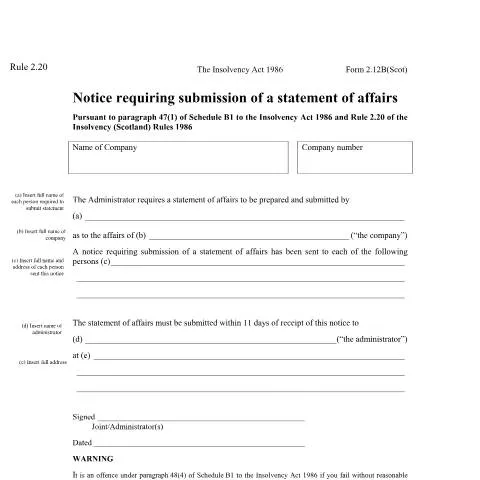
Navigating the Notice Requiring Submission of a Statement of Affairs
When a company faces insolvency, it enters a complex web of legal obligations and procedures. One critical document that emerges from this process is the Notice requiring submission of a statement of affairs, formally known as Insolvency Form 2.12B (Scotland). This important notice, issued by the administrators, is pivotal in ensuring that the financial details of the company are transparently declared, enabling creditors and stakeholders to understand the financial situation at hand.
Understanding the Structure of the Notice
The notice comprises several sections, each serving a specific purpose:
- Identification of the Company: This section lists the name and company number, ensuring clarity on which entity the notice pertains to.
- Details of the Administrator: The administrator’s name and contact information are provided, establishing who is responsible for overseeing the insolvency proceedings.
- Notification Recipients: This part identifies the individuals who are required to submit the statement of affairs, placing clear accountability on them.
- Submission Timeline: The notice stipulates an 11-day deadline for submission, emphasizing the urgency and necessity of compliance.
- Legal Warnings: It includes significant warnings regarding the consequences of non-compliance, which can lead to fines or disqualification from managing a company.
Who Should Pay Attention to This Document?
This notice is aimed primarily at officers of the company, including directors and management personnel who hold pivotal responsibilities during insolvency proceedings. The implications for these individuals are substantial:
- Failure to submit the statement of affairs can lead to personal liability, including fines and potential disqualification as company officers.
- Understanding this notice is vital for anyone involved in a company that is undergoing administration, as it outlines legal obligations and the gravity of the situation.
The Importance of the Statement of Affairs
The statement of affairs itself is a comprehensive document that must be prepared diligently. It includes:
- The company’s assets and liabilities
- A list of creditors and the amounts owed to them
- Details on any security interests affecting the company’s assets
- Any contingent liabilities that may arise
This information is essential for the administrator to assess the financial health of the company and determine the best course of action for creditors and stakeholders.
Exploring the Consequences of Non-Compliance
Ignoring or failing to adhere to the notice can have severe ramifications. According to the Insolvency Act 1986, individuals who disregard the requirement face:
- A potential fine for non-compliance
- Daily default fines for continued contravention
- Legal action that may lead to disqualification from serving as a director
This underscores the necessity of prompt and accurate submission of the statement of affairs, as the repercussions extend beyond immediate financial penalties and can affect future career prospects within the business sector.
Articulating the Statement of Affairs with Other Legal Documents
It is crucial to understand how the statement of affairs interconnects with other documents in the insolvency process. For instance:
- The notice itself is issued under the authority of the Insolvency (Scotland) Rules 1986, establishing a legal framework for submission.
- The Company Directors Disqualification Act 1986 plays a role in further regulating the actions of directors during insolvency, potentially affecting their ability to serve in such roles if they fail to comply.
Thus, the statement of affairs is not an isolated document; it is part of a wider network of regulations and requirements that govern company insolvency in Scotland.
Common Misunderstandings Surrounding the Notice
Throughout the insolvency process, various misconceptions may arise regarding the notice and its implications. Here are a few critical points to keep in mind:
- Misinterpretation of Deadlines: Some individuals may underestimate the importance of the 11-day submission requirement. Delays can lead to significant penalties.
- Overlooking Responsibilities: Officers might assume that the administrator handles all matters without their input. However, active cooperation is mandatory under section 235 of the Insolvency Act 1986.
- Assuming Lack of Liability: The belief that only the company faces repercussions is misguided. Personal liability for company officers is a serious risk should they fail to adhere to the requirements.
Key Steps for Preparing the Statement of Affairs
Preparation of the statement of affairs is not merely a matter of filling out a template; it requires a methodical approach. Here is a step-by-step guide to aid in this process:
- Gather Financial Information: Collect all relevant financial data, including recent accounts, asset valuations, and debt records.
- Compile a List of Creditors: Ensure that all creditors are identified, including their contact details and the amounts owed.
- Assess Assets and Liabilities: Create a detailed account of all company assets and liabilities, ensuring transparency and accuracy.
- Consult with the Administrator: It is prudent to maintain open communication with the appointed administrator to clarify any questions regarding the document submission.
By following these steps, company officers can better prepare a comprehensive statement of affairs that meets the legal obligations set forth by the notice.
Final Thoughts on Compliance and Cooperation
Compliance with the Notice requiring submission of a statement of affairs is not merely about evading penalties. It is a critical aspect of the insolvency process that facilitates transparency and accountability within the company. By adhering to the guidelines and actively engaging with the administrator, company officers can help navigate the complexities of insolvency more effectively.
To sum up, understanding the intricacies of this notice and its implications is essential for anyone involved in the administration of a company facing insolvency. The risks of non-compliance are significant, but with careful attention to the required steps and a strong commitment to transparency, officers can fulfil their legal responsibilities and work toward an orderly resolution of the company’s financial distress.
Understanding the Statement of Affairs Form 2.12B in Detail
The Statement of Affairs Form 2.12B is a critical document in the insolvency process in Scotland, designed for individuals who are unable to pay their debts. This form helps create a comprehensive overview of an individual’s financial situation, which is vital for the appointed trustee or insolvency practitioner to assess how best to manage the insolvency. The information provided on this form includes assets, liabilities, income, expenses, and details about creditors.
Completing the 2.12B form involves meticulous attention to detail. You must provide accurate figures that reflect your financial position as of the date of insolvency. For example, under assets, you’ll need to list all properties, bank accounts, vehicles, and any other valuables, along with their estimated worth. Under liabilities, you must disclose all debts, including mortgages, personal loans, credit card debts, and any other financial obligations.
Special care should be taken when disclosing any contingent or prospective liabilities. These are debts that may arise in the future but are not currently owing. For instance, if you are in a dispute that could lead to a financial settlement, this should be included. Transparency in this section can prevent issues later in the insolvency process.
Moreover, the form requires detailed information about your income and expenditures. This includes salaries, benefits, pensions, and any other sources of income. On the expenditure side, regular household bills, groceries, transportation, and discretionary spending need to be accounted for. Accurate reporting here is essential, as it helps in creating a repayment plan that is agreeable to both the debtor and creditors.
Common Challenges Faced When Completing Form 2.12B
Filling out the Notice requiring submission of a Statement of Affairs Form 2.12B can be daunting due to the complexity of financial situations. One common challenge is accurately valuing assets. Many individuals may either overestimate or underestimate the worth of their possessions. For example, when it comes to properties, market fluctuations can significantly affect valuation. It’s advisable to consult with a professional estate agent or surveyor to obtain a realistic assessment of property values.
Another significant hurdle is properly understanding and disclosing liabilities. Individuals often forget to include smaller debts or underestimate the impact of ongoing financial obligations. To minimize errors, it’s wise to compile a comprehensive list of all creditors beforehand, including those that may not seem significant. This ensures that all debts are accounted for, providing a clearer picture of one’s financial situation.
Furthermore, people may struggle with the language and terminology used in the form. Terms like 'secured creditor', 'unsecured creditor', and 'preferential creditor' can be confusing. It’s vital to understand these distinctions, as they can affect how debts are prioritized in the insolvency process. Consulting with an insolvency practitioner or legal advisor can provide much-needed clarity and support throughout this process.
The Role of Insolvency Practitioners in Completing Form 2.12B
Insolvency practitioners play a crucial role in guiding individuals through the insolvency process, especially when it comes to completing the Statement of Affairs Form 2.12B. They possess the expertise and knowledge needed to navigate the complexities of insolvency law and can provide invaluable assistance in ensuring that the form is completed accurately and comprehensively.
When working with an insolvency practitioner, individuals can benefit from their experience in identifying assets and liabilities that may not be immediately apparent. They can also help clients understand the implications of their financial situation and advise on the best course of action moving forward. This support can be especially beneficial for individuals who may feel overwhelmed by the process or unsure about the steps to take.
Moreover, insolvency practitioners can assist in negotiations with creditors, ensuring that any proposals for repayment or restructuring are realistic and in line with what is disclosed in the 2.12B form. Their involvement often leads to better outcomes for individuals, as they can advocate for the interests of their clients while adhering to legal requirements and best practices in insolvency management.
Ultimately, having a knowledgeable partner in the form of an insolvency practitioner not only eases the burden of completing the Statement of Affairs Form 2.12B but also enhances the likelihood of a successful resolution to one’s financial difficulties.