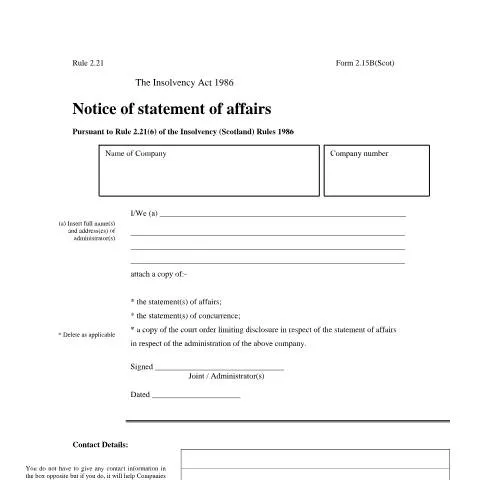
Navigating the Insolvency Landscape: Understanding the Notice of Statement of Affairs (Insolvency Form 2.15B) in Scotland
The Notice of Statement of Affairs (Insolvency Form 2.15B) serves as a cornerstone document in insolvency proceedings in Scotland. It encapsulates essential financial information related to a company facing insolvency, paving the way for administrators to efficiently manage the process. This document is not merely a formality; it holds the potential to influence the outcomes of insolvency cases significantly.
Decoding the Document: What Lies Within the Notice of Statement of Affairs
This notice includes a comprehensive overview of the company's affairs, detailing all financial aspects that administrators, creditors, and stakeholders must consider. Here’s what you’ll typically find:
- Financial Overview: The statement lists assets, liabilities, and other key financial indicators that provide insight into the company’s financial health.
- Statement of Affairs: It outlines the financial standing at the point of insolvency, detailing the company’s debts, asset valuations, and overall financial obligations.
- Statement of Concurrence: This section involves confirmations from involved parties, verifying their knowledge and agreement concerning the stated financial facts.
- Court Orders: Inclusion of any court orders limiting the disclosure of certain sensitive information in compliance with legal requirements.
The Practical Application: How to Utilize the Notice of Statement of Affairs
Understanding how to effectively use the Notice of Statement of Affairs can help streamline the insolvency process. Here’s a step-by-step approach:
- Gather Necessary Documentation: Assemble all relevant financial records, including balance sheets, income statements, and any existing court orders.
- Prepare the Statement of Affairs: Accurately complete the statement by detailing the company’s assets and liabilities. Ensure that all figures are up-to-date and reflect the current financial situation.
- Incorporate Statements of Concurrence: Collect statements from creditors or stakeholders, affirming their acceptance of the disclosed financial information.
- Review Legal Compliance: Ensure that all information adheres to the legal stipulations outlined in the Insolvency Act 1986 and any applicable local regulations.
- Submit to Companies House: Send the completed notice to Companies House along with any supporting documents, ensuring compliance with submission deadlines.
Interconnections: The Notice of Statement of Affairs and Other Essential Documents
The Notice of Statement of Affairs does not function in isolation; it is part of a broader set of documentation required during insolvency proceedings. Key documents that often accompany it include:
- Insolvency Application Form: This document initiates the insolvency process, formally requesting the appointment of an administrator.
- Declaration of Solvency: In circumstances where an insolvency process is initiated voluntarily, a declaration confirming that the company can pay its debts may be necessary.
- Creditors’ Voluntary Liquidation (CVL) Documents: For companies opting for liquidation, additional forms detailing creditor information and asset distribution may be required.
Having a clear understanding of how these documents interrelate can significantly impact the efficiency of the insolvency process and the rights of stakeholders involved.
Who Needs This Document? Identifying Key Stakeholders and Scenarios
The Notice of Statement of Affairs is pivotal for various stakeholders within the insolvency framework. Key users include:
- Company Administrators: Responsible for managing the insolvency process, administrators must utilize this document to assess the company’s financial position.
- Creditors: They rely on accurate statements to understand the financial viability of the company and to make informed decisions regarding their claims.
- Shareholders: Shareholders may also need to reference this document to gauge the implications of insolvency on their investments.
- Legal Representatives: Lawyers and financial advisors representing companies or creditors use this form to navigate legal obligations and protect their clients' interests.
Key Terminology and Concepts to Master in the Context of the Notice of Statement of Affairs
To effectively engage with the Notice of Statement of Affairs, familiarity with specific terms and concepts is crucial. Here are some key terms:
Administrator: An individual appointed to manage the affairs of a company in financial trouble. Creditor: An individual or entity to whom money is owed by the company. Statement of Affairs: A document that outlines the financial position of the company at the time of insolvency. Insolvency: The state of being unable to pay debts owed, leading to legal proceedings.Understanding these concepts can aid stakeholders in better navigating the complexities associated with insolvency proceedings.
Common Procedural Challenges and Considerations
While engaging with the Notice of Statement of Affairs, stakeholders often encounter procedural hurdles. Being aware of these challenges can lead to smoother outcomes:
- Incomplete Information: One common issue arises when the information provided in the document is incomplete or inaccurate. This can delay the insolvency process.
- Timeliness: Meeting submission deadlines is critical. Failing to submit the notice within the required timeframe can have legal consequences.
- Legal Compliance: Ensuring that the notice complies with all relevant legislation is paramount to avoid potential disputes and sanctions.
Being proactive in addressing these challenges can significantly enhance the efficacy of the insolvency proceedings.
Spotlight on Related Regulations: How the Insolvency Act 1986 Influences the Notice of Statement of Affairs
The Insolvency Act 1986 serves as the legal backbone governing insolvency in the UK, influencing the creation and submission of the Notice of Statement of Affairs. Key points of relevance include:
- Legal Framework: The Act provides the legal basis for the procedures surrounding insolvency, including the obligations of administrators and creditors.
- Disclosure Requirements: It outlines the necessary disclosures that must be included in the Notice of Statement of Affairs, ensuring transparency throughout the insolvency process.
Understanding these regulations is crucial for anyone involved in insolvency, as they dictate the standards and practices that must be adhered to.
Final Thoughts: Maximizing the Utility of the Notice of Statement of Affairs
The Notice of Statement of Affairs (Insolvency Form 2.15B) is a vital tool in navigating the complexities of insolvency in Scotland. By comprehending its structure, interrelations with other documents, and its application across various scenarios, stakeholders can maximize its utility. It stands as an informative resource that underscores the importance of transparency and compliance in financial distress situations.
Understanding the Purpose of a Statement of Affairs
The Notice of Statement of Affairs, specifically Form 2.15B in the context of insolvency in Scotland, is a critical document that plays a pivotal role in the insolvency process. Its primary purpose is to provide a comprehensive overview of an individual’s financial situation. This includes detailing assets, liabilities, income, and expenditures. The form acts as a snapshot of the individual's economic position and is essential for both the debtor and creditors in understanding the scope of insolvency.
In practical terms, this document helps determine whether formal insolvency proceedings should commence, and if so, it lays the foundation for how assets will be managed and debts repaid. Furthermore, it serves to protect creditors by ensuring they are fully informed about the financial state of the debtor. The accuracy and completeness of the information presented in the Statement of Affairs are vital; any discrepancies could lead to legal complications or accusations of fraudulent activity.
Key Sections of Form 2.15B Explained
Form 2.15B is structured to elicit specific information across several key sections, each of which has its own importance in the insolvency assessment process:
- Personal Information: This section requires the full name, address, and National Insurance number of the debtor. Providing accurate personal details is essential as it serves as the identification for all subsequent proceedings.
- Statement of Assets: Debtors must enumerate all assets, including property, vehicles, savings, and investments. Each asset must be reasonably valued, as this will impact how creditors are paid.
- List of Liabilities: Individuals must list all debts owed, including loans, credit card debt, unpaid bills, and any other financial obligations. This section should be thorough, as failing to disclose any liabilities can lead to legal repercussions.
- Income and Expenditure: This segment requires information on monthly income sources and regular expenditures, including living costs. A realistic depiction of cash flow helps trustees understand the debtor's ability to contribute to repayments.
- Additional Information: This is an open section where debtors can provide context or further details relevant to their financial situation, such as recent changes in circumstances, health issues, or other factors that may impact their insolvency.
Each of these sections requires careful attention and consideration, as incomplete or inaccurate information could hinder the insolvency process or lead to the rejection of the application.
Common Pitfalls When Completing Form 2.15B
While completing the Notice of Statement of Affairs Form 2.15B, many individuals may encounter common pitfalls that can undermine their application. Being aware of these mistakes can significantly enhance the chances of a smooth insolvency process:
- Inaccurate Valuation of Assets: One of the most prevalent issues is misvaluing assets. Debtors may overestimate or underestimate the value of their possessions, leading to complications during asset liquidation. It is advisable to seek professional appraisals when necessary.
- Failure to List All Liabilities: Some individuals may inadvertently fail to disclose all debts, especially smaller or forgotten accounts. Complete transparency is critical; all liabilities must be included to avoid accusations of concealment.
- Ignoring Changes in Financial Circumstances: Changes in income or unexpected expenses can arise. It’s essential to keep the Statement of Affairs updated with any significant financial changes that occur during the process.
- Not Seeking Professional Advice: Many debtors attempt to complete the form without seeking guidance from insolvency practitioners or legal advisors. Consulting with an expert can provide clarity and ensure compliance with all necessary legal standards.
- Missing Deadlines: Understanding deadlines is crucial in insolvency procedures. The earlier one files the Statement of Affairs, the quicker the process can commence. Missing deadlines can result in delays or complications in the insolvency proceedings.
By recognizing these pitfalls and taking proactive steps to avoid them, debtors can enhance the integrity of their application and facilitate a more efficient insolvency process.