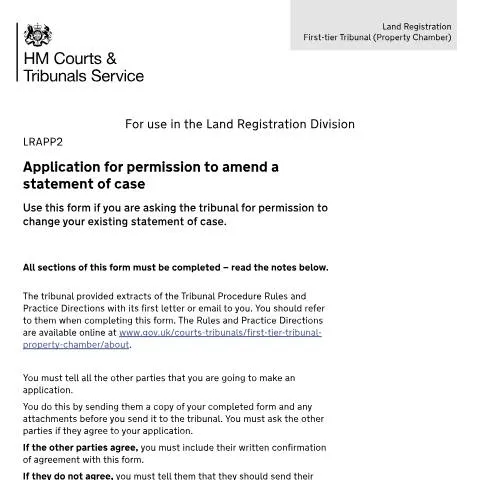
Understanding the LRAPP2 Form: A Critical Tool in Tribunal Proceedings
When engaging in legal proceedings, the nuances of the documents required can often become overwhelming. For those navigating the complexities of the Land Registration Division, the LRAPP2 form is a significant component in the process of amending a statement of case. This application for permission to amend your statement is not merely bureaucratic; it plays a crucial role in ensuring that your case is accurately presented and considered by the tribunal. Understanding its purpose, how to fill it out, and the broader context of its use can greatly enhance your chances of a successful outcome.The Importance of the LRAPP2 Form in the Tribunal Process
The LRAPP2 form serves as a formal request to the tribunal for permission to make changes to an existing statement of case. This might be necessary due to various reasons, such as new evidence emerging, errors identified in the original statement, or changes in the legal strategy being pursued. The tribunal must assess these requests carefully, as any amendments can directly impact the trajectory of the case.Main Roles of the LRAPP2 Form:
- Facilitating Amendments: The form allows parties to formally request changes that reflect new information or corrected details.
- Ensuring Fairness: By requiring communication with other parties, the form helps maintain transparency and fairness in the proceedings.
- Documenting Reasons: Applicants must provide justifications for their amendments, which aids the tribunal in understanding the context of the request.
Who Needs to Submit the LRAPP2 Form?
Understanding who is responsible for submitting the LRAPP2 form is key to navigating the legal landscape effectively. In this context, it is primarily the applicant or their representative who will be filling out and submitting this form to the tribunal.Roles Defined:
- Applicant: The individual or entity initiating the application process.
- Respondent: The party responding to the application, who may also need to provide input on the proposed amendments.
- Representatives: Legal or professional representatives acting on behalf of the applicant or respondent must also follow the same procedures outlined in the LRAPP2 form.
Preparing to Complete the LRAPP2 Form
Gathering the necessary information before you start filling out the LRAPP2 form is essential to avoid delays and complications in your application. The following checklist outlines critical pieces of information and documents you will need:Essential Information Required:
- Case Reference Number: Ensure you have the tribunal case number, as this identifies your case within the system.
- Your Role: Clarify whether you are the applicant, respondent, or a representative.
- Date of Existing Statement: Provide the date of your original statement of case to establish a timeline.
- Hearing Dates: If there are any upcoming tribunal dates, make sure to note these, as they may influence how quickly your application is processed.
- Proposed Amendments: Prepare a clear and detailed version of your amended statement to attach to the application.
- Justification for Amendments: Be ready to explain the rationale behind your request for changes and any delays in your application.
Understanding the Submission Process
Once you have completed the LRAPP2 form, the next step is to submit it to the tribunal. This process is governed by specific rules that aim to ensure all parties involved are informed and given a fair opportunity to respond.Steps for Submission:
- Copy Other Parties: Before submitting the form, you must send a copy to all other parties involved in the case.
- Seek Agreement: If the other parties agree to the amendment, ensure you obtain their written consent to include with your submission.
- Objections: If any party disagrees, they should be informed that they can submit their objections to the tribunal and you.
- Email Submission: Send the completed form and any supporting documents via email to [email protected], ensuring you CC all other parties.
Anticipating Outcomes: What Happens After Submission?
After you've submitted your LRAPP2 form, it's vital to understand the potential outcomes and next steps in the tribunal process.Possible Scenarios:
| Outcome | Explanation |
|---|---|
| Permission Granted | Your amendments are accepted, and the tribunal will schedule a hearing based on the updated statement. |
| Permission Refused | The tribunal may reject the application, requiring you to proceed with the original statement without changes. |
| Request for Further Information | The tribunal might ask for additional details or clarification regarding your application. |
Addressing Challenges: What If Your Application Is Refused?
Receiving a refusal from the tribunal can be frustrating, but understanding your options can help mitigate the impact of such a decision.Next Steps After Refusal:
- Review the Refusal Notice: Take note of the reasons provided for the rejection, as this can inform your next steps.
- Consider Appeal Options: Depending on the circumstances, you may have the right to appeal the decision; consult legal advice if necessary.
- Reassess Proposed Amendments: Consider modifying your request based on feedback from the tribunal and resubmitting if appropriate.
The Broader Context: Historical and Regulatory Framework
The requirement to submit an LRAPP2 form is rooted in the procedural rules governing tribunal operations. Understanding this framework can enhance your comprehension of the tribunal's functioning.Regulatory Underpinnings:
The Tribunal Procedure Rules and Practice Directions outline the procedural requirements for the operation of tribunals in the UK. These rules ensure a structured and fair process for all parties involved. The LRAPP2 form is a reflection of these regulations, emphasizing the importance of accurate and timely communication among parties.
Strategies for Effective Communication with Other Parties
Effective communication with other parties can significantly impact the success of your application for amendments. Being proactive in this area can pave the way for smoother proceedings.Best Practices for Communication:
- Clarity: Ensure that your communication regarding the application is clear and concise, stating your intentions and the reasons for the amendments.
- Timeliness: Notify other parties as soon as decisions are made to avoid last-minute complications.
- Documentation: Keep records of all communications sent and received regarding the application to ensure transparency and accountability.
The Role of the LRAPP2 Form in a Larger Procedural Landscape
The LRAPP2 form is one piece of the puzzle in the broader context of legal proceedings in the Land Registration Division. Understanding where it fits within the larger framework can help applicants manage their cases more effectively.Integrating LRAPP2 into Your Legal Strategy:
It’s important to view the LRAPP2 form not just as a standalone document but as part of an intricate process that includes initial statements of case, evidence gathering, and eventual hearings. Each step must be approached with care and consideration to ensure consistency and adherence to legal standards.
Conclusion: The Path Ahead with the LRAPP2 Form
Navigating the requirements of the LRAPP2 form can be a daunting task, especially when legal stakes are high. However, by understanding its purpose, preparing adequately, and communicating effectively with all parties involved, you can enhance your chances of successfully amending your statement of case. Remember, the tribunal process is designed to be fair and just, and with the right approach, you can ensure your voice is heard in the proceedings.Understanding the Statement of Case in Civil Proceedings
In the context of civil litigation, a statement of case is a pivotal document that outlines the claims and defenses involved in a case. It establishes the parameters of the dispute and informs all parties of the issues at hand. There are various forms of statements of case, including particulars of claim, defense, and counterclaim. Each of these documents must adhere to the Civil Procedure Rules (CPR), which govern their content, format, and submission timelines.
When preparing a statement of case, the importance of clarity and precision cannot be overstated. Parties must ensure that their arguments are logically structured and supported by relevant evidence. Failure to do so can lead to significant delays or even dismissal of the case. Legal practitioners often advise on the necessity of thorough research and comprehensive drafting to prevent the need for amendments later in the proceedings.
It is crucial to remember that a statement of case can evolve throughout the litigation process. As new evidence comes to light or legal strategies shift, parties may find it necessary to amend their statements. This is where the Form LRAPP2 comes into play, allowing for a structured approach to seek permission to make these critical changes.
Common Reasons for Amending a Statement of Case
There are several legitimate reasons why a party might wish to amend their statement of case using the Form LRAPP2. Understanding these can help parties anticipate the need for amendments and prepare their applications accordingly.
- New Evidence: One of the most common reasons for amending is the discovery of new evidence that could significantly impact the case. This might include witness statements, expert reports, or documentation that was previously unavailable.
- Clarification of Claims: As a case develops, it may become clear that certain claims are not articulated as effectively as possible. An amendment can provide clearer legal arguments or expand upon the details of claims that were initially vague.
- Changes in Law: Amendments may be necessary if there are changes in legislation or relevant legal precedents that could affect the case. Staying informed about developments in the law is essential for all parties involved in litigation.
- Correcting Errors: Typographical mistakes, factual inaccuracies, or omissions can detract from the credibility of a case. Amending allows parties to correct these errors to ensure that the statement of case accurately reflects their position.
- Shifting Legal Strategy: As legal counsel assesses the strengths and weaknesses of a case, they may decide to shift their strategy. This might involve adding or removing claims or defenses to better align with the evolving circumstances of the case.
Each of these reasons illustrates the dynamic nature of litigation, emphasizing the necessity for practitioners to remain adaptable and responsive to changes in their cases.
Fill in your form directly online
No printing: type your details into the boxes of the official form, tick, then download the PDF ready to send.
- 1Type into the form boxes
- 2Tick in one click
- 3Save and download the PDF
Procedure for Submitting Form LRAPP2
Submitting Form LRAPP2 to seek permission to amend a statement of case involves a structured process, which must be followed meticulously to avoid complications. Here is a step-by-step guide to the procedure:
- Complete Form LRAPP2: Ensure that the form is filled out accurately. This includes detailing the specific amendments you wish to make, along with justifications for each change. Be clear and concise in your reasoning to facilitate the court’s understanding of the necessity for the amendment.
- Gather Supporting Documentation: Alongside Form LRAPP2, it is vital to gather any supporting documents that corroborate your request. This might include evidence that justifies the changes being sought, such as new witness statements or expert reports.
- File with the Court: Submit the completed Form LRAPP2 and any supporting documents to the relevant court. It is essential to ensure that you comply with the court’s filing procedures, which might vary depending on the jurisdiction.
- Serve Other Parties: After filing, you must serve copies of the submitted form and accompanying documents to all other parties involved in the case. This ensures transparency and allows other parties to respond to your application.
- Attend the Hearing: In some instances, a hearing may be scheduled regarding your application to amend. Prepare to present your case before a judge, providing a clear rationale for why the amendments are necessary. Be ready to address any objections raised by opposing parties.
Following these steps carefully will increase your chances of successfully obtaining permission to amend your statement of case, ensuring that your litigation remains on track and effectively represents your interests.