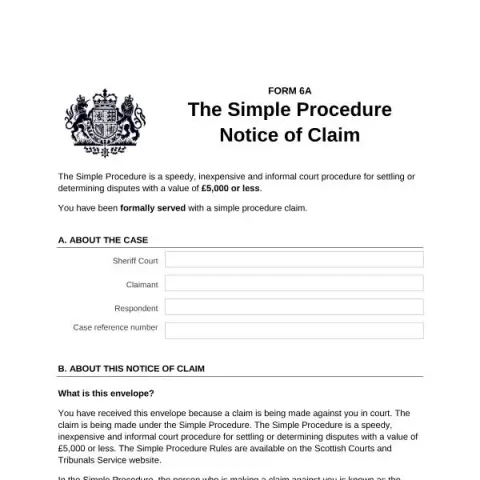
Understanding the Scottish Courts and Tribunals Service Form 6A: Notice of Claim
The Scottish Courts and Tribunals Service (SCTS) provides a standardized process for individuals or entities involved in civil disputes through the Form 6A: Notice of Claim. This official document is part of the Simple Procedure, a streamlined legal process designed to resolve cases quickly and cost-effectively, particularly for claims valued at £5,000 or less. This guide aims to clarify the purpose of the form, how to prepare and submit it, and what steps to follow after receipt.
Purpose of the Notice of Claim
The Notice of Claim serves as the initial formal communication that a legal claim has been made against an individual or organisation, known as the respondent. When served with this document, the respondent is informed that a dispute has been filed in court under the Simple Procedure. Its primary goal is to notify the respondent of the claim details, including the nature of the dispute, the amount involved, and the legal basis for the claim.
This process is designed to be accessible and straightforward, enabling parties to understand their position and respond appropriately without needing complex legal procedures. The form is specifically tailored for civil cases involving monetary disputes up to the £5,000 threshold, ensuring that cases are resolved swiftly and with minimal expense.
Preparing Your Response to the Claim
Reviewing the Documents
Upon receiving the Notice of Claim, it is essential to carefully review all enclosed documents, including:
- The Claim Form, which details the allegations and the claimant's demands;
- The Timetable, outlining the deadline for a response;
- The Response Form, which must be completed and returned to the court if you intend to contest the claim or admit liability.
Understanding Your Options
Within the specified timeframe, you have two primary options:
- Respond in writing: Complete the Response Form and send it to the court and claimant, stating whether you admit or deny the claim and any relevant comments.
- Apply for time to pay: If you acknowledge the debt but cannot settle immediately, you may submit a Time to Pay Application to request an extension or installment plan.
Failing to respond by the deadline could result in the court awarding the claim to the claimant, along with any associated costs and interest.
Submitting Your Response and Next Steps
Methods of Submission
You can respond to the claim either by:
- Completing and mailing the physical Response Form to the court, or
- Responding online via the Civil Online portal on the Scottish Courts and Tribunals Service website.
Responding online is encouraged for its convenience and efficiency, allowing quicker processing and confirmation of receipt.
What Happens After Submission
Once your Response Form or Time to Pay Application has been received and processed, the court will review the information and determine the next steps. If the claim is contested, a hearing may be scheduled, but many cases are resolved without the need for court appearances, thanks to the informal nature of the Simple Procedure.
Fill in your form directly online
No printing: type your details into the boxes of the official form, tick, then download the PDF ready to send.
- 1Type into the form boxes
- 2Tick in one click
- 3Save and download the PDF
Who Serves the Notice of Claim?
The section Who formally served this Notice of Claim? details the individual or organisation responsible for delivering the claim to the respondent. This could be a sheriff officer or another authorised process server. The form includes:
- Name and address of the server,
- Organisation or firm name,
- Signature and date of service.
Additional Support and Guidance
If you are unsure of how to proceed after receiving the Notice of Claim, several resources are available:
- Contact the sheriff court's office or sheriff clerk for guidance,
- Seek advice from a solicitor, Citizens Advice Bureau, or other legal aid organisations, especially if you need help completing the Response Form or applying for a payment plan.
It is vital to respond within the specified deadline to ensure your rights are protected and to avoid default judgments against you. The Simple Procedure aims to make civil disputes more accessible, transparent, and manageable for all parties involved.