Understanding the Context: When the N205D Notice of Issue Becomes Essential
The issuance of a probate claim under the N205D Notice of Issue occurs in intricate circumstances surrounding the administration of a deceased person's estate. This document is pivotal for claimants wishing to initiate a formal legal process to resolve disputes regarding the probate of a will or the distribution of an estate. Situations prompting the use of this notice can range from contesting the validity of a will to addressing issues related to the executor's conduct.
Probate claims are not solely the purview of family members. They can involve a variety of stakeholders, such as creditors, beneficiaries, or even unrelated parties with a vested interest in the estate. It is crucial for any individual navigating these waters to understand not only the procedural requirements outlined in the N205D but also when it becomes indispensable for their particular situation.
Navigating the Complexities: Key Components of the N205D Notice
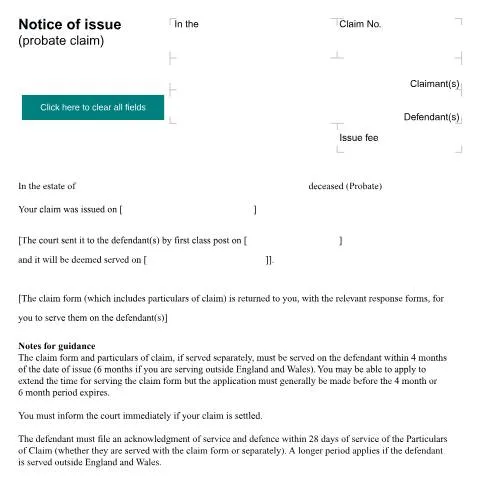
The N205D encompasses several critical elements that claimants must accurately fill out and understand:
- Claim Number: An assigned identifier that allows for tracking the progress of the case.
- Claimant(s) and Defendant(s): The respective parties involved in the claim, clearly identifying who is suing whom.
- Issue Fee: The fee associated with issuing the claim, which varies depending on the nature of the claim.
- Date of Issue: The date the claim is formally issued by the court.
These components serve not only as formal identifiers but also as crucial timestamps and reference points for legal proceedings. For instance, the date of issue is vital as it dictates timelines for both the claimant and defendant.
Critical Timelines: Serving the Claim Form Correctly
One of the notable stipulations in the N205D is the time frame in which the claim must be served. As per the guidelines, the claim form, and particulars of claim must be served on the defendant within:
- 4 months: If served within England and Wales.
- 6 months: If the service occurs outside England and Wales.
Claimants should be acutely aware that failure to adhere to these timelines can jeopardize their claim. An extension for serving the claim can be requested, but it must be done before the expiration of the initial period. Hence, understanding and managing these timelines is critical for a successful probate claim.
The Importance of Responding: Defendant's Obligations
An essential aspect of the N205D Notice of Issue is the requirement for the defendant to respond. Once served, the defendant is obligated to file an acknowledgment of service and a defence within 28 days of being served the particulars of claim. If the defendant is served outside England and Wales, a longer period is permissible.
Understanding this requirement is vital for both parties involved, as the absence of a response can significantly impact the course of the proceedings:
- If the defendant fails to acknowledge service or file a defence within the stipulated time, the claimant has the right to apply for the claim to proceed to trial.
- Moreover, the nature of the probate claim complicates matters, as default judgments cannot be obtained in these cases, leading to potential delays in resolution.
Interconnections: Articulating the N205D with Other Documentation
The N205D is not an isolated document; it works in conjunction with various other forms and notifications within the probate process. Understanding how this notice interacts with other documents is essential for a smooth legal experience. Key documents include:
- Particulars of Claim: This document outlines the specific claims being made and must be served together with the N205D or as a separate entity.
- Acknowledgment of Service: This reflects the defendant's acceptance of the claim and is necessary for proceeding with court actions.
- Defence Document: In this, the defendant presents their case against the claim being made.
Failing to properly serve these documents can lead to complications, delays, and even the potential dismissal of the case, emphasizing the need for attention to detail and compliance with procedural requirements.
Understanding Limitations: What the N205D Does Not Cover
The N205D Notice of Issue has its limitations and does not cover every aspect of a probate claim. Emphasizing these limitations can save claimants from potential misunderstandings:
- Default Judgments: As noted previously, the N205D cannot facilitate default judgments in probate claims, meaning that the claimant cannot rely on a lack of response from the defendant as grounds for an automatic win.
- Settlement Notifications: Claimants are required to inform the court immediately if their claim is settled, a point often overlooked which can lead to procedural hiccups.
- Claim Duration: While the notice sets the stage for proceedings, it does not dictate how long the overall probate process will take, which can be protracted based on the circumstances of the estate.
Avoiding Pitfalls: Common Misinterpretations of the N205D
As with many legal documents, the N205D is subject to misinterpretation. Addressing these common misinterpretations can assist claimants in navigating their claims more effectively:
- Misunderstanding Timeframes: Some claimants may confuse the time limits for serving the claim with the time allowed for the defendant to respond, leading to strategic missteps.
- Overlooking Additional Requirements: Failing to consider other related forms, such as the particulars of claim and their respective deadlines, is a common mistake that can significantly impact the case.
- Assuming Automatic Progression: A prevalent misconception is that once the N205D is filed, the case will simply proceed, disregarding the necessity for the defendant's acknowledgment or defence.
Practical Steps: Moving Forward with Your Probate Claim
Engaging with the legal system can evoke anxiety, especially when dealing with probate matters linked to personal loss. Having a clear step-by-step approach can alleviate some of this stress:
- Gather Necessary Information: Ensure you have all relevant details regarding the estate, including the deceased's will, assets, and any existing disputes.
- Complete the N205D and Related Forms: Take the time to thoroughly complete the N205D, ensuring accuracy in all particulars to avoid delays.
- Serve the Documents Promptly: Adhere strictly to timelines, serving the claim document and particulars of claim as required.
- Monitor Responses: Be vigilant in monitoring the defendant's response to ensure compliance with deadlines.
By following these practical steps, claimants can enhance their likelihood of navigating the probate process successfully, minimizing delays and complications.
Understanding the Role of Form N205D in the Probate Process
Form N205D, known as the Notice of Issue for a probate claim, is a crucial document in the management of deceased estates in the UK. This form serves as an official notification to parties involved that a probate application has been lodged with the court. It is particularly important for those seeking to contest a will, as it illustrates that the legal process is underway. Understanding its significance can help beneficiaries and potential challengers navigate the often-complex landscape of probate law.
When a probate application is filed at the HM Courts & Tribunals Service, Form N205D is issued to inform all relevant parties, including executors and beneficiaries, that a claim has been initiated. The form includes essential information such as the names of the deceased, the executor, and the date the application was submitted. It also provides instructions to the recipients on their rights, such as the ability to challenge the will within a designated period of time.
In situations where there are multiple claimants or possible contesters, the notice helps to establish a formal communication line. For those disputing the probate, understanding the time lines and procedures referenced in Form N205D is vital. Generally, if someone wishes to contest the will, they must do so within 14 days from the date of the notice, but legal advice should always be sought to clarify these specific time limits.
Fill in your form directly online
No printing: type your details into the boxes of the official form, tick, then download the PDF ready to send.
- 1Type into the form boxes
- 2Tick in one click
- 3Save and download the PDF
Implications of Failing to Respond to Form N205D
Ignoring or failing to respond appropriately to a Notice of Issue (Form N205D) can have severe consequences for interested parties. If you are a beneficiary or a potential challenger to the estate, neglecting to act within the stipulated timeframe could result in your claims being dismissed. This is particularly critical if you wish to dispute the validity of the will or question the actions of the executor.
For example, suppose an interested party receives Form N205D but does not formally respond within the required period. In that case, they may lose their opportunity to contest the probate, even if they have legitimate grounds to question the will. If you believe that you have a valid reason to contest the will, it’s imperative to take immediate action by either filing a caveat or formally responding as indicated in the notice.
Furthermore, failing to engage in the process may lead to the grant of probate being issued without your input, possibly allowing the executor to distribute the estate without considering your claims. This can lead to significant financial and emotional distress, particularly if you were relying on your inheritance. Therefore, understanding the importance of Form N205D and responding promptly cannot be overstated.
Challenging the Notice of Issue: Strategies and Considerations
Challenging the Notice of Issue (Form N205D) involves a series of strategic steps that must be undertaken with careful consideration. First and foremost, individuals must determine on what grounds they intend to contest the will. Common reasons include lack of testamentary capacity, undue influence, or failure to properly execute the will. Knowing your grounds will influence not only your arguments but also the documents and evidence you will need to present.
Once you have established your grounds for contesting the probate, it’s essential to file a Caveat at the Probate Registry. A Caveat serves as a formal notice to the court that you intend to challenge the validity of the probate application. It effectively prevents the grant of probate from being issued until the matter is resolved. Filing a Caveat should be done promptly upon receipt of Form N205D to ensure your position is protected.
Next, it's advisable to gather all necessary documentation to support your claim. This may include previous wills, medical records, or witness statements that could attest to the deceased’s mental capacity. Engaging a solicitor who specializes in probate disputes can be invaluable as they will guide you through the legal pitfalls and ensure your submissions to the court are appropriately formatted and timely.
Finally, be prepared for a potentially lengthy process. Contesting a will can entail court appearances and negotiations that may take several months to resolve. It’s crucial to stay informed and proactive throughout the proceedings to effectively represent your interests and uphold any claims you have against the estate.