The Significance of Form COP28 in the Court of Protection
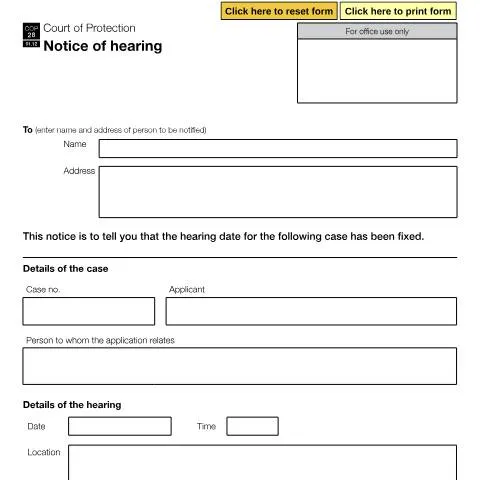
In the realm of the UK legal system, particularly within the context of the Court of Protection, the COP28 Notice of Hearing plays a pivotal role. This document serves as an official notification regarding scheduled hearings, essential for parties involved in cases concerning individuals who may lack the capacity to make decisions for themselves. Understanding this document is crucial for anyone engaged in such hearings, providing clarity and ensuring that all parties are adequately prepared for the proceedings ahead.
Understanding the Structure of Form COP28
The COP28 Notice of Hearing is a structured document that conveys essential details regarding an upcoming court hearing. It encapsulates various key elements:
- Applicant Information: Identifies who has initiated the application.
- Details of the Person in Focus: Specifies the individual for whom the application relates.
- Hearing Details: Captures critical information about the hearing, including date, time, and venue.
- Purpose of the Hearing: Indicates the nature of the hearing, whether for directions, disposition of matters, or other specified reasons.
- Assistance Information: Mentions available support for attendees requiring special accommodations.
This structured format ensures that all necessary information is conveyed clearly and concisely, aiding participants in understanding the context and requirements of the hearing.
Who Should Pay Attention to This Notice?
The COP28 Notice is indispensable for a variety of stakeholders involved in Court of Protection proceedings:
- Applicants: Individuals or entities who have submitted an application concerning the personal welfare or property matters of another individual.
- Representatives: Legal representatives, social workers, and other advocates assisting parties in the proceedings.
- Family Members: Relatives of the individual in question who may be affected by the court's decisions.
- Support Staff: Administrative personnel within legal firms or organisations assisting with case management.
Each group must understand the nuances of the hearing as outlined in the notice to ensure effective participation in the court process.
Navigating the Hearing Process with COP28
Once the relevant parties receive the COP28 Notice of Hearing, there are several steps they should take to prepare for the upcoming court session:
- Review the Notice: Carefully read the document to understand the date, time, and purpose of the hearing.
- Confirm Attendance: Ensure that all parties who wish to participate have confirmed their attendance by the hearing date.
- Seek Clarification: If there are any uncertainties, contact the Court Enquiry Service using the provided details for clarification.
- Prepare Documentation: Gather any relevant documents that may need to be presented during the hearing.
- Consider Legal Representation: Depending on the complexity of the case, it may be wise to seek legal counsel.
By following these steps, involved parties can enhance their readiness for the hearing, potentially influencing the outcome positively.
Key Terminology in the COP28 Context
In navigating the complexities of the Court of Protection and its associated hearings, familiarity with specific terminology is essential:
| Term | Definition |
|---|---|
| Capacity: | The ability of an individual to make decisions regarding their own welfare and finances. |
| Applicant: | The person or organization that submits the application to the court. |
| Respondent: | The individual or party to whom the application relates. |
| Directions: | Orders given by the court regarding how the proceedings should be conducted. |
Understanding these terms not only aids in comprehending the contents of the COP28 but also empowers participants to engage more effectively during hearings.
The Limitations of Form COP28
While the COP28 Notice of Hearing serves as a vital component of the court process, it does have its limitations:
- Notification Scope: The notice primarily focuses on informing parties of the hearing date and time; it does not cover the specifics of case particulars or legal arguments.
- Assistance Variability: The mention of assistance options may not encompass all individual needs, necessitating proactive communication with the court.
- Legal Advice Not Provided: The notice does not serve as legal advice, and parties are encouraged to seek professional assistance when required.
Recognising these limitations allows participants to approach the hearing with a balanced perspective, ensuring they supplement the information provided by the COP28 with necessary research and legal support.
Special Assistance and Accessibility Considerations
An important aspect of the COP28 Notice of Hearing is the provision for special assistance. The document emphasizes that individuals requiring specific accommodations should contact the Court Enquiry Service as soon as possible. This is particularly crucial for:
- Individuals with Disabilities: Modifications can include wheelchair access, sign language interpreters, or any other necessary adjustments.
- Individuals with Mental Health Concerns: Providing a supportive environment that can help individuals feel more comfortable during hearings.
- Language Needs: Arrangements can be made for translation services if required.
It is vital for those needing assistance to communicate their requirements promptly, ensuring their needs are met, and they are able to participate fully in the proceedings.
Final Thoughts: Preparing for a Successful Hearing
Engaging with the legal system can be a daunting experience, particularly within the context of the Court of Protection. With the COP28 Notice of Hearing as a guiding document, all parties can navigate the process with greater confidence. By understanding its implications, preparing adequately, and familiarising themselves with key terms, individuals can approach their hearings informed and prepared.
Ultimately, the COP28 Notice of Hearing is not just a piece of paper—it is an invitation to engage in a critical process that impacts the lives of vulnerable individuals. Recognising the importance of this document and its role in the broader legal framework is essential for anyone involved in such cases.
Understanding the COP28 Hearing Process in the UK
The COP28 hearing process is a significant aspect of climate negotiations, especially for those parties or stakeholders wishing to make their case heard regarding climate change impacts, policies, and adaptations pertinent to the United Kingdom's commitments. Individuals or organizations looking to participate in this process must understand the framework and procedures involved.
Typically, the hearing process is structured around the proceedings set by the host nation, in this case, the UK, and the United Nations Framework Convention on Climate Change (UNFCCC). Interested parties need to prepare a Notice of Hearing, which informs the relevant authorities about their intention to present their views or data during the sessions.
To file a Notice of Hearing, you must ensure that it includes vital information such as:
- Your full name and contact details.
- The organization you represent, if applicable.
- A brief outline of the points you wish to address.
- The format of your presentation (oral or written).
Submitting this notice is often done through the official channels specified by the UK government and the UNFCCC. Keep in mind that deadlines for submission may vary, so it’s essential to check the official guidelines posted on the UK government’s or UNFCCC’s websites.
Key Considerations for Environmental NGOs
Environmental Non-Governmental Organizations (NGOs) play a pivotal role in the COP28 proceedings and must approach the Notice of Hearing with a strategic mindset. As these organizations often represent a diverse range of interests, it’s crucial to consolidate their messages effectively.
Fill in your form directly online
No printing: type your details into the boxes of the official form, tick, then download the PDF ready to send.
- 1Type into the form boxes
- 2Tick in one click
- 3Save and download the PDF
One of the main considerations for environmental NGOs is ensuring that their presentation aligns with the overarching objectives of the COP28, which, in 2023, centers around enhancing climate resilience and achieving net-zero emissions. This alignment helps to establish credibility and relevance in their contributions.
Moreover, NGOs should also consider:
- Collaborating with other organizations to amplify their voice. Joint submissions can showcase solidarity and can cover broader issues impacting multiple stakeholders.
- Engaging in pre-hearing workshops or forums that allow for further elaboration of their concerns and solutions. These engagements provide an opportunity to refine their arguments based on feedback.
- Understanding the political landscape. Familiarizing themselves with key players and their positions can assist in framing their arguments in a manner that resonates with decision-makers.
It’s advisable for NGOs to regularly monitor updates and discussions leading up to COP28, as this can provide invaluable context for their presentations. This proactive approach not only enhances the quality of their submissions but also ensures they are part of the broader conversation.
Engaging with the Public and Stakeholders
In addition to formal presentations, engaging with the public and relevant stakeholders is crucial for those preparing a Notice of Hearing. Public opinion can significantly influence climate policies, and the COP28 provides an avenue for this engagement.
Organizations should consider holding public forums or workshops where they can gather feedback and insights from community members. This grassroots involvement not only enriches their arguments but also fosters a sense of ownership among local populations regarding climate action.
Additionally, leveraging social media platforms to raise awareness about issues related to COP28 can mobilize public support. Sharing stories, facts, and data relevant to climate change can help demystify the hearing process and encourage broader participation.
It can also be beneficial to reach out to local businesses, educational institutions, and other community groups. Collaborating on initiatives or information sessions can present a united front at COP28, making the case for strong, decisive climate action more compelling.
Ultimately, engaging with a diverse array of stakeholders can bolster the credibility of the submissions made during the COP28 proceedings and contribute to a more comprehensive dialogue about climate change in the UK.