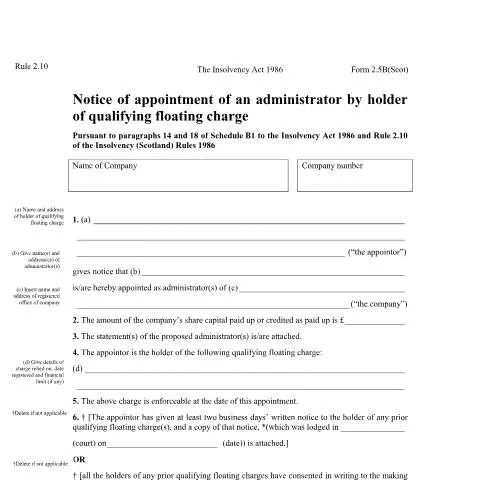
Navigating the Notice of Appointment of an Administrator: Form 2.5B (Scotland)
In the intricate world of insolvency, the Notice of Appointment of an Administrator by Holder of Qualifying Floating Charge: Form 2.5B (Scotland) is a pivotal document that plays a critical role in business recovery processes. Whether you are a creditor, a director of a company, or an insolvency practitioner, understanding how to effectively utilise this notice can significantly influence the outcome of administrative proceedings.
The Primary Audience: Who Should Engage with Form 2.5B?
This notice is specifically tailored for holders of qualifying floating charges who need to initiate the administration process for a distressed company. It is crucial for:
- Creditors: Particularly those in possession of a qualifying floating charge, who aim to protect their interests while facilitating the recovery of the company.
- Company Directors: Who may need to collaborate with creditors to ensure that the administration process is handled efficiently.
- Insolvency Practitioners: Engaging with Form 2.5B allows them to assume control of the administration process, ensuring compliance with legal requirements.
Understanding the obligations and rights encapsulated in this document is essential for these stakeholders, especially in situations where rapid action is required to avert insolvency proceedings.
Understanding the Legal Framework and Implications
The Form 2.5B operates within the context of the Insolvency Act 1986, particularly referencing paragraphs 14 and 18 of Schedule B1, which outline the necessary conditions for appointing an administrator. The key points to consider include:
- Qualifying Floating Charge: Only those with a qualifying floating charge are empowered to make this appointment. Understanding what constitutes a qualifying floating charge is pivotal for stakeholders.
- Enforceability: The charge must be enforceable at the time of the appointment, which signifies that the holder has the legal right to act.
- Notification Requirements: The appointor must notify prior charge holders, thereby ensuring transparency in the process. This can prevent future disputes regarding the appointment.
These elements exemplify how crucial it is to follow the stipulated legal processes to safeguard all parties' interests while complying with the law.
Exploring Procedural Nuances: A Step-by-Step Guide
Completing the Form 2.5B involves several procedural steps, each playing an essential role in the overarching administration process. Key stages include:
- Gather Necessary Information: Collect and verify all details pertaining to the company, including its registered office address, company number, and the specifics of the qualifying floating charge.
- Prepare Attachments: Compile the statements of the proposed administrator(s) and any notices given to prior charge holders as required.
- Complete the Form: Fill in all required fields accurately, paying close attention to the particulars of the charge, the names of the appointed administrators, and the declaration of the appointor.
- Lodge with the Court: Submit the completed notice along with all attachments to the appropriate court. This action must align with the local court's requirements to ensure that the appointment is legally recognised.
Adhering to these steps meticulously can help prevent administrative delays and ensure that all parties are fully informed throughout the process.
A Common Pitfall: Misinterpretations and Misuse of the Notice
Despite its straightforward nature, the Form 2.5B can lead to misunderstandings that may compromise the administration process. Some of the common misinterpretations include:
- Incorrect Identification of Charge Holders: Failing to accurately identify all holders of prior qualifying floating charges can lead to legal complications.
- Overlooking Enforceability: If the floating charge is not enforceable at the time of appointment, the appointment may be challenged in court.
- Failure to Notify: Not providing the requisite notice to prior charge holders can open avenues for dispute and undermine the legitimacy of the appointment.
By being aware of these potential pitfalls, stakeholders can take proactive steps to ensure compliance and validity in their dealings.
Key Concepts and Terminology: What You Must Know
Understanding the terminology and key concepts surrounding the Form 2.5B is crucial for effective navigation within the insolvency framework. Important terms include:
| Term | Description |
|---|---|
| Qualifying Floating Charge | A type of security interest that allows lenders to claim on a fluctuating pool of assets. |
| Administrator | An individual appointed to manage the affairs of a company in the interest of creditors. |
| Insolvency Proceedings | Legal processes governing the handling of companies that cannot meet their financial obligations. |
| Enforceability | The ability of a holder to execute the terms of a charge legally. |
Familiarity with these terms is fundamental not only for filling out the Form 2.5B correctly but also for understanding the broader implications of the administration process.
Limitations and Coverage of the Form 2.5B
While the Form 2.5B serves a significant purpose in the administration process, it is essential to recognise its limitations. This document:
- Does Not Constitute a Full Administration: The notice itself does not result in full administration; it is merely a step in the process.
- Excludes Other Stakeholders’ Concerns: While it provides vital information for charge holders, it may not address the needs or concerns of unsecured creditors adequately.
- Requires Subsequent Actions: Following the completion of Form 2.5B, additional documentation and steps will be necessary to advance the administration process.
Being cognizant of these limitations helps all parties manage their expectations and understand the full scope of their responsibilities moving forward.
Practical Applications: How to Leverage the Form 2.5B Effectively
Utilising the Form 2.5B effectively can substantially impact the proceedings' outcomes. Here are practical tips for stakeholders:
- Engage Early: The sooner you begin the administration process using the Form 2.5B, the better the chances of mitigating losses and finding viable solutions.
- Maintain Clear Communication: Ensure all relevant parties are kept informed throughout the process to prevent disputes and misunderstandings.
- Consult with Professionals: Involving legal or financial experts can provide valuable insights and minimise risks associated with the appointment and administration process.
By strategically leveraging the Form 2.5B, stakeholders can navigate the complexities of insolvency administration with greater effectiveness and confidence.
Final Insights on the Path Forward
Utilising the Form 2.5B is not merely a clerical task but an essential step in a systemic procedure aimed at protecting stakeholders' interests in the face of company distress. Understanding its nuances, the legal framework surrounding it, and the potential implications can drastically change the course of administrative outcomes.
As the insolvency landscape continues to evolve, staying informed about the latest practices and regulations is paramount. Engaging with this notice thoughtfully can pave the way for successful administration and recovery processes.
Understanding the Role of an Administrator in Scotland
In the context of insolvency, an administrator serves as a crucial figure, appointed to manage the affairs of a company facing financial difficulties. The appointment aims primarily to rescue the business as a going concern, or if that’s not feasible, to achieve a better return for creditors than would be available through liquidation. In Scotland, the process of appointing an administrator under a qualifying floating charge is governed by specific legal frameworks, particularly the Insolvency Act 1986 as amended.
When a holder of a qualifying floating charge appoints an administrator via Form 2.5B, they effectively take control of the company's assets and operations. This role involves making critical decisions about how to best manage the company’s resources, negotiating with creditors, and seeking potential buyers if necessary. Administrators must act in the best interests of all creditors and are obligated to provide regular updates on the status of the administration process to stakeholders.
Fill in your form directly online
No printing: type your details into the boxes of the official form, tick, then download the PDF ready to send.
- 1Type into the form boxes
- 2Tick in one click
- 3Save and download the PDF
It's important to note that while an administrator has extensive powers, they must also adhere to strict legal and ethical standards. This includes a duty to avoid conflicts of interest and to operate transparently, providing clear communication to creditors regarding the status of the administration and any actions taken. Failure to comply can lead to serious repercussions, including personal liability for any misconduct.
The Process of Completing Form 2.5B
Filling out Form 2.5B is a critical step in the administrative appointment process. The form itself is a formal document that must be completed accurately to ensure that the appointment is legally binding. Here are some essential aspects to consider when completing the form:
- Identifying Information: The form requires detailed information about the company being placed into administration, including its registered number, address, and the nature of its business. This information must be current and precise, as any discrepancies can lead to challenges or delays in the administration process.
- Details of the Floating Charge Holder: The holder of the qualifying floating charge must provide their name, address, and other pertinent details. This information establishes the authority of the individual or entity acting on behalf of the creditors.
- Grounds for Appointment: The form must specify the grounds for the appointment of the administrator. Commonly cited grounds include the belief that the company is or is likely to become unable to pay its debts. This section allows the floating charge holder to justify their action and demonstrate compliance with insolvency laws.
After completing Form 2.5B, it’s crucial to ensure that it is submitted to the appropriate authorities, including the Scottish Insolvency Register, and that all relevant parties, including creditors and the company itself, are notified of the appointment. Adherence to these procedural requirements is essential for the validity of the administration process.
Implications for Creditors and Stakeholders
The appointment of an administrator through Form 2.5B has significant implications for creditors and other stakeholders involved with the company. Understanding these implications can help creditors navigate the complexities of the administration process more effectively.
Firstly, creditors must recognize that their position may change dramatically once an administrator is appointed. The administrator will take control of the company's assets and operations, which can affect the timing and amount of any repayments. In general, the administrator is obligated to pursue the best possible outcome for all creditors, but this may mean that unsecured creditors have to wait longer for repayment, especially if there are secured creditors with priority over claims.
Additionally, during the administration process, the administrator will conduct a thorough review of the company's financial situation. This may involve negotiating with creditors, restructuring debts, or selling off assets to raise funds. Creditors are encouraged to stay informed about the administration process, attend creditors' meetings, and participate in any claims processes to ensure their interests are represented.
The administrator is required to provide regular updates to creditors regarding the progress of the administration. These updates often outline the actions taken, the financial status of the company, and any potential recovery scenarios. Creditors who feel their interests are not being appropriately addressed can raise concerns with the administrator or seek legal advice if necessary.
In summary, the implications for creditors and stakeholders are multifaceted and necessitate careful consideration and ongoing communication with the appointed administrator. Understanding the nuances of Form 2.5B and the overall administration process can ultimately empower creditors to make informed decisions regarding their claims and interests.