Navigating the Complexities of the POAC1 Document
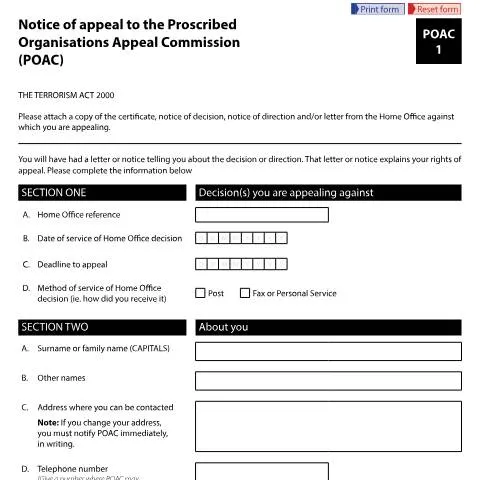
For individuals or organisations faced with a proscription decision under the Terrorism Act 2000, the Notice of Appeal to the Proscribed Organisations Appeal Commission, commonly referred to as Form POAC1, serves as a crucial instrument in seeking redress. Understanding the intricacies of this document and its procedural implications is essential for those endeavouring to challenge such decisions.
The Framework of the Appeal Process: Critical Elements
The appeal process against a proscription decision is classified under strict legal frameworks, notably the Terrorism Act 2000. When using the POAC1 form, several key elements must be understood:
- Section One: This section addresses the decision you are appealing against. Key details such as the Home Office reference number and the date of service of the decision must be provided, ensuring that the basis of your appeal is clearly established.
- Section Two: Personal information is required here, including your name, contact details, and your connection to the proscribed organisation.
- Section Three: This is arguably the most critical part of the document, where you outline the precise grounds of your appeal. A comprehensive explanation supported by reference to the decision letter is necessary to substantiate your case.
Interconnection with Other Legal Documents
The POAC1 is not an isolated document; it interacts with a range of other legal texts and decisions. An understanding of these interconnected elements can bolster your appeal. For instance, you must attach a copy of all relevant documents, such as the decision notice and any correspondence from the Home Office that outlines the reasons behind the proscription.
Frequently Encountered Procedural Questions
When navigating the POAC1 form, appellants often encounter various procedural questions. Here, we address some common queries:
- What if my appeal is late? If you suspect your appeal will not meet the deadline stipulated by Rule 6 of the Proscribed Organisations Appeal Commission (Procedure) Rules 2007, you must apply for an extension and provide valid reasons for the delay.
- Can I change the grounds of my appeal later? Variations to the grounds can only occur with explicit permission from the POAC, so it’s crucial to clearly state your position from the outset.
- Who should I inform if my address changes? You must notify the POAC immediately in writing of any changes to your contact details to ensure all correspondence reaches you.
Understanding the Scope and Limitations of POAC1
While the POAC1 form is designed to facilitate the appeal process, it has inherent limitations. Specifically, this document does not provide legal representation; instead, it serves as a means for those affected by proscription decisions to articulate their grievances. The content of your appeal, therefore, must be meticulously crafted as it can significantly influence the outcome.
Defining Key Concepts: What to Know Before You Submit
When preparing to submit your appeal via the POAC1, several essential concepts must be clarified:
- Proscription: Understanding what it means for an organisation to be proscribed is critical, as it relates to the legal implications of membership and associated activities.
- Appeal Grounds: Familiarising yourself with legitimate grounds for appeal—such as procedural error or new evidence—can strengthen your case.
- Hearing Logistics: Be aware of the protocols regarding attendance at hearings, including the need for interpreters or special arrangements if you or your witnesses have disabilities.
A Step-by-Step Approach to Utilising the POAC1 Document
The following structured approach outlines how to effectively utilise the POAC1 document as part of your appeal process:
- Gather Relevant Documents: Collect all essential documents, including the decision letter and any correspondences from the Home Office.
- Complete the POAC1 Form: Carefully fill out each section, ensuring accuracy in the information provided. Pay particular attention to the grounds of appeal, as this section will form the backbone of your case.
- Submit Your Appeal: Once completed, send your POAC1 form and accompanying documents to the Proscribed Organisations Appeal Commission (POAC) at the designated address.
- Await Confirmation: Following submission, monitor for confirmation of receipt from the POAC and stay informed about any subsequent steps or hearings.
Who Benefits from Familiarity with the POAC1 Document?
The POAC1 form is primarily designed for individuals or representatives of organisations facing proscription. However, its implications extend to various stakeholders:
- Legal Representatives: Understanding the nuances of the document is vital for legal professionals assisting clients through the appeal process.
- Human Rights Advocates: Those working in the field of human rights can benefit from awareness of the appeals process to better support individuals affected by proscription.
Exploring Real-World Applications of the POAC1
Real-world applications of the POAC1 document illustrate its significance in the landscape of UK law, particularly concerning counter-terrorism efforts. Cases involving proscribed organisations highlight the essential nature of a fair appeals process.
Case Studies: Understanding Appeals in Action
Numerous cases have arisen where the POAC1 played a pivotal role in the outcomes of appeals, illustrating the importance of a robust and transparent legal framework. Such case studies often reflect broader issues related to civil liberties and the balance between national security and individual rights.
- Example Case 1: An entity that was proscribed due to alleged links to extremist activities successfully appealed by presenting new evidence which had not been considered previously.
- Example Case 2: Another case involved a late submission of an appeal; however, the appellant managed to secure an extension by demonstrating compelling circumstances surrounding their delay.
The POAC1 as a Tool for Change
The POAC1 document is not merely a form; it represents a fundamental right to appeal against government decisions that can have profound implications on individuals and organisations. It embodies the principle of legal recourse in the face of significant governmental action.
In conclusion, navigating the complexities of the Notice of Appeal to the Proscribed Organisations Appeal Commission (POAC1) requires careful preparation, a thorough understanding of the legal landscape, and an awareness of one's rights. Armed with this knowledge, appellants can effectively engage with the appeals process, ensuring their voices are heard amidst the intricate workings of legal systems.
Understanding the Proscribed Organisations Appeals Commission
The Proscribed Organisations Appeals Commission (POAC) plays a crucial role in the context of the UK's legal and security framework. Established under the Terrorism Act 2000, POAC is tasked with providing a forum for appeals against the Home Secretary's decisions to proscribe organisations as terrorist entities. An understanding of this body is essential for anyone considering an appeal using Form POAC1.
POAC operates independently of the government and seeks to balance considerations of national security with the rights of individuals and organisations. This is important because proscription not only affects the financial operations of an organisation but also its ability to operate freely within the legal framework of the UK.
The commission's hearings are generally conducted in private, reflecting the sensitive nature of the evidence involved, particularly where national security is concerned. This can raise challenges for appellants, as transparency is limited. It's advised for appellants to seek legal assistance from experts in national security law to navigate the complexities of the POAC process effectively.
Filing Your Notice of Appeal: Key Considerations
When filing a Notice of Appeal using Form POAC1, it is essential to consider various factors that can impact the success of your appeal. First and foremost, ensure that your appeal is submitted within the stipulated deadlines, as missing these can result in your appeal being dismissed outright. The expected timeframe for filing an appeal after receiving notice of proscription is generally 28 days. It is crucial to check for any updates or changes to these timelines on the official POAC website.
Moreover, the grounds for appeal must be well-articulated. Valid reasons may include a lack of evidence supporting the Home Secretary’s decision, procedural failures in the initial decision-making process, or changes in circumstances that could influence the assessment of the organisation in question. Each ground must be supported by substantial evidence and legal arguments.
It is also important to note the implications of legal representation. While self-representation is permitted, engaging a legal professional with expertise in national security and administrative law can significantly enhance the quality and effectiveness of your appeal. They can help prepare your submissions, ensuring that all necessary documentation and arguments are presented clearly and persuasively.
Additionally, appellants should be aware of the potential impact of their appeal on broader public perceptions and legal precedents. As POAC decisions can influence future cases, it may be beneficial to consider the wider implications of your appeal strategy.
After the Appeal: Next Steps and Potential Outcomes
Once you have submitted your Notice of Appeal via Form POAC1, it is important to understand what to expect next. The commission will review your appeal alongside the evidence presented by the Home Secretary. Generally, the process involves a written submission phase, followed by a hearing where both sides may present their arguments. Occasionally, the commission may also seek additional evidence or clarification on any matter that arises during its review.
The potential outcomes of your appeal can vary. If the commission finds in favour of the appellant, it can recommend that the Home Secretary revoke the proscription order. However, it is also possible that the appeal could be dismissed, in which case the proscription remains in effect. In scenarios where the evidence was deemed insufficient, POAC may request a re-examination of the issues by the Home Secretary, which can lead to a different determination based on new arguments or evidence presented.
It is essential to prepare for all potential outcomes, including the possibility of a subsequent judicial review if you believe that the commission's decision was flawed in a legal sense. Understanding your rights in this context is paramount, and seeking advice from legal professionals can ensure that you are prepared for any subsequent steps needed to protect your interests.
Finally, appellants should maintain awareness of their obligations during and after the appeal process, particularly regarding any public statements or media interactions, as these can have repercussions on the appeal itself and broader public perceptions of the case.