Understanding the Notice of Application to Vary or Set Aside a Financial Order: A Vital Resource
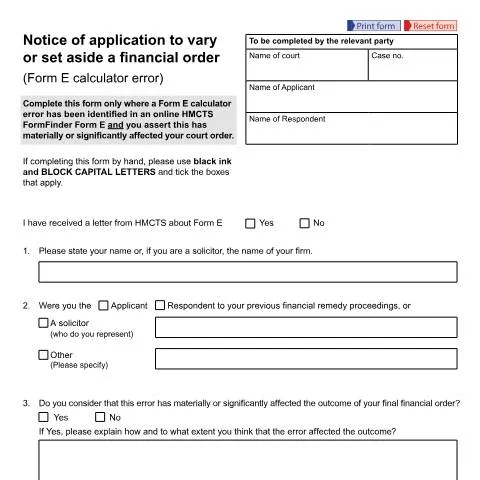
The Notice of Application to Vary or Set Aside a Financial Order (Form D650) is a critical document for individuals who believe that a mistake in the financial calculator used during their court proceedings has led to an unjust outcome. This notice is specifically designed for those who have identified a Form E calculator error within HM Courts & Tribunals Service (HMCTS) online processes. It offers a structured way to address the issue and seeks the court’s intervention to rectify any material impact the error may have had on a financial order.
Triggering Circumstances for Utilizing Form D650
Form D650 is not a general-purpose document; it must be employed under specific conditions. Here are the primary situations that necessitate its use:
- Identification of Errors: Upon reviewing your final financial order, you may discover discrepancies that can be attributed to mistakes in the Form E calculator.
- Material Impact: You must demonstrate that the error has materially or significantly affected your financial order's outcome.
- Previous Communication: You need to have received a letter from HMCTS acknowledging the error, which outlines your rights and the next steps.
It’s essential to ensure that these triggering circumstances exist before proceeding with Form D650, as they form the foundation of your application to the court.
Navigating Through Related Documentation
The process of addressing a financial order error requires a nuanced understanding of related court documents. Not only does Form D650 interact with the original Form E, but it also connects with other legal documents in your case. Here’s how:
- Form E: This is the primary document detailing financial information during divorce or separation proceedings. If a calculator error is noted here, it directly impacts the information presented in your financial order.
- Final Financial Order: You will need to refer back to this document to identify the judge's name and the specifics of your case. Your application hinges on demonstrating the connection between the error and the terms set forth in this order.
- Draft Order: If you are proposing a new order as part of this application, attaching a draft is crucial. It outlines the changes you seek and provides context for your request.
Understanding these related documents is essential for constructing a compelling case in your application.
Key Concepts to Grasp for Successful Applications
To effectively utilise Form D650, grasping key concepts is paramount. Here are several critical notions:
- Material Significance: What constitutes a material impact? This refers to how the error would alter the outcome of your financial order if corrected.
- Judicial Discretion: The judge may decide to consider your application based purely on the submitted documentation. Understanding this can help you gauge whether a hearing might be necessary.
- Statement of Truth: This is a legal declaration affirming that the facts you present are accurate. Misrepresentations can lead to serious consequences, including contempt of court.
These concepts are not merely legal jargon but essential elements that can determine the success of your application.
Potential Pitfalls When Submitting Form D650
While Form D650 serves a specific purpose, navigating its submission can be fraught with common pitfalls. Avoiding these errors can save time and resources:
- Inadequate Justification: Failing to clearly explain how the calculator error affected your financial order can undermine your application.
- Missing Information: Omitting vital details, such as the name of the judge or the final financial order, can cause delays or rejection of the application.
- Neglecting Timeliness: Be aware of any deadlines associated with your application. Submitting late could forfeit your opportunity to correct the order.
Awareness of these pitfalls is your first step toward a smoother application process.
Step-by-Step Guide for Using Form D650
Utilizing Form D650 effectively involves several deliberate steps. Here’s a structured approach to ensure you complete the application correctly:
- Gather Documentation: Collect all relevant documents, including your final financial order, previous correspondence from HMCTS, and any other supporting evidence.
- Complete the Form: Fill out Form D650 carefully, ensuring to use block capitals and black ink if submitting by hand. Take particular care with the sections requiring your justification for the application.
- Attach Supporting Evidence: Include a copy of the final financial order and any drafted orders you are proposing to the court.
- Submit the Application: Deliver the completed form and attachments to the appropriate court. Make sure to keep copies for your records.
- Monitor Your Application: After submission, stay proactive. If you do not hear back within a reasonable timeframe, follow up with the court.
By following these steps meticulously, you enhance your chances of a successful application.
Examining the Scope and Limitations of Form D650
Form D650 is integral in challenging financial orders based on calculator errors, but it’s essential to recognise its limitations:
- Specificity of Issues: This form is only applicable for errors related to the Form E calculator, not for general disputes about the content of financial orders.
- Judicial Limits: Judges may refuse to consider applications they determine are frivolous or lacking merit.
- Time Constraints: The application must be made within a reasonable period after identifying the error. There are no hard and fast rules, but delays can jeopardize your chances.
Understanding these limitations is vital in managing expectations regarding the outcome of your application.
Legal Assistance and Resources When Using Form D650
For individuals navigating the complexities of Form D650, leveraging available resources can be invaluable. Here are some options:
- Legal Advisors: Consulting with a solicitor who specializes in family law can provide tailored advice specific to your situation, ensuring you deploy the most effective strategies.
- Community Legal Advice: Access free legal advice through reputable services, which can guide you through the nuances of your application.
- Citizens Advice Bureau: This organization offers a breadth of resources and support, including information on court procedures and the application process.
Access to legal support can significantly enhance your understanding and execution of the Form D650 application.
Final Thoughts on Navigating Financial Order Challenges
The overall process surrounding a Notice of Application to Vary or Set Aside a Financial Order (Form D650) is intricate and requires diligence. By understanding the context in which this document operates, the related procedures, and the potential challenges, you empower yourself to advocate effectively for your case. Remember, each situation is unique, and while the guidelines provided here serve as a compass, personalised legal advice can provide the clarity needed to navigate this complex terrain.
Understanding the Financial Order: Key Elements to Consider
When dealing with a financial order in the UK, it is critical to recognize the components that form the foundation of such orders. A financial order can encompass a variety of financial arrangements, including property division, maintenance payments, and pensions. Understanding the intention behind each element is vital, as it aids in preparing a robust application for variation or setting aside a financial order.
Firstly, it is essential to be aware that financial orders are typically made in the context of divorce or civil partnership dissolution. The Family Court considers the financial needs, obligations, and resources of both parties, alongside the welfare of any children involved. Knowing how the court weighs these factors can significantly influence the outcome of your application. For instance, if you can demonstrate that circumstances have materially changed since the original order—such as a significant loss of income or unexpected financial burdens—you may have a stronger case for variation.
Fill in your form directly online
No printing: type your details into the boxes of the official form, tick, then download the PDF ready to send.
- 1Type into the form boxes
- 2Tick in one click
- 3Save and download the PDF
Additionally, it's beneficial to be well-versed in the specifics of how certain financial orders are calculated. For example, if maintenance calculations are based on the gross income of the payer, it may be relevant to present evidence of any shifts in income or employment status that could justify a change. The Form E, which discloses financial information, plays a pivotal role in this context. Miscalculations or errors in this form can lead to unfair financial obligations, directly affecting the credibility of the financial order. Being prepared with precise financial documentation can bolster your position in court.
Steps to Correct Errors in Form E Calculations
Form E is crucial for the disclosure of financial information in family law proceedings. However, errors in the calculations can lead to significant repercussions. If you suspect that there has been a mistake in the Form E calculations, it’s important to act promptly. Here is a step-by-step guide to addressing these errors:
- Review the Form E: Begin by thoroughly reviewing your submitted Form E. Look for any discrepancies in income, assets, and liabilities that could have led to the incorrect calculation. Pay special attention to entries affecting the financial order, such as maintenance or property values.
- Gather Supporting Evidence: Collect all pertinent documents that can substantiate your claims. This might include payslips, tax returns, bank statements, or evidence of any changes in circumstances. Documentation is crucial in proving that an error has occurred.
- Notify the Other Party: Following your review, inform the other party about the error. Open communication can often lead to a resolution without the need for court involvement. It is advisable to document this communication for your records.
- Complete Form D650: If the issue cannot be resolved amicably, you may proceed to complete Form D650. Note that this form must be accompanied by a detailed explanation of the nature of the error and the reasons for your application to vary or set aside the order.
- Submit Your Application: Submit Form D650 to the relevant court along with any supporting documentation. Ensure that you adhere to any court-specific requirements regarding submission timelines and formats.
- Attend the Hearing: Be prepared to present your case at a hearing. This might involve providing oral evidence and answering questions from the judge or the opposing party.
Understanding these steps can help navigate the complexities of rectifying errors associated with Form E calculations. Remember, the objective is to ensure that the financial order accurately reflects the financial realities of both parties, thereby achieving a fair outcome.
Exploring the Implications of Financial Variations on Children’s Welfare
The welfare of children is paramount in family law decisions, and any application to vary or set aside a financial order must consider their wellbeing. The court’s overarching principle is to ensure that children are not financially disadvantaged by parental separation. This is particularly relevant when addressing issues of maintenance and property division.
When submitting an application, it is advantageous to highlight how financial variations might affect the children involved. For instance, if the variation leads to a reduced maintenance payment, it could impact the child's standard of living. Therefore, you should present a comprehensive argument that demonstrates not only your current financial difficulties but also the potential long-term consequences for the children’s welfare.
Additionally, consider involving child welfare professionals if applicable. Their reports can provide insightful assessments of how financial changes may affect the children's upbringing, educational opportunities, and overall stability. Courts take these considerations seriously, and having expert testimonials can strengthen your case.
When drafting your application, it may be beneficial to include specific examples of how the financial arrangement directly impacts the children. For instance, changes in housing stability or access to extracurricular activities can be grounds for the court to reassess the financial order with children’s welfare in focus.
Ultimately, ensuring that the children's needs are central to your argument can influence the outcome positively. The court's paramount concern is to serve the children's best interests, and framing your application within this context can bolster your position.