Navigating the Notice of Application: A Comprehensive Guide to Form D651
In the intricate world of family law in the UK, the Notice of Application to Vary or Set Aside a Financial Remedy (Form D651) emerges as a vital document. This guide is designed to demystify the contents and practicalities of this notice, particularly focusing on instances where a calculator error related to Form E1 has had a significant impact on the order. By understanding the nuances of this document, applicants can effectively navigate the legal landscape and advocate for their rightful adjustments.
Understanding the Context: When and Why to Utilize Form D651
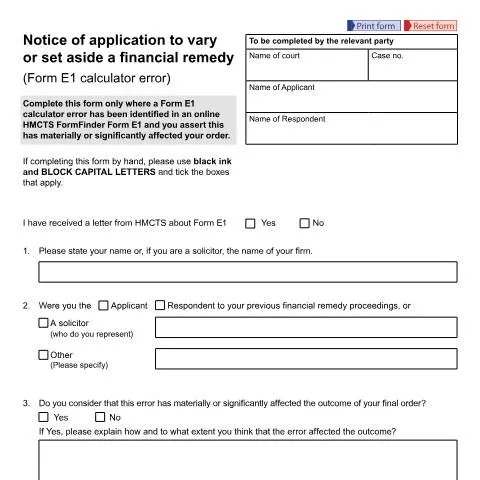
Form D651 is relevant when a party identifies an error in the calculations performed by the online HMCTS FormFinder Form E1. Such errors can influence the outcome of financial remedies awarded during divorce settlements, child support, or asset division. If you believe that a calculator error materially affected your final order, this document serves as your formal request to the court to review and potentially amend the terms of the financial remedy.
Common scenarios that necessitate the use of Form D651 include:
- Discrepancies in Asset Valuation: If the Form E1 calculator produced incorrect valuations of shared assets, leading to an unfair distribution.
- Income Miscalculations: Errors in reported income can disproportionately affect spousal or child support calculations.
- Changes in Circumstances: If a party's financial situation has changed significantly, leading to a need for reassessment of previously agreed terms.
Step-by-Step Guide: Completing the Notice of Application
The completion of Form D651 requires careful attention to detail. Below is a structured approach to assist you in filling out the notice effectively:
1. Identifying the Relevant Court
Begin by entering the name of the court where your original financial order was made. This detail is crucial for the proper routing of your application.
2. Case Number Documentation
Next, include the case number associated with your previous proceedings. This can be found on your original court documentation and ensures your application is linked to the correct file.
3. Stating Your Position
Clearly indicate whether you were the applicant or the respondent in the initial proceedings. This helps to establish your standing in relation to the case.
4. Articulating the Error's Impact
In the section provided, explain how the identified calculator error materially affected the outcome of your financial remedy. Detail is key. Consider the following:
- What specific calculations were incorrect?
- How did these errors alter the final financial order?
5. Requesting Court Intervention
Detail what you are asking the court to do in response to the error. This can include varying the existing order or setting it aside entirely. If you have a proposed alternative order, attach a draft for the court's consideration.
Understanding Court Procedures: What Happens Next?
Once your application is submitted, the court will review the information provided. Depending on the nature of your request, the judge may decide on the application based solely on the written documentation or may require a hearing.
Assessing the Need for a Hearing
It is essential to understand that:
- If you believe a hearing is necessary due to the complexity or contentious nature of the case, you can specify your reasons in the application.
- Many applications are resolved without a hearing, but you have the right to ask for one if you deem it necessary.
Timeframes and Expectations
Following your submission, the court typically communicates the next steps, including any scheduled hearings. It's important to stay proactive and responsive to any court correspondence.
Key Considerations: The Scope and Limitations of Form D651
Form D651 is not a catch-all solution; it has specific limitations and is only applicable under certain conditions. Here are key points to keep in mind:
1. Definition of a Calculator Error
Make sure that what you’re claiming falls squarely within the definition of a calculator error as per HMCTS guidelines. This typically refers to miscalculations that are typographical or clerical in nature.
2. Impact Justification
The burden of proof lies with the applicant. You must convincingly demonstrate that the calculator error materially influenced the final order. This might require gathering evidence and possibly expert testimonies.
3. Judicial Discretion
Judges have the discretion to decide whether to make a ruling based solely on your written application or to require a hearing. Being prepared for both scenarios is important.
Common Misinterpretations and Their Implications
Mistakes in understanding the purpose and impact of Form D651 can lead to unnecessary delays or rejections of applications. A few common misinterpretations include:
1. Misunderstanding the Type of Errors
Not all discrepancies qualify for correction under Form D651. Applicants must differentiate between mere disagreements over financial settlements and genuine calculator errors that warrant judicial review.
2. Assuming Automatic Approval
There is a misconception that submitting Form D651 will automatically grant a revision of the financial order. Each case is considered on its individual merits.
3. Lack of Comprehensive Documentation
Insufficient documentation or failure to provide a clear narrative regarding the error's impact can hinder your application. Being thorough in your submissions is crucial.
Concrete Steps: Preparing for a Potential Hearing
If your application leads to a hearing, it's prudent to be well-prepared. Here are steps to take:
1. Gather All Relevant Documentation
Collect all pertinent documents that support your claim, including previous court orders, correspondence related to the calculator error, and any financial statements. Ensure you have both original and copies ready for submission.
2. Prepare Your Argument
Articulate your argument clearly. Outline how the calculator error has led to an unjust financial remedy, and be ready to explain your requested changes in detail.
3. Seek Legal Advice
Although court staff cannot advise on legal matters, consulting with a solicitor can provide valuable insights into presenting your case effectively. They can help clarify the legal framework and positioning.
Practical Tips for Engaging with HMCTS
Interacting with the HM Courts & Tribunals Service (HMCTS) can be daunting, particularly for those unfamiliar with legal processes. Here are some practical tips:
1. Keep Communication Clear and Professional
When corresponding with HMCTS, ensure that your communication is clear, formal, and relevant. Avoid jargon unless you're certain of its appropriateness.
2. Track All Correspondence
Maintain records of all communications, both sent and received. This includes dates, names of individuals spoken to, and details of discussions. This documentation can be invaluable in case of discrepancies.
3. Be Proactive
If you haven't received a response within the expected timeframe, follow up. Being proactive can help avoid unnecessary delays in your application process.
Conclusion: Empowering Your Legal Journey with Form D651
Understanding and properly utilizing the Notice of Application to Vary or Set Aside a Financial Remedy (Form D651) can significantly impact your financial remedy outcomes following a calculator error. By adhering to the structured approach outlined in this guide, you can navigate the complexities of the court system more effectively, ensuring that your rights and interests are adequately represented. Always remember to consult legal professionals when needed and to approach the court with clarity and preparation.
Understanding the Financial Remedy Process
The financial remedy process in the UK is a critical aspect of family law, particularly when couples are separating or divorcing. Financial remedies refer to the various orders that can be made by the court to determine how assets and finances are to be divided upon the dissolution of a marriage or civil partnership. Understanding this process is essential for those involved, as it directly impacts financial stability post-separation.
When parties cannot reach an agreement on financial matters, they may apply to the court for a financial remedy by completing Form D651, which is the official notice of application to vary or set aside a financial remedy. This form is particularly relevant when there has been an error in the financial calculations presented during proceedings, such as a mistake in inputting data into the Form E1 calculator.
It's important to note that any application made using this form must be supported by sufficient evidence, including documentation that illustrates the nature of the calculator error and its implications on the financial remedy award. This evidence may include financial statements, tax returns, and any relevant correspondence. The applicant must also demonstrate why it would be in the interests of justice to vary or set aside the existing order.
Before submitting Form D651, it is advisable to seek legal advice to ensure that all procedural requirements are met, and to enhance the chances of a successful outcome. Additionally, parties should be aware that if the application is made after the financial remedy has been finalized and implemented, they may need to demonstrate that the error was substantial enough to warrant a reconsideration of the order.
Fill in your form directly online
No printing: type your details into the boxes of the official form, tick, then download the PDF ready to send.
- 1Type into the form boxes
- 2Tick in one click
- 3Save and download the PDF
Key Considerations for Completing Form D651
Completing Form D651 requires meticulous attention to detail, as inaccuracies or omissions can lead to delays or even rejection of the application. Here are several key considerations to keep in mind while filling out this important document:
Personal Information: Ensure that all personal details, including your full name, address, and contact information, are accurately recorded. This includes your National Insurance number, as this helps the court identify you in relation to other financial matters.
Details of the Original Order: Clearly reference the original financial remedy order you are seeking to vary or set aside. This includes specifying the court where the order was made, the case number, and the date of the order. Providing this context is crucial for the court to understand the basis of your application.
Nature of the Error: Explicitly describe the error that has occurred with the Form E1 calculator. Whether it was a miscalculation of income, assets, or liabilities, detail how this error affects the fairness of the financial remedy. Include any calculations that illustrate the discrepancy.
Supporting Documents: Attach any supporting documents that substantiate your claims. This may include bank statements, property valuations, or expert reports that clarify the financial situation. The more comprehensive your evidence, the stronger your application will be.
Consult Legal Guidelines: Familiarize yourself with the relevant family law guidelines and pre-action protocols before submitting the form. Understanding the framework will help ensure that your application aligns with current legal standards and procedures.
It's also prudent to check whether you qualify for any exemptions regarding court fees, especially if your financial circumstances have changed since the original ruling. In some cases, a fee exemption can be applied for, which may alleviate the financial burden of submitting an application.
Common Mistakes and How to Avoid Them
Navigating the legal landscape regarding financial remedies can be challenging, and many applicants make common mistakes when completing Form D651. Being aware of these pitfalls can help ensure a smoother application process. Here are some of the most frequent errors and tips on how to avoid them:
Incomplete Information: One of the most common issues is failing to provide complete information. Review your form multiple times to ensure all sections are filled out thoroughly. Incomplete forms can lead to delays or rejection, so it's worthwhile to double-check your work.
Not Including Necessary Evidence: Another mistake is not attaching the required supporting documentation. This can significantly weaken your application. Make a checklist of all necessary documents before submission to ensure nothing is overlooked.
Misunderstanding Court Terminology: Legal terminology can be confusing, and misusing terms can lead to misunderstandings. Take the time to research and familiarize yourself with terms related to financial remedies and the specifics of Form D651. This will help you articulate your case clearly and effectively.
Ignoring Deadlines: Applicants must adhere to any deadlines set by the court. Late applications can be disregarded, resulting in financial remedies remaining unchanged. Keep a calendar with important dates noted to avoid any lapses.
Failing to Seek Professional Advice: Many applicants underestimate the value of legal advice. While it’s possible to navigate the process independently, seeking guidance from a solicitor or family law expert can provide invaluable insights and improve the quality of your application.
Neglecting to Follow Up: After submitting your application, failing to follow up can result in a lack of updates on your case status. Make a note to check in with the court or your legal advisor to stay informed throughout the process.
By being proactive and prepared, applicants can significantly enhance their chances of successfully varying or setting aside a financial remedy using Form D651. Always remember to stay organized, informed, and engaged throughout the legal process.