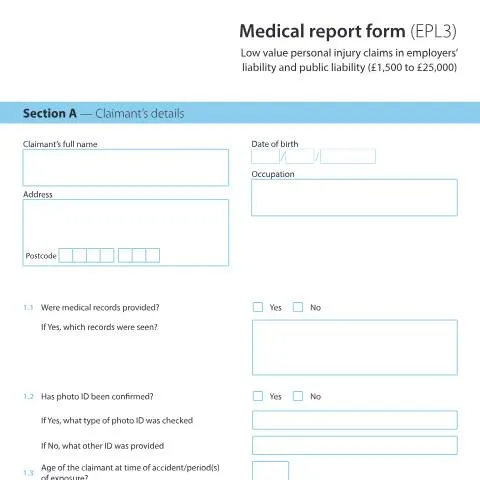
Navigating the EPL3 Form: A Crucial Step in Low Value Personal Injury Claims
The EPL3 Medical Report Form is pivotal for claimants pursuing low value personal injury claims within the realm of employers' liability and public liability. Ranging from £1,000 to £25,000, these claims often arise from workplace accidents or public incidents where personal injury has occurred. Understanding the intricacies of this form is essential for ensuring a claim is well-supported and properly processed.
Understanding the Components of Form EPL3
A breakdown of the EPL3 form reveals multiple sections, each designed to gather specific information pertinent to the claimant's circumstances and their injuries. This section will explore the key parts of the form and highlight critical areas where meticulous attention is essential.
Section A: Claimant’s Details
- Full name and Address: It’s imperative that claimants provide their full legal name and a complete address, as discrepancies can lead to processing delays.
- Date of Birth: This field helps establish the claimant’s age, which can be relevant for evaluating the impacts of the injury.
- Occupation: Detail is crucial here; claimants should specify their role, as this can influence both the severity of the claim and the potential impacts on their work life.
- Medical Records: The form prompts whether medical records were provided, which can substantiate the claim's validity.
Section B: History of the Incident
Claimants must recount the circumstances of the accident or exposure in detail. This includes:
- A brief description of the incident.
- Immediate symptoms experienced post-incident.
- A history of treatment received, specifying in-patient or out-patient care.
- Details of ongoing symptoms or any previous issues related to the same area of injury.
Inaccuracies here can lead to challenges in establishing causation, making it critical to be comprehensive and precise.
Section C: Employment and Educational Impact
Understanding the impact on the claimant's employment or educational status is vital. Information required includes:
- Details of the claimant's role at the time of the accident.
- Any periods of absence due to the injury.
- Light duties performed, if applicable.
Further, the form asks how the injury has affected the claimant’s daily life, encompassing hobbies and social activities. Thorough documentation here can significantly affect the evaluation of the claim.
The Distinction Between EPL3 and Similar Forms
Claimants often confuse the EPL3 form with other medical report forms used in different contexts. The EPL3 is specifically tailored for low value personal injury claims within the framework of employer and public liability. Other forms may cater to distinct types of claims, such as those involving significant injury or different liability contexts.
It is vital for applicants to ensure they are using the correct form appropriate for their situation. Misfiling could lead to unnecessary delays or outright rejections.
The Legal Framework Surrounding EPL3
The EPL3 form operates within a specific legal context defined by the Civil Procedure Rules (CPR), particularly Rule 35, which deals with expert evidence. The duty of the expert completing the report is to assist the court, with their opinions being based solely on their expertise rather than external influences. This adherence ensures that the information presented is reliable and objective.
Furthermore, compliance with the Data Protection Act 2018 and UK GDPR is crucial. Claimants and their representatives should ensure personal data is handled appropriately throughout the process, reflecting the importance of privacy and data accuracy.
Filing Deadlines and Subsequent Steps
Understanding the timeline of the claim is essential for proper filing. Once the EPL3 form has been completed, it must be submitted alongside any relevant documentation within the deadlines set by the court. Typically, the claim process begins when the claimant submits the EPL3 along with the claim form. Here’s a general timeline:
| Step | Timeline |
|---|---|
| Submission of EPL3 and claim form | Within 3 months of the accident |
| Response from the defendant | Usually within 28 days |
| Further documentation requests | As necessary, no set timeline |
| Hearing Date | Depends on court scheduling |
Following Up on Your Claim
Once submitted, claimants may wonder how to track their application. Here are some practical suggestions:
- Keep a copy of the submitted EPL3 and all associated documents.
- Regularly check in with the HM Courts & Tribunals Service for updates.
- Be proactive in responding to any requests for additional information.
Staying engaged and informed is crucial to avoiding pitfalls during the claims process.
The Role of Medical Professionals in the Completion of EPL3
Medical experts play a vital role in the completion of the EPL3 form. Their insights into the claimant’s health condition and prognosis can significantly affect the outcome of the claim. When filling out the form, medical professionals must ensure:
- Their statements reflect a clear and concise assessment of the claimant’s condition.
- All relevant medical records are reviewed and considered.
- They maintain objectivity in their opinions, avoiding any bias.
Failure to adhere to these principles can lead to challenges in the credibility of the claims made.
Integrating EPL3 into a Broader Claims Process
The EPL3 form does not exist in isolation; it is part of a broader claims process that includes gathering evidence, submitting various legal documents, and possibly attending hearings. Understanding where the EPL3 fits into this overall picture is critical for claimants. Here’s a general overview of the steps involved:
- Gather evidence, including medical records and witness statements.
- Complete the EPL3 form with detailed history and medical evaluations.
- Submit the EPL3 alongside the claim form to the court.
- Await the defendant's response and prepare for possible negotiations.
- Engage in hearings if no settlement is reached.
Each step builds on the previous one, with the EPL3 serving as a cornerstone in establishing the validity and scope of the claim.
Final Thoughts on Mastering the EPL3 Process
Successfully navigating the EPL3 form and surrounding processes requires diligence and precision. Claimants are encouraged to take their time in completing the form, ensuring all details are accurate and thoroughly documented. By understanding the role of this form within the context of personal injury claims, individuals can significantly enhance their chances of achieving a favorable outcome. The importance of engaging with qualified legal and medical professionals cannot be overstated, as their expertise will underpin the claims process and provide vital support throughout.
Understanding the EPL3 Form: Purpose and Importance
The EPL3 form plays a crucial role in the processing of low-value personal injury claims, specifically within the framework of employers' liability and public liability claims ranging from £1,000 to £25,000. Its primary purpose is to collect and provide a detailed medical report that substantiates the injury sustained by the claimant. This form is instrumental for both the claimant and the defendant, as it serves as an official record that captures the nature and extent of injuries alleged in a claim.
When completing the EPL3 form, accuracy is paramount. The information provided must be detailed and precise, covering aspects such as the type of injury, the treatment administered, and the prognosis for recovery. This detailed account not only aids in establishing the validity of the claim but also influences the compensation amounts that may be awarded in the event of a settlement or court ruling.
Fill in your form directly online
No printing: type your details into the boxes of the official form, tick, then download the PDF ready to send.
- 1Type into the form boxes
- 2Tick in one click
- 3Save and download the PDF
Additionally, it is essential to understand that the medical report included in the EPL3 must be prepared by a qualified medical professional. The individual filling out the form should ensure that the medical practitioner is familiar with the specifics of the case, which enhances the credibility of the report. This rapport can be beneficial for both parties and may facilitate a quicker resolution to the claim.
Completing the EPL3 Form: Step-by-Step Guidance
Filling out the EPL3 form requires careful attention to detail to ensure all necessary information is conveyed succinctly. Here is a step-by-step guide to assist claimants and their representatives in successfully completing this important document:
- Gather Required Information: Before starting the form, gather all relevant information, including personal details, details of the incident, and medical records. This preparatory step ensures that you do not overlook any critical information.
- Section One – Claimant’s Details: Begin by entering your full name, address, and a valid National Insurance number. This information uniquely identifies you and is essential for processing your claim.
- Section Two – Details of the Incident: Provide a comprehensive account of how the injury occurred. Include the date, time, location, and any witnesses if applicable. Be as specific as possible to give a clear context to the medical professional reviewing your claim.
- Section Three – Medical History: This section must include your medical history relevant to the injury, including any previous similar injuries, pre-existing conditions, and treatments received. This history is critical for the evaluating practitioner to assess the validity of the claim.
- Section Four – Description of Injury: Describe the nature of the injury in detail. Explain symptoms and how they affect your daily life. This information needs to be clear and concise to assist the medical professional in making their report.
- Section Five – Treatment Received: Document all medical treatments received since the injury, including names of healthcare providers, dates of treatment, and type of treatment (e.g., physiotherapy, surgery). This section aids in establishing the extent of the injury and the care required.
- Section Six – Prognosis: The medical professional will provide a prospective outlook on recovery, which is vital for determining long-term impacts of the injury. This section will be filled out after the medical assessment.
- Review and Submit: Once the form is completed, review it thoroughly for any missing or incorrect information. Errors can delay processing, so clarity is essential before submission.
After the EPL3 is completed and submitted, keep a copy for your records. This document is critical for tracking the progress of your claim and may be referenced during further communications with related parties, including legal representatives and insurance entities.
Common Challenges and How to Overcome Them
While filing the EPL3 form can seem straightforward, several challenges may arise during the process. Understanding these potential pitfalls can help claimants navigate the complexities of personal injury claims more effectively.
Insufficient Medical Evidence: One of the most common challenges is providing insufficient medical evidence. If the medical report does not accurately reflect the injuries or does not contain detailed descriptions, it can lead to claim disputes and delays. To mitigate this, ensure you choose a knowledgeable medical professional and communicate clearly about your symptoms and how they affect your daily life.
Disputes Over Liability: In employers' and public liability claims, disputes often arise concerning who is responsible for the injury. If the defendant contests liability, gather comprehensive evidence such as witness statements, photographs of the incident scene, and any relevant documentation that supports your claim. Seek legal advice if necessary to bolster your position.
Delays in Processing: Delays can occur at any stage of the claims process, often due to incomplete forms or slow responses from medical professionals. To minimize delays, submit the EPL3 form promptly and maintain contact with the medical professional to ensure the timely completion of the medical report. Following up regularly can help expedite the process.
Understanding Compensation: Many claimants are uncertain about how compensation is calculated within the provided range of £1,000 to £25,000. Factors such as the severity of the injury, the impact on quality of life, and associated medical costs play a role in determining settlement amounts. Familiarizing yourself with these factors can aid in setting realistic expectations for recovery.
In conclusion, while the process of completing the EPL3 form and navigating low-value personal injury claims can present challenges, being informed and prepared can significantly enhance your chances of a successful claim outcome. Leveraging available resources and seeking guidance when necessary can make this journey smoother and less stressful.