Navigating the Court Proceedings Pack: EPL6 and EPL7 Explained
When faced with a low-value personal injury claim within the scope of employers' liability and public liability, understanding the nuances of the Court Proceedings Pack (Part A) (EPL6) and Part B (EPL7) is essential. This form serves as a critical link in the judicial process, specifically tailored for claims ranging from £1,000 to £25,000. Whether you are a claimant or a representative, grasping the significance and intricacies of these documents is paramount.
Understanding the Role of EPL6 and EPL7
The EPL6 form primarily focuses on initiating the claims process, gathering vital information regarding the accident and associated losses. Conversely, EPL7 comes into play during the latter stages, primarily addressing the settlement offers made by both parties. Together, they encapsulate the journey of a low-value personal injury claim.
The Journey Begins: Completing Part A (EPL6)
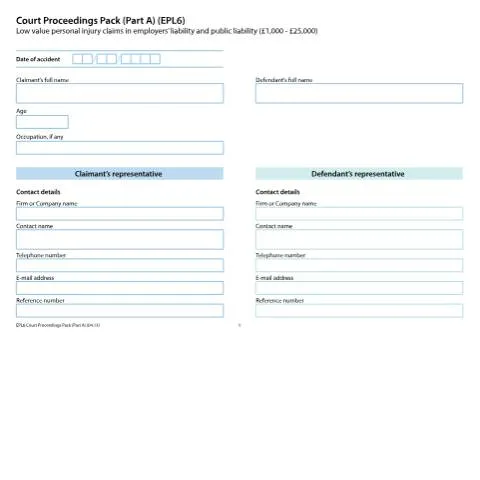
When filling out the EPL6 form, clarity and precision are your best allies. This form necessitates comprehensive details about both the claimant and the defendant. One cannot overlook the importance of including accurate information, as it facilitates smoother processing by the HM Courts & Tribunals Service.
- Claimant’s Information: Full name, age, and occupation.
- Defendant’s Details: Full name and any legal representatives.
- Date of Accident: Clearly state the exact date.
Calculating and Presenting Losses
Within the EPL6, there is a distinct section dedicated to detailing various types of losses incurred due to the incident. Here, meticulousness is crucial. Claimants should catalogue each loss with corresponding evidence, ensuring to include:
- General Damages: Such as pain and suffering (PSLA).
- Special Damages: Loss of earnings, care services, medical expenses, etc.
- Future Losses: Any anticipated ongoing losses that stem from the incident.
Accurate documentation not only supports your claims but also demonstrates your preparedness to the court.
From EPL6 to EPL7: Transitioning Through the Process
Once Part A is filed, the next step often involves negotiations regarding the settlement. This is where the EPL7 form becomes pertinent. It allows for the official recording of any settlement offer made by the defendant or the claimant.
Utilising Part B (EPL7) Effectively
When preparing to file the EPL7, avoid confusion with EPL6. This form is primarily concerned with final offers and settlements rather than the initial claim details. Ensure that:
- The offer in EPL7 is distinct from the cumulative claims detailed in EPL6.
- Both parties' offers are clearly and accurately articulated.
- You adhere to the cost structure set out for the stages involved.
The Importance of Evidence in Support of Claims
Documentation serves as the backbone of any claim. For both EPL6 and EPL7, it is imperative to attach all relevant evidence substantiating the loss claims. This includes medical reports, witness statements, and any other documents showcasing the impact of the injury.
Classifying Evidence: A Checklist for Claimants
Here’s a helpful checklist for gathering appropriate evidence:
| Type of Evidence | Details Required | Relevance |
|---|---|---|
| Medical Reports | Clear medical diagnosis and treatment details. | Supports personal injury claims. |
| Witness Statements | Accounts from individuals present at the incident. | Corroborates your version of events. |
| Receipts | Proof of expenses related to care or treatment. | Validates special damages claimed. |
Common Pitfalls: What to Watch For
Claimants often encounter specific pitfalls that can impede their claims. Understanding these can save significant time and stress:
Omissions and Errors
- Incomplete Sections: Ensure all areas of the forms are filled out comprehensively.
- Incorrect Information: Double-check names, dates, and amounts.
Time Constraints
The deadlines for submission of both EPL6 and EPL7 are rigid. Failure to meet these deadlines can lead to claim rejection. Be mindful of:
- Submitting EPL6 by the designated court deadline.
- Timely filing of EPL7 during negotiation phases.
Deposit Channels: How to Submit Your Forms
Understanding how to submit your forms is crucial in ensuring they reach the court without delay. There are generally three channels available:
Online Submission
In many cases, online submission is the preferred method as it allows for immediate processing. However, confirm that electronic submissions are accepted for your specific case, as some jurisdictions may still require paper forms.
Postal Submission
When mailing your forms, use recorded delivery to ensure they are acknowledged upon receipt. The address will typically be provided by the HM Courts & Tribunals Service in your court documentation.
In-Person Submission
For those who prefer a face-to-face interaction, filing the forms at the court in person allows you to receive confirmation of submission directly. Be aware of court opening hours and any necessary COVID-19 protocol.
After the Submission: What to Expect
The aftermath of your filing can vary based on the complexity of your case and the responsiveness of the defendant. Typically, the court will process the EPL6 form and notify you of any upcoming court dates or necessary actions.
Tracking Your Claim
Utilise the online tracking tools available on the HM Courts & Tribunals Service website, which can provide updates on your case status. If you need further information, contacting the court directly can be beneficial, but ensure you reference your claim number for efficient assistance.
Responding to Issues: What Happens If Problems Arise
Throughout the process, claimants may face various challenges, such as refusals, errors on forms, or missing documentation. Being prepared for these eventualities is crucial.
Handling Refusals or Disputes
In the event of a claim refusal, it's essential to:
- Review the reasons cited for the refusal carefully.
- Prepare a response addressing the stated concerns.
- Consider seeking legal advice if disputes arise.
Correcting Errors
Should you discover an error after submission, contact the court immediately. Depending on the nature of the error, they may provide guidance on how to rectify it.
Being Proactive: Ensuring a Smooth Process
Engaging with the Court Proceedings Pack (EPL6 and EPL7) effectively requires not only a comprehensive understanding of the forms but also a proactive approach. Regularly check your claim status, maintain open communication with the court, and keep abreast of any deadlines that may impact your case.
Fill in your form directly online
No printing: type your details into the boxes of the official form, tick, then download the PDF ready to send.
- 1Type into the form boxes
- 2Tick in one click
- 3Save and download the PDF
By familiarising yourself with every aspect of the EPL6 and EPL7 forms, claimants can navigate the judicial system with greater confidence, ensuring that their claims are processed swiftly and accurately.
Understanding the Purpose and Structure of EPL6 and EPL7 Forms
The EPL6 and EPL7 forms are specifically designed for individuals seeking to pursue low value personal injury claims within the realms of employers' liability and public liability. These forms are particularly crucial for claims where the compensation sought falls between £1,000 and £25,000. The structure of these forms is intended to facilitate a smooth transition through the court proceedings, ensuring that claimants can present their cases in a clear and concise manner.
The EPL6 form, also known as the Court Proceedings Pack (Part A), serves as the initial submission to the court. It is used to outline the particulars of the claim, including the nature of the injury, the circumstances surrounding the incident, and the evidence supporting the claim. This form is pivotal as it sets the tone for the subsequent proceedings and provides the court with essential information to assess the validity of the claim.
On the other hand, the EPL7 form, or Court Proceedings Pack (Part B), complements the EPL6 by focusing on the financial aspects of the claim. It includes details regarding the claimant's financial losses, medical expenses, and any other costs incurred as a result of the injury. Both forms must be completed thoroughly, as inaccuracies or omissions can delay the proceedings or, in the worst-case scenario, lead to a dismissal of the claim.
Common Mistakes to Avoid When Completing EPL6 and EPL7 Forms
Filing claims can be a daunting process, and common pitfalls can hinder a claimant's chances of success. One of the most frequent mistakes is the incomplete or unclear presentation of evidence. It is crucial to provide detailed information that clearly establishes how the injury occurred and how it has impacted the claimant’s life. Documents such as medical reports, witness statements, and photographs may be necessary to substantiate the claim. Claimants should ensure that all relevant evidence is included and well-organised.
Another common issue is failing to adhere to the specified deadlines. Both the EPL6 and EPL7 forms must be submitted within certain timeframes set by the court. For instance, once a claim has been initiated, the claimant typically has a limited period to submit further documentation, including the EPL7 form. Marking important dates on a calendar can help to mitigate the risk of missing these deadlines.
Furthermore, claimants should avoid submitting the forms without proper review. Even minor errors in personal information, such as the National Insurance number or address, can lead to complications. It is advisable to have someone knowledgeable in legal matters review the forms prior to submission to catch any potential discrepancies.
Tips for Gathering Evidence to Support Your Claim
Collecting comprehensive evidence is a crucial step when preparing to submit the EPL6 and EPL7 forms. This evidence not only supports the claims of injury but also substantiates any financial losses claimed in the EPL7 form. Here are some practical tips for gathering the necessary documentation:
- Medical Records: Obtain copies of medical reports from treating physicians and hospitals. These should detail the injury and any treatment received, along with future prognosis.
- Witness Statements: If there were witnesses to the incident, their statements can significantly strengthen a claim. Collect contact details and written accounts of what they observed.
- Photographic Evidence: Taking photographs of the injury or the scene of the accident can provide visual proof of your claims. Ensure that these images are dated and stored securely.
- Receipts for Expenses: Keep all receipts related to medical expenses, travel costs, and any other financial outlays related to the injury. This documentation will be vital when completing the EPL7 form.
- Expert Opinions: In some cases, obtaining expert testimony related to the injury or the circumstances of the incident can be beneficial. Consult with professionals who may provide insight into the impact of the injury.
By carefully gathering and organising evidence, claimants can bolster their cases and increase the likelihood of a successful outcome in their personal injury claims. Understanding the importance of thorough documentation can make a significant difference in navigating the complexities of the court system.