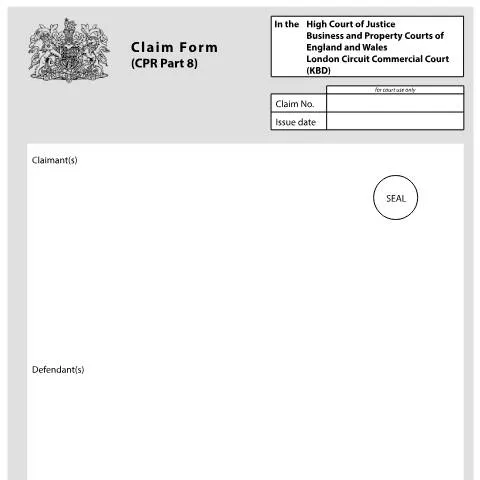
Navigating the Idiosyncrasies of Form N208(LCC)
When engaging with the London Commercial Court under Part 8 of the Civil Procedure Rules, clarity in the procedural landscape is essential. The Form N208(LCC) serves a specific function that distinguishes it from other forms within the realm of court claims. The primary intention of this form is to enable a claimant to seek a judicial determination on a matter without the need for a full trial, thus promoting efficiency in the judicial process.
Unlike its counterparts, such as the standard Form N1 (the general claim form for money claims), N208 focuses on claims that can be resolved on the basis of written evidence alone. This unique positioning makes it suitable for cases where the facts are not in dispute but require a court's interpretation or application of the law.
Key Features that Set N208(LCC) Apart
The N208(LCC) form is tailored for specific claims within the London Commercial Court, and understanding its nuances is vital for effective use:
- Targeted Usage: Geared towards commercial disputes, particularly those involving contracts, partnerships, and other business-related matters.
- Written Evidence Basis: It is designed for claims that can be substantiated through documentary evidence, minimising the need for oral testimony, thus expediting the process.
- Flexibility in Claim Types: Accommodates various types of claims from declarations to orders for specific performance.
This specificity is crucial as it ensures the claimant and defendant are engaging with a form designed explicitly for their circumstances, thereby streamlining the adjudication process.
Timeline: From Initial Claim to Final Judgment
The timeline associated with a claim submitted via Form N208(LCC) is a critical aspect to comprehend, as it determines the pace at which matters can progress through the court system:
- Submission of Claim: Once completed, the form must be submitted, ideally within any stipulated limitation periods. For most commercial claims, this is typically up to six years, but specific cases may vary.
- Payment of Court Fees: Upon submission, the relevant court fees must be paid. These fees can fluctuate based on the nature of the claim and whether any special requests are made.
- Issuance of Claim Number: Following submission, the court will allocate a claim number, which must be referenced in all future correspondence.
- Service of Claim: The defendant must be served with the claim form and accompanying documents, which generally occurs within four months of issuing the claim.
- Response Period: The defendant typically has 14 days to respond, although this can be extended if agreed upon or under specific circumstances.
- Court Directions: A hearing may be arranged where the judge will issue directions regarding the further conduct of the case, including deadlines for submissions and further evidence.
- Final Judgment: The court will issue a judgment based on the evidence presented, concluding the matter.
This timeline is not set in stone, and various factors may influence the duration of proceedings. Delays can be caused by the need for further evidence, pre-trial applications, or the complexities of the case.
Submission Channels: The How-To of N208(LCC)
Understanding the submission channels for Form N208(LCC) is integral to ensuring that your claim is processed accurately and efficiently. There are various avenues through which this form can be submitted:
- Online Submission: Utilising online court services can expedite the filing process. However, ensure that you have all necessary documentation in electronic format.
- Paper Submission: Forms can be filled out manually and sent to the relevant court office. This method requires careful attention to detail to avoid delays due to clerical errors.
- In-Person Filing: For those preferring face-to-face interaction, filing at the court office can offer immediate clarification on any queries regarding the procedure.
It is crucial to keep a copy of all submitted documents, along with proof of submission, whether online or by post, as this could be necessary for any future proceedings or inquiries.
Completing the N208(LCC): A Step-by-Step Guide
Each section of the N208(LCC) form must be completed meticulously to ensure that the court understands your claim and its basis clearly. Here’s a detailed breakdown:
Claimant and Defendant Information
Begin by accurately providing the names and addresses of both the claimant and the defendant. This information is critical as it identifies the parties involved in the proceedings.
Details of the Claim
This section should comprehensively outline the nature of the claim. Clarity is key; be specific about the issues in dispute and provide any relevant legal basis or reference points.
Statement of Truth
A statement of truth must be included, verifying that the information provided is accurate to your knowledge. Misrepresentation can lead to serious legal consequences, including contempt of court proceedings.
Attachments
If you have supporting documents, such as contracts, correspondence, or previous judgments, these should be referenced and attached as they substantiate your claim.
Legal Representation
If you are represented by legal counsel, ensure their details and address for correspondence are clearly documented. This is essential for proper communication regarding the proceedings.
Addressing Refusal, Errors, and Missing Documents
Should your claim encounter any hurdles—be it a refusal, errors on the form, or missing documents—there are steps to rectify these issues:
Handling a Refusal
If the court refuses to accept your claim, it is imperative to review the reasons for refusal meticulously. You have the right to amend your claim, addressing any deficiencies highlighted by the court.
Correcting Errors
In the event that an error is noticed after submission, you may request to amend the form through a supplementary application, though this might incur additional costs and time.
Missing Documentation
Notify the court promptly if any documents were overlooked. The court may grant an extension to provide these documents, but this is at their discretion and should not be relied upon.
Post-Filing: What to Expect from the Court
Once the form N208(LCC) is filed, the court will set the procedural wheels in motion. Here's a glimpse into what comes next:
- Initial Review: The court will conduct a preliminary review of the claim to ensure all necessary documents and fees are in order.
- Allocation of a Hearing Date: If deemed necessary, a hearing may be scheduled where both parties can present further arguments or evidence.
- Judgment Issuance: The decision will be communicated, typically in writing, detailing the court's findings and, if applicable, any orders that are made.
Understanding this process minimizes anxiety and allows for better strategic planning as you await the court’s decision.
Considerations for International Claims
In an increasingly globalised commercial environment, many litigants may find themselves dealing with international claims. If your case involves foreign parties or jurisdictions, additional considerations come into play:
- Jurisdictional Issues: Ensure the London Commercial Court has jurisdiction over your case. This may require specific legal grounds, especially if the defendant is based outside the UK.
- Service of Documents: The manner in which documents are served internationally can vary, adhering to the Hague Service Convention or other relevant treaties.
- Differences in Legal Systems: Be aware that legal principles may differ significantly, affecting how claims are brought and defended.
Seeking professional legal advice with expertise in international law can be invaluable in navigating these complexities.
Understanding the Procedure for Claims under CPR Part 8
Before initiating a claim under CPR Part 8 in the London Commercial Court, it's crucial to grasp the nuances and specific procedural requirements involved. Part 8 is designed for cases where the claimant seeks a declaration or order from the court without a full trial, primarily when the issue is straightforward or where there is no substantial dispute regarding the facts of the case. This path is ideal for situations where the parties can agree on the essential facts but differ on the legal implications.
To initiate a claim, you must fill out Form N208(LCC), but the process does not end there. It’s essential to determine whether your claim falls within the scope of Part 8. For instance, if you seek a declaration regarding contractual obligations or an interpretation of a commercial agreement, this would typically be suitable for CPR Part 8 proceedings. However, if your claim involves complex factual disputes, it might be redirected to Part 7, which governs standard claims.
One critical aspect of the Part 8 process is the requirement for the claimant to file a clear statement of the issues and the relief sought. This statement, known as the 'Particulars of Claim', should provide a comprehensive overview of the matter, detailing the context and the precise nature of the relief being sought. The clarity of this document can significantly affect the court's understanding of the case and its willingness to accept the claim under Part 8.
Furthermore, it’s essential to consider the timelines involved. While Part 8 claims are typically faster than traditional claims, the court has specific timelines for filing and responding that must be adhered to strictly. For instance, the defendant generally has 14 days from the date of service of the claim to file their acknowledgment of service. If the defendant fails to respond in the allotted time, the claimant may be able to apply for judgment on the claim without further proceedings.
Fill in your form directly online
No printing: type your details into the boxes of the official form, tick, then download the PDF ready to send.
- 1Type into the form boxes
- 2Tick in one click
- 3Save and download the PDF
Key Elements of Form N208(LCC)
Form N208(LCC) is integral to initiating a claim under CPR Part 8 in the London Commercial Court. Understanding its components is essential for successfully lodging your claim. The form consists of several key sections, each serving a specific purpose.
First, the section regarding the parties involved in the case must be accurately completed. This includes providing full names and contact details for both the claimant and defendant. Additionally, if there are multiple claimants or defendants, this section needs to reflect that, ensuring all parties are correctly identified.
Following this, the ‘Nature of the Claim’ section must concisely state the grounds on which you are basing your claim. This part should summarize the factual background of your case, including key dates and events, as well as any relevant contractual clauses or legal principles. A well-articulated claim nature helps the court grasp the essence of the dispute quickly.
The next crucial section involves the relief being sought. Here, you must specify the precise outcome you desire from the court, whether it is a specific order, declaration, or another form of relief. It's important to be as specific as possible, as vague requests may lead to confusion or dismissal.
Finally, the form requires a signature and a statement of truth, confirming that the contents of the claim are true to the best of your knowledge. This element serves as a formal affirmation that the information provided is factual, and any false statements could lead to penalties under the law.
Completing Form N208(LCC) accurately is essential, as any discrepancies or omissions could jeopardize your claim's success. Therefore, it’s advisable to seek legal advice if you are uncertain about any component of the form.
Post-Filing Steps: What Happens Next?
Once you have filed Form N208(LCC) with the court and served it on the defendant, several critical steps take place that you should be aware of. Understanding these stages will help you navigate the process more effectively and prepare for any eventualities.
First, after the claim is issued, you will receive a 'court seal' on your documents, indicating that your claim has been officially recognized by the court. This is an important document, as you will need to keep it for your records and potentially present it in future court proceedings.
Next, the defendant will be required to acknowledge receipt of the claim within 14 days. If they choose to contest the claim, they will need to file a defence, which typically must occur within 28 days of receiving the claim. In contrast, if they do not respond, you may apply for judgment in default, requesting that the court rules in your favour without further engagement from the defendant.
After the defendant has responded, the court might schedule a case management conference, where both parties will meet with a judge to discuss the case, identify key issues, and set timelines for the next steps. This conference is vital, as it establishes the framework for how the case will proceed, including deadlines for submitting evidence and witness statements. The judge will aim to ensure that the process runs smoothly and efficiently, reflecting the expedited nature of Part 8 proceedings.
Finally, it’s essential to prepare for a potential hearing. Although many Part 8 claims can be resolved without a full trial, the court may still require a hearing to clarify certain aspects or to hear arguments from both sides. Preparing for this possibility involves gathering all relevant evidence and documentation, as well as outlining your legal arguments clearly and succinctly.
In summary, navigating the post-filing process of a CPR Part 8 claim requires an understanding of the important timelines and procedural rules to ensure that your case is presented effectively.