Understanding the Landscape of Part 20 Claims in the Commercial Court
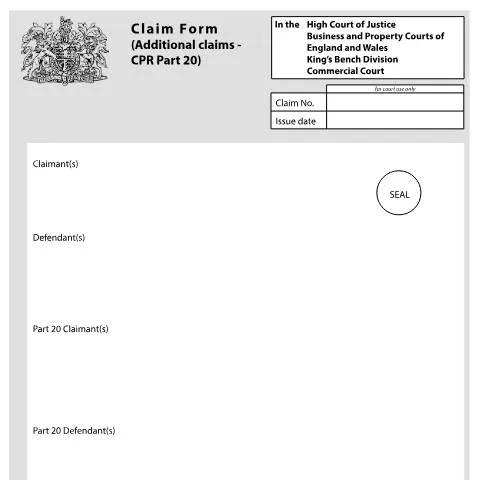
The Commercial Court in the High Court of Justice offers a unique avenue for litigants seeking to bring claims against other parties involved in ongoing proceedings. One such mechanism is encapsulated in the Form N211(CC), which is essential for initiating a claim under the Civil Procedure Rules (CPR) Part 20. This form allows a claimant to make an additional claim against another party, known as a Part 20 defendant, and it’s crucial to grasp its nuances to navigate the process effectively.The Catalyst for Filing a Part 20 Claim
Imagine you are entrenched in a commercial dispute, and as proceedings unfold, you realize that another party should bear some responsibility for the matter at hand; this could be due to issues of contributory negligence or a related cause of action. In this scenario, filing a Part 20 claim via Form N211(CC) becomes your strategic move. A typical trigger could be an unexpected development during the litigation that reveals another party's liability or participation in the matter, thus necessitating a claim against them. This integrated approach not only streamlines the process but also avoids the need to initiate entirely separate proceedings, which can be resource-intensive.The Workflow: From Filing to Resolution
Understanding the procedural flow of a Part 20 claim helps in managing expectations. Following these steps ensures that you adhere to the requirements set by the HM Courts & Tribunals Service.1. Preparing Your Claim
Before you complete Form N211(CC), gather the necessary documentation, including the particulars of the claim, which must accompany the form. This includes a detailed account of the circumstances leading to the claim and the specific relief sought.2. Completing Form N211(CC)
While filling out the form, accuracy is paramount. Key sections you must complete include:- Claimant Information: Include your name, address, and the case number. If you are represented by legal counsel, provide their firm details.
- Details of the Part 20 Defendant: Accurately record the name and address of the party you are claiming against.
- Amount Claimed: This involves the total financial compensation you are seeking, which may also include court fees and legal costs.
- Statement of Truth: This legally binding declaration asserts that the information provided is truthful to the best of your knowledge.
3. Filing Your Claim
Form N211(CC) can be filed either online or in paper format at the court's designated registry. Ensure that you choose the appropriate method based on your comfort level and the specifics of your case.| Filing Method | Pros | Cons |
|---|---|---|
| Online Submission | Quick, efficient, and environmentally friendly | Requires familiarity with online systems |
| Paper Submission | Familiar process for traditional users | Takes longer to process; may incur postal delays |
4. Understanding Court Fees
When filing your claim, be prepared to pay court fees. The fee structure varies depending on the amount being claimed, which means it's crucial to ascertain the exact fee prior to payment. Keep in mind that failure to submit the necessary fees could lead to your case being struck out.Unpacking Form N211(CC): A Closer Look at Its Sections
Breaking down the components of Form N211(CC) sheds light on its complexity and ensures that each part is handled correctly.Claimant and Defendant Details
These sections require complete information about both parties involved. Missing or incorrect information here can create substantial issues later on. The court must accurately identify all parties for notification purposes.Particulars of Claim
This critical section must articulate the basis of your claim succinctly. Clarity and detail are essential. Include clear references to any relevant contracts, agreements, or statutory obligations that support your claim.Statement of Truth: Legal Ramifications
The Statement of Truth is not merely a formality; it carries legal weight. Providing false information could lead to severe penalties, including contempt of court charges. Ensure that the declarant understands the seriousness of this declaration.Personas Involved: Who Is Likely to Use Form N211(CC)?
Various stakeholders might find themselves in need of Form N211(CC). Understanding their profiles helps in anticipating the needs and common scenarios of its use.1. Business Entities
Companies often face complex litigation scenarios where additional claims against co-defendants become necessary. A thorough understanding of market practices and third-party liabilities is critical for these entities.2. Individual Claimants
Individuals who find themselves at the receiving end of commercial disputes may also utilize this form. Whether they are pursuing claims against a business partner or a service provider, clarity in the particulars of the claim is vital.3. Legal Representatives
Solicitors and barristers must be well-versed in completing Form N211(CC) on behalf of their clients. They ensure that all claims are substantiated, facilitating a smooth litigation process.Distinguishing Characteristics: Part 20 vs. Other Claims
Form N211(CC) serves a specific purpose within the realm of civil claims and can easily be confused with other types of claims forms.1. Comparison with Initial Claim Forms
Unlike the initial claim forms, which establish the groundwork for a case, Form N211(CC) is explicitly used for making additional claims. Understanding this distinction is vital for strategic decision-making in litigation.2. Interaction with Counterclaims
Counterclaims might be filed in response to an initial claim, typically using a different form, whereas Form N211(CC) encompasses claims against additional parties. Knowing this difference can prevent procedural missteps.Following Up: Tracking Your Claim's Progress
Once Form N211(CC) is filed, staying informed about your claim's progress is crucial.1. Court Communications
After submission, the court will communicate important details regarding your claim's status and next steps. It’s essential to address any correspondence promptly to avoid unnecessary delays.2. Dealing with Delays
If the court does not respond within the expected timeframe, consider following up. Keeping a record of all correspondence allows for smoother interactions, particularly in complex cases.3. Understanding Court Hearings
Be prepared for potential hearings related to your claim. Knowing what to expect, including procedures and documentation required, can be pivotal in presenting your case effectively.Practical Tips for Navigating the Process
Successfully navigating the Part 20 claim process requires a strategic approach. Here are several practical tips:- Maintain Clear Documentation: Keep copies of all submitted forms and correspondence with the court to ensure you have a comprehensive record at hand.
- Consult Legal Experts: Engage legal counsel familiar with commercial disputes; their insights can be invaluable in crafting compelling particulars of claim.
- Monitor Deadlines: Be acutely aware of all deadlines associated with your claim, particularly those related to submissions and responses.
- Respond Promptly: Address all court communications swiftly to maintain momentum in your case.
Understanding the Basics of CPR Part 20
Before diving into the claims process using Form N211(CC), it is essential to understand the framework of CPR Part 20, which governs claims involving additional parties in the UK’s civil litigation system. Part 20 primarily facilitates the inclusion of third parties in ongoing proceedings, allowing claimants to join parties necessary for resolving disputes effectively. This process can prevent the need for separate claims and help streamline the resolution of complex cases.
Under CPR Part 20, there are specific situations in which a party may be added, such as when a defendant wishes to claim against another party or when a third party may be liable to the defendant. This means that understanding the substantive rules under CPR Part 20 is crucial for litigants who seek to ensure that all relevant parties are included in a case, thereby protecting their interests and avoiding potential future litigation.
The Role of the Commercial Court in Claims Under CPR Part 20
The Commercial Court plays a vital role in handling cases that involve complex commercial disputes, including those submitted under CPR Part 20. Designed to deal with business-related matters, the Commercial Court provides a platform for resolving disputes that require specialized knowledge, including international trade, shipping, and banking.
When submitting a claim under CPR Part 20 in the Commercial Court using Form N211(CC), it is crucial to understand the court's procedures and practices. The Commercial Court operates under specific rules that govern the conduct of claims, including timelines for submitting documents, disclosure requirements, and specific practices that differ from other divisions of the High Court. Moreover, the Commercial Court judges are typically experienced in handling intricate commercial matters, which can be beneficial for claimants who might be involved in high-stakes disputes.
In the Commercial Court, the role of the claimant and the additional parties added under CPR Part 20 can become quite intricate. For example, if a claimant seeks to add a third party who might share liability, the court will assess whether the addition is necessary for the fair determination of the claim. This can involve considering the relationship between the parties, the nature of the dispute, and the potential impact on judicial resources.
Practical Tips for Completing Form N211(CC)
Completing Form N211(CC) is a critical step in the claim process under CPR Part 20. While the form itself is structured to collect essential information, attention to detail is paramount to ensure that all required aspects are addressed. Here are some practical tips to assist claimants:
Fill in your form directly online
No printing: type your details into the boxes of the official form, tick, then download the PDF ready to send.
- 1Type into the form boxes
- 2Tick in one click
- 3Save and download the PDF
- Understand the Form Sections: Form N211(CC) consists of several sections, including claimant details, the particulars of the claim, and any relevant information about the additional party. Familiarize yourself with each section to ensure you provide comprehensive and accurate information.
- Be Precise with Details: When describing the nature of the claim, it is essential to be as detailed as possible. This includes providing factual background, the basis of the claim against the additional party, and any evidence that supports your assertion. Inadequate descriptions may lead to delays or refusals.
- Include Supporting Documents: Alongside Form N211(CC), attach any documents that bolster your claim. This could include contracts, correspondence, or any other relevant materials. Make sure to reference these documents in your claim to provide clarity.
- Check Court Fees: Before submitting your claim, ensure that you are aware of any applicable court fees related to the filing of Form N211(CC). The fees may vary based on the nature of the claim and the parties involved.
- Seek Legal Advice: Given the complexities involved in claims under CPR Part 20, it is strongly advised to seek legal counsel. A solicitor experienced in commercial litigation can provide invaluable insights and assist in navigating the intricacies of the claim process.
By following these tips, claimants can enhance their chances of successfully filing their claims under CPR Part 20 and ultimately achieving a fair resolution in the Commercial Court.