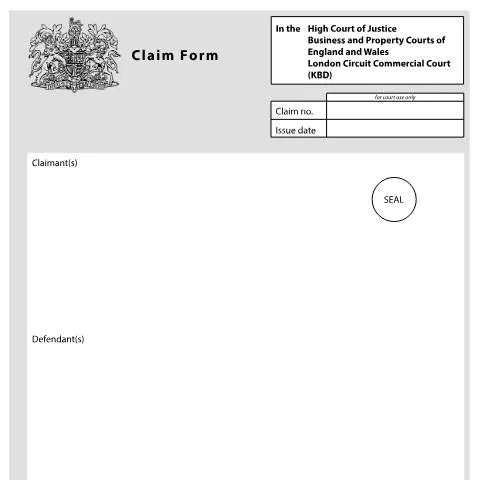
Navigating the N1(LCC) Claim Form in Commercial Disputes
When entering the London Commercial Court system, understanding the role of the N1(LCC) Claim Form is crucial for any claimant. This form is the starting point for initiating a claim in the High Court of Justice's Business and Property Courts. It’s your first step in a complex procedure that may ultimately lead to a resolution of your commercial dispute.
Understanding the Context: Why the N1(LCC) Matters
The N1(LCC) form is not a standalone document; it situates itself within the larger framework of civil procedure as outlined in the Civil Procedure Rules (CPR). Specifically, this form falls under Part 7, which deals with the general rules for making a claim. By filling out the N1(LCC), you formally request the court's assistance in resolving a dispute, thereby initiating legal proceedings.
Commercial disputes may arise from various situations, including breaches of contract, issues with sales or services, and financial disagreements. Using the N1(LCC) effectively can be the difference between a swift resolution and a protracted legal battle.
Who Needs to File and When?
Typically, the claimant files the N1(LCC). This is the individual or entity bringing the claim against another party (the defendant). However, the claimant could also be a legal representative acting on behalf of someone else, depending on the circumstances of the case.
Timing is critical when filing the N1(LCC). You can submit this form at any point when you believe you have a valid claim, but be mindful of the limitations that may apply depending on the nature of your dispute. Generally, you must initiate your claim within specific time limits, which vary by case type. For instance, contract disputes often need to be initiated within six years from the date of the breach.
Key Details Required in the N1(LCC)
- Claimant’s Information: Include your name, address, and contact details.
- Defendant’s Information: Specify the name and address of the party you are claiming against.
- Particulars of Claim: This section briefly outlines the basis of your claim. It should be concise yet detailed enough to inform the defendant of the nature of the dispute.
- Amount Claimed: State the sum you are claiming, which may include damages and court fees.
Preparing Your Case: The Importance of Supporting Evidence
Filing the N1(LCC) without adequate supporting documentation can jeopardize your claim. Attach any relevant documents that substantiate your case. This might include:
- Contracts: Relevant agreements that form the basis of your claim.
- Correspondence: Emails or letters exchanged with the defendant that may clarify the intent and context of the dispute.
- Financial Records: Proof of any losses incurred, such as invoices or bank statements.
Ensure that all documents are clearly labelled, as this will aid the court and the defendant in understanding your claim better.
Common Types of Claims in the London Commercial Court
| Type of Claim | Description | Typical Time Limits |
|---|---|---|
| Contractual Disputes | Disputes arising from breaches of written or verbal agreements. | 6 years from the breach |
| Tort Claims | Claims resulting from negligence or other wrongful acts. | 6 years from the date of the act |
| Debt Recovery | Actions to recover unpaid debts. | 6 years from the due date |
| Intellectual Property Disputes | Claims regarding infringement of IP rights. | 6 years for most claims |
Filing Procedures: Ensuring Compliance with Court Requirements
Once your N1(LCC) form is complete with all necessary details, it must be filed with the court. The court designated for these claims is located at the Royal Courts of Justice. Here are the steps you need to follow:
- Prepare Your Form: Ensure all sections of the N1(LCC) are thoroughly completed and signed.
- Include Supporting Documents: Attach all relevant documentation that strengthens your claim.
- Calculate Fees: Check the current court fee applicable for your claim and ensure payment is made. Failure to pay the correct fee may result in delays or rejection of your claim.
- Submit Your Claim: File your documents either in person or by post. If filing in person, the court is open from 10 am to 4.30 pm, Monday to Friday.
After filing, you will receive a claim number, which you should keep for your records and any further correspondence with the court.
Tracking Your Claim: Understanding the Court’s Process
Once the N1(LCC) has been submitted, it enters the court system. It’s important for claimants to stay informed about the status of their claim. The court will serve the claim form and any accompanying documents to the defendant, who will then have the opportunity to respond, typically within 14 days.
Should the defendant acknowledge the claim, the matter may progress to a court hearing. If they intend to dispute it, they must file a defence within the given timeframe. At this stage, it’s vital to monitor any communication from the court regarding hearings or further requirements.
Anticipating Outcomes: What Happens Next?
Upon the defendant’s response, the court will schedule a directions hearing to determine the next steps. Depending on the complexity of the case, the court may:
- Set a trial date.
- Encourage mediation or negotiation between parties.
- Issue further directions regarding the preparation of evidence.
Be prepared for each of these scenarios, as the outcome may directly affect the course of your claim.
Consequences of Non-Compliance: What to Watch Out For
Filing the N1(LCC) claim is an obligation, and failing to adhere to deadlines or procedural requirements can have severe repercussions. Be mindful of the following:
- Failure to File on Time: Missing the deadline to file your claim can lead to your case being dismissed.
- Inaccurate Information: Providing false or misleading information can result in penalties, including contempt of court.
- Not Responding to Court Communications: Ignoring requests for further information or directions can jeopardize your claim.
Understanding these potential pitfalls can help you navigate the process more smoothly and ensure that your claim proceeds without unnecessary complications.
Final Thoughts: Empowering Yourself in the Legal Process
The N1(LCC) Claim Form is not just a piece of paper—it’s a vital tool in your pursuit of justice within the London Commercial Court. By understanding its role, preparing thoroughly, and following court procedures diligently, you can significantly enhance your chances of a successful outcome. Remember, while the legal process may seem daunting, being well-informed is your greatest ally.
Understanding the London Commercial Court: What You Need to Know
The London Commercial Court is a specialized division of the High Court of Justice in England and Wales, designed to handle complex commercial disputes. Established to provide a focused jurisdiction, it assists businesses and entities in resolving issues efficiently. The court is based in the Royal Courts of Justice, located on The Strand in London, and deals with cases that often cross international boundaries.
One of the significant advantages of the London Commercial Court is its expertise in handling various types of commercial matters, including shipping, insurance, banking, and intellectual property disputes. The judges in this court are highly experienced in commercial law, which ensures that parties receive knowledgeable and informed deliberations. Furthermore, the court offers an expedited procedure for urgent cases, allowing for faster resolution compared to more general court procedures.
Before making a claim, it's essential to consider whether your case falls within the jurisdiction of the London Commercial Court. Specifically, the court has jurisdiction over disputes where the parties have agreed to submit to its jurisdiction or where the claim arises out of a contract that explicitly states the London Commercial Court as the chosen venue. Additionally, if the defendant resides or has a registered office within the jurisdiction, that may also establish the court's authority over the case.
In cases involving international parties, the court provides a platform supported by a well-established legal framework, which reassures parties from various jurisdictions. The London Commercial Court has also embraced technology, allowing for efficient case management through electronic filings and remote hearings, especially highlighted during the COVID-19 pandemic. This adaptability has made the court a preferred choice for international businesses seeking to resolve their disputes in a timely and cost-effective manner.
Fill in your form directly online
No printing: type your details into the boxes of the official form, tick, then download the PDF ready to send.
- 1Type into the form boxes
- 2Tick in one click
- 3Save and download the PDF
Preparing Your Claim: Essential Documentation and Evidence
When initiating a claim in the London Commercial Court using Form N1(LCC), proper preparation is crucial. The claim form must be completed accurately and accompanied by all necessary documentation to support your case. This includes any contracts, correspondence, or other relevant papers that substantiate your claim. The more comprehensive your documentation, the stronger your position will be when presenting your case.
Additionally, it's beneficial to gather evidence that may include witness statements, expert reports, and any other material that can help establish your position. The court operates under the Civil Procedure Rules (CPR), which dictate the types of evidence admissible in court. Importantly, all evidence submitted must comply with the Data Protection Act 2018 and the UK GDPR, ensuring that personal data is handled appropriately during the claim process.
Before filing your claim, consider engaging with a legal advisor who specializes in commercial litigation. They can help you assess the strengths and weaknesses of your case and guide you in compiling the necessary documents. It is also vital to ensure that you're aware of the potential costs involved, including court fees and legal representation, as these can vary depending on the complexity of your case.
Once your claim is prepared, you will need to file it at the court, paying attention to any specific guidelines for the London Commercial Court. Keeping a record of all submissions and communications with the court and the other party is essential for maintaining clarity and organization throughout the process.
Exploring Alternative Dispute Resolution (ADR) Options
Before or during the claims process in the London Commercial Court, parties can consider Alternative Dispute Resolution (ADR) as a means of resolving their disputes without the need for a full court trial. ADR encompasses methods such as mediation, arbitration, and conciliation, which can be beneficial in terms of saving time and reducing costs associated with litigation.
Mediation involves a neutral third party who facilitates discussions between the conflicting parties to help them reach a mutual agreement. This process is often less formal than court proceedings and can allow for more creative solutions that suit both parties. Mediation sessions are typically private and confidential, which can help preserve business relationships that might be strained by litigation.
Arbitration, on the other hand, is a more structured process where an arbitrator makes a binding decision after hearing both parties. This method can be especially advantageous when parties seek a definitive resolution but wish to avoid the lengthy court process. The London Commercial Court often recognizes arbitration agreements in contracts, and many international contracts incorporate such provisions.
Before deciding on ADR, it's crucial to check whether your contract includes any clauses mandating ADR procedures, as this can affect your claim. Additionally, the court encourages parties to explore ADR options, and in some cases, may require that parties demonstrate an attempt at resolution through ADR before pursuing litigation.
In conclusion, while the London Commercial Court provides a robust platform for resolving commercial disputes, considering alternative methods such as ADR can lead to more efficient and harmonious outcomes. Always consult with legal counsel to determine the most appropriate course of action based on the specifics of your situation.