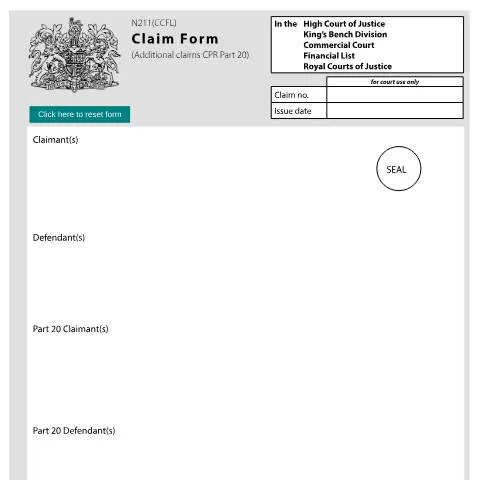
Understanding Form N211(CCFL): A Vital Tool in Commercial Litigation
In the realm of commercial disputes within the UK, the Form N211(CCFL) stands as a crucial document for claimants seeking to initiate additional claims under the Civil Procedure Rules (CPR) Part 20 in the Commercial Court Financial List. Whether you're a seasoned legal professional or an individual navigating the complexities of the judicial system, comprehending the significance of this form is essential for the efficacy of your legal pursuits.
The Role of Form N211(CCFL) in Claim Proceedings
Form N211(CCFL) serves more than just a procedural function; it is the foundation upon which additional claims are built when a party needs to bring a relevant claim against an additional defendant. This form is particularly pertinent in scenarios where the defendant wishes to call upon another party to share liability for a claim already filed.
When Is It Necessary to Use Form N211(CCFL)?
- Multiparty Litigation: If your case involves multiple parties where the interactions between them could influence the outcome.
- Contribution or Indemnity Claims: When you seek to claim against another party for part of the liability that may fall on them.
- Complex Financial Claims: Particularly in financial disputes that necessitate multi-faceted calculations and assessments.
Navigating the Requirements: Who Needs to Submit Form N211(CCFL)?
While the submission of Form N211(CCFL) is generally the responsibility of the primary claimant or defendant in a case, there are specific contexts in which others may need to file this form:
- Legal Representatives: Solicitors acting on behalf of a claimant or defendant can file the form, ensuring that all necessary particulars are duly completed.
- Individuals Acting on Their Own Behalf: Litigants in person may also submit this form, though they must take extra care to adhere to the court's procedural rules.
This form is submitted when a party has been involved in an ongoing litigation process, and an additional claim is warranted. It is paramount for parties to understand their legal standing and obligations in this regard.
Completing Form N211(CCFL): A Step-by-Step Guide
The intricacies of filling out Form N211(CCFL) require a meticulous approach. Each section is designed to gather specific information essential for the court's understanding of the claim.
Key Sections of Form N211(CCFL)
| Section | Description | Importance |
|---|---|---|
| Claimant Details | Information about the party initiating the claim. | Helps the court identify the claimant and their legal representative. |
| Defendant Details | Information about the party responding to the claim. | Essential for addressing the claim correctly. |
| Details of the Claim | A brief overview of the financial claim. | Provides context for the judge and supports the particulars of claim. |
| Statement of Truth | A declaration of the truth of the information provided. | Legally binding affirmation of the claimant's assertions. |
| Contact Information | Address for correspondence. | Ensures the court can communicate effectively with the parties involved. |
Practical Tips for Effective Completion
- Be Thorough: Ensure all sections are filled out completely to avoid delays.
- Use Clear Language: Avoid jargon and use plain English to articulate your claims succinctly.
- Attach Supporting Documents: Include all pertinent documents that substantiate your claim.
Filing Form N211(CCFL): Timing and Location
Once Form N211(CCFL) is complete, understanding how and when to file it is crucial. Timing can be a pivotal element in legal processes, particularly in the financial context.
Where to File
The correct filing location for Form N211(CCFL) is the High Court of Justice, specifically within the King’s Bench Division at the Royal Courts of Justice, located at:
The Rolls Building, 7 Rolls Building, Fetter Lane, London, EC4A 1NL
Filing Hours
The court office operates from 10 AM to 4:30 PM, Monday to Friday. It’s recommended to arrive early to allow for any unforeseen delays in the submission process.
Understanding What Happens After Submission
Once your form is submitted, it enters a process that can vary based on the specifics of the claim and court schedules. Here’s what to expect:
Processing Your Claim
- Claim Number Assignment: The court will assign a claim number, which you must reference in all subsequent correspondence.
- Initial Review: The court will perform an initial review to ensure all necessary information is provided.
- Hearing Schedule: The court will notify you regarding the date and time of any hearings related to your claim.
It is prudent to maintain communication with the court and your legal representatives to stay informed about any developments related to your case.
Handling Complications: What to Do If Issues Arise
In the legal landscape, complications can often arise. Understanding how to navigate these challenges is essential for any claimant.
Common Issues After Filing
- Missing Documentation: If the court finds that required documents are missing, they may contact you for resubmission.
- Errors in Submission: Correct any mistakes quickly; failure to do so may result in delays or dismissal of the claim.
- Disputes on Claims: Be prepared to provide additional evidence or clarification if the defendant challenges your claim.
Dealing with Rejections: What Are Your Options?
A rejection of your claim can be disheartening, but it is not the end of the road. Understanding your options allows you to respond effectively.
Appealing a Rejection
- Understand the Grounds: Carefully review the reasons for the rejection provided by the court.
- Gather Additional Evidence: Compile any new evidence or documentation that may support your appeal.
- Submit an Appeal Application: Follow the court’s specific procedure for filing an appeal against the rejection.
The Regulatory Framework Behind Form N211(CCFL)
Understanding the legislative backdrop of Form N211(CCFL) can provide valuable insights into its importance in the judicial process. The Civil Procedure Rules (CPR) govern the conduct of claims and outline the procedural framework for disputes within the UK courts, ensuring fairness and clarity.
Key Legislative Points
- CPR Part 20: This section deals with additional claims and specifies how defendants may seek contributions or indemnities from third parties.
- Data Protection Compliance: All parties must comply with the Data Protection Act 2018 and UK GDPR when handling personal data throughout the claim process.
Practical Considerations for Claimants in Various Situations
Different scenarios may require tailored approaches when utilizing Form N211(CCFL). Understanding these nuances can significantly impact the efficacy of your legal strategy.
Special Cases to Consider
- Involvement of Foreign Parties: Additional rules may apply if one of the parties resides outside the UK, potentially complicating the process.
- Minor Claimants: Special considerations and legal representation are required if the claimant is a minor.
- Urgent Claims: In cases requiring expedited hearings, requesting the court’s permission to fast-track the application is essential.
Conclusion: Empowering Your Legal Journey
Utilizing Form N211(CCFL) effectively is fundamental for any party seeking to navigate additional claims in the Commercial Court Financial List. By understanding the intricacies of the form, the filing process, and potential complications, claimants can empower themselves in their legal journeys. Additionally, being aware of the regulatory frameworks and practical considerations enhances the probability of a successful outcome. Stay informed, prepared, and proactive as you embark on your litigation journey.
Understanding CPR Part 20: A Deep Dive into Third Party Claims
CPR Part 20 governs the addition of parties to proceedings and the making of claims against those parties in the context of civil litigation in England and Wales. Within the Commercial Court Financial List, this is particularly relevant when dealing with complex commercial disputes where multiple parties or claims may arise. Understanding the nuances of CPR Part 20 is crucial for properly navigating these legal waters.
Under CPR Part 20, a party can make a claim against a third party if that claim arises out of the same transaction or series of transactions as the original claim. This is particularly pertinent in commercial disputes where liability may be shared among different entities. For instance, if Company A sues Company B for breach of contract, Company B may wish to bring Company C into the proceedings if it believes Company C is responsible for the issues at hand.
To initiate this process, the party must file Form N211(CCFL) to seek the court’s permission for the third party claim. The application must demonstrate that the claim is not only relevant but also necessary for the resolution of the primary dispute. This involves clearly outlining the connection between the claims and ensuring that all procedural requirements are met.
One common misconception is that parties can simply add anyone they wish to a claim without justification. However, the court will assess whether the addition of the new party is proportionate and whether it will complicate proceedings unnecessarily. The court aims to streamline cases, so clarity and relevance in the application are paramount.
Practical Steps for Completing Form N211(CCFL)
Completing Form N211(CCFL) involves specific steps that must be followed meticulously to ensure the application is accepted by the court. The form itself has sections that must be filled out accurately, reflecting the details of the original claim and the grounds for joining the third party.
1. Filling Out the Basic Information: At the beginning of the N211 form, you will need to provide basic information such as the case number, the parties involved, and the court in which the claim is being brought. Ensure that this information is precisely as it appears in the original claim to avoid any confusion.
Fill in your form directly online
No printing: type your details into the boxes of the official form, tick, then download the PDF ready to send.
- 1Type into the form boxes
- 2Tick in one click
- 3Save and download the PDF
2. Detailing the Relationship Between Claims: In part 3 of the N211 form, you must detail the relationship between the original claim and the proposed third party claim. Here, clarity is critical. Provide a concise explanation of how the third party’s liability is tied to the original dispute. This is where you will demonstrate why it is essential for the resolution of the case to include the new party.
3. Submitting Supporting Documents: Alongside the N211 form, you may also need to submit supporting documents that reinforce your argument. This could include contracts, emails, or any other evidence that demonstrates the connection between the claims. Always ensure that you reference these documents in your form and submit copies that are legible and properly labelled.
4. Serving the Notice: Once you have submitted the N211 form to the court, it is essential to serve a copy of the application notice and any supporting documents to the proposed third party. This step is crucial as it informs them of the claim against them and allows them the opportunity to respond.
5. Attending the Hearing: In many instances, the court may schedule a hearing to consider your application. Prepare for this by gathering all relevant documents and being ready to argue why the claim should be allowed. It’s advisable to consult with legal counsel to ensure you are adequately prepared, as the hearing could shape the outcome of the entire case.
Common Challenges and How to Overcome Them
When making a claim under CPR Part 20 using Form N211(CCFL), parties may encounter various challenges. Being aware of these potential issues can help you navigate the process more effectively.
1. Opposition from the Proposed Party: A common challenge is opposition from the party you wish to add. They may dispute the validity of the claim or argue it will complicate the proceedings. To counter this, ensure your application is robust, well-supported, and clearly articulates why their inclusion is necessary. Gathering strong evidence and legal arguments is vital.
2. Time Delays: The process of adding a party can introduce delays in the overall proceedings. To mitigate this, be proactive. Submit your N211 form as soon as you're aware of the necessity to include the third party, and keep track of timelines to ensure you meet all court deadlines.
3. Unfamiliarity with Court Procedures: If you or your legal team are unfamiliar with the Commercial Court Financial List or the specific procedures relating to CPR Part 20, it can lead to mistakes or oversights in your application. Investing time in understanding the specific rules of the court can save you considerable hassle. Consider attending relevant training sessions or consulting with a legal professional who has experience in this area.
4. Lack of Evidence: One of the most critical aspects of a successful application under CPR Part 20 is evidence. If you cannot provide sufficient evidence to demonstrate the connection between the claims, the court may dismiss your application. Make sure to meticulously gather all relevant documents and witness statements that can support your claim.
5. Financial Implications: Adding a third party may also have financial implications, especially if they dispute the claim and the case proceeds to trial. Be prepared for the possibility of increased legal costs and consider discussing the financial aspects with your legal advisor to understand the potential impact.