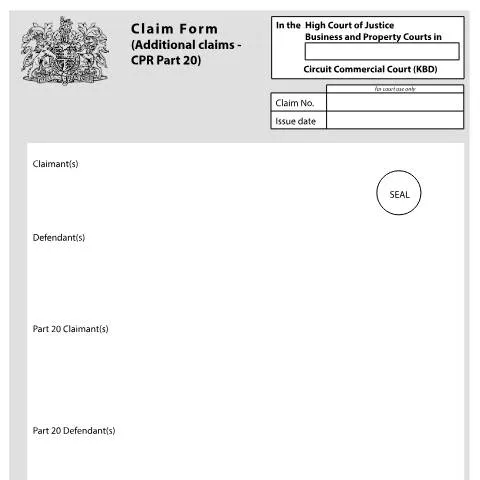
Understanding the N211 RCC Claim: A Deep Dive into the Process
In the realm of commercial litigation, navigating the complexities of the court system can be challenging, particularly when dealing with Part 20 Claims under the Civil Procedure Rules (CPR). The N211 RCC form serves as a crucial document for parties wishing to make an additional claim in the Regional Commercial Court. Understanding its nuances is essential for claimants and defendants alike.
Essential Profiles: Who Engages with the N211 RCC Form?
The N211 RCC form is primarily utilized by parties involved in commercial disputes where they seek to make an additional claim against another party within the proceedings. This includes:
- Claimants: Original claimants in the case who wish to add further claims.
- Defendants: Original defendants who may find themselves needing to counterclaim or add parties.
- Litigants in Person: Individuals representing themselves, often facing unique challenges in understanding the legal landscape.
It’s crucial to differentiate between the roles of the original parties and the additional claimants they may wish to involve. For instance, a claimant may find that the original defendant has a counterclaim that necessitates using the N211 RCC, further complicating the original proceedings.
Special Cases: Minors and Protected Parties
When the claims involve minors or individuals lacking the mental capacity to litigate, additional considerations arise. A litigation friend must be appointed to act on their behalf. Understanding the implications of such appointments is key:
- The litigation friend must sign the N211 RCC form, certifying that they understand the case and are capable of acting in the best interests of the minor or protected party.
- Proper documentation regarding the status of the protected party may be required to verify their circumstances.
The Mechanics of Completing the N211 RCC Form
Completing the N211 RCC form requires careful attention to detail, as inaccuracies can lead to delays or even outright rejection of the claim. Here’s how to ensure you fill it out correctly:
- Claim Details: Clearly outline the nature of your claim. It's critical to provide specifics that can substantiate your arguments.
- Statement of Truth: This section emphasizes the importance of honesty in your claim. A false statement can lead to serious legal repercussions.
- Attachments: Don't forget to include the Particulars of Claim, which provides detailed information on the claims being made.
Common Challenges in Form Submission
Errors in form submission can lead to significant setbacks. Here are some common pitfalls to avoid:
- Incomplete Information: Ensure that all required fields are filled, including the claim number and your address for correspondence.
- Missing Signatures: If the form is being submitted by a litigation friend or legal representative, ensure their signatures are included.
- Incorrect Fees: Be sure to calculate the correct court fee based on the amount being claimed; fees vary significantly.
Submitting the N211 RCC Form: Best Practices
After completing the N211 RCC form, the next step is submission. Here’s a streamlined approach:
- Where to Submit: Claims must be filed at the appropriate court. For the N211 RCC, this typically means the High Court of Justice or the designated Commercial Court.
- Method of Submission: Forms can often be submitted in person, by post, or electronically. Check the court's guidelines for permissible methods.
- Keep Records: Retain copies of the submitted form and any attachments for your records, as well as any correspondence with the court.
Following Up: What Happens Next?
Once the N211 RCC form is submitted, the court processes it, which can lead to several outcomes:
- Acknowledgement of Receipt: You should receive confirmation from the court that your claim has been lodged.
- Notice of Hearing: In many cases, a hearing will be scheduled. Pay close attention to the notice as it will specify important dates and deadlines.
- Potential for Mediation: The court may recommend mediation before proceeding to trial, which can be an effective way to resolve disputes without a full court hearing.
What If the Claim is Contested? Handling Rejections and Appeals
The path of a claim does not always run smoothly. If your use of the N211 RCC form is met with contestation or rejection, several options are available:
- Responding to Rejections: If your claim is rejected due to a technicality, the court typically provides guidance on rectifying the issue. Follow their instructions carefully.
- Contesting a Counterclaim: If the defendant responds with a counterclaim, you will need to prepare a robust rebuttal and may also need to engage the N211 RCC form once more.
- Filing an Appeal: In the case of an unfavorable judgment, appeals can be made, though these must be lodged within a specific timeframe and often require a separate application.
Exploring Alternatives: Distinguishing the N211 RCC from Other Legal Forms
The N211 RCC form is just one part of the larger legal framework, and it is essential to understand how it differs from other forms that may be encountered:
| Form Type | Purpose | Filing Environment |
|---|---|---|
| N211 RCC | Make additional claims in commercial cases | High Court & Regional Commercial Courts |
| Part 7 Claim Form | Initiate standard claims | County or High Court |
| Form N244 | Application to the court for an order | Various courts |
This comparison highlights that while the N211 RCC is focused on additional claims during ongoing proceedings, other forms cater to initiating new claims or specific applications, demonstrating the diverse nature of civil procedures.
Expert Tips for Navigating the N211 Claim Process
Successfully managing the N211 RCC form and the associated processes requires both diligence and strategic planning. Here are some expert insights:
- Consult Legal Professionals: Engaging with a solicitor experienced in commercial litigation can save time and prevent costly errors.
- Stay Organized: Maintain a detailed log of all correspondence and filings related to your claim. This will help in tracking progress and responding promptly to any court communications.
- Utilize Official Resources: The HM Courts & Tribunals Service provides guidance and resources that can be immensely helpful. Utilize their website for any updates or protocol changes.
Approaching the N211 RCC claim with thorough understanding and preparation can significantly influence its outcome. By meticulously following the outlined steps and considering the specific profiles involved, parties can better navigate the complexities of commercial litigation in the UK.
Understanding the Structure of CPR Part 20 Claims
Before making a claim under CPR (Civil Procedure Rules) Part 20, it's essential to understand the structure and purpose of these rules. CPR Part 20 provides a framework for adding third parties to existing proceedings or bringing in new claims that are related to those already before the court. It is particularly useful in commercial disputes where the relationships between parties can become complex, involving multiple stakeholders who may have varying levels of liability or involvement.
The core objectives of Part 20 are to ensure that the court can resolve all matters related to a dispute efficiently and fairly. This entails considerations of judicial economy and the potential for conflicting judgments. Understanding these principles is not only crucial for complying with the procedural requirements but also for formulating a strategic response in your case. It can influence the decision-making process, such as whether you choose to bring in a counterclaim or add an additional defendant.
Typically, there are two primary scenarios in which CPR Part 20 applies:
- Adding a Third Party: This situation arises when a defendant believes that another party should share in the liability for the claim. For example, if a supplier’s negligence contributed to a contract dispute, the defendant may wish to add the supplier as a third-party defendant.
- Bringing Related Claims: A claimant may also invoke Part 20 if they wish to initiate a claim against a new party that has a direct association with the original claim. For instance, in a case of breach of contract, if a subcontractor’s failure to perform directly results in the primary contractor’s liabilities, the contractor might use CPR Part 20 to add the subcontractor as a defendant.
Each scenario involves specific procedural steps, including notice requirements, timelines, and the need for the court's permission in certain cases. It's prudent to consult the relevant forms and guidelines on submissions to the Regional Commercial Court (N211 RCC) to ensure that you comply with all requirements established by the HM Courts & Tribunals Service.
Key Considerations When Making a Claim Under CPR Part 20
When preparing to make a claim under CPR Part 20 in the Regional Commercial Court, several critical considerations come into play. These factors can significantly affect both the process and outcome of your claim. Here are some essential aspects to keep in mind:
1. Timing of the Application
The timing of your application to add a party or make a related claim is of paramount importance. CPR Part 20 stipulates that applications should be made as soon as you become aware of the need to add a party or make a related claim. Delaying the application can create complications, particularly if the existing proceedings are at an advanced stage. The court may refuse to allow a late application unless you can show good reasons for the delay.
2. Permission to Add a Party
In certain circumstances, you may need to seek the court's permission to add a new party. This is particularly pertinent when the new party has not been involved in the initial claim. You will typically need to demonstrate why this party's involvement is necessary for the just resolution of the dispute. A well-reasoned application could include information about the new party’s potential liability and how it directly relates to the case at hand.
3. Interaction with Other Rules
It's crucial to recognize how CPR Part 20 interacts with other Civil Procedure Rules. For instance, you may need to be mindful of Part 18, which deals with requests for further information, as it may be relevant when preparing your application. Likewise, consider the implications of Part 19, which concerns the joinder of parties. Ensuring compliance across these interconnected rules can be complex, but it is essential for a successful application.
4. Costs and Implications
Adding a party or making a related claim can also raise cost implications. Be prepared for potential increases in court fees, and consider how costs orders may affect both your claim and the new party being added. When making your application, the court may also consider the financial burden on all parties involved, so presenting a clear rationale for your request can help mitigate any costs-related objections.
Fill in your form directly online
No printing: type your details into the boxes of the official form, tick, then download the PDF ready to send.
- 1Type into the form boxes
- 2Tick in one click
- 3Save and download the PDF
5. Legal Advice
Given the complexities involved in making claims under CPR Part 20, seeking legal advice is highly recommended. An experienced solicitor can help you navigate the intricacies of the CPR and assist in preparing your application. They can also provide vital insights into case law and precedents that may affect your claim. This professional guidance can be instrumental in ensuring a robust application that aligns with the court's expectations.
Practical Steps for Filing a Part 20 Claim in the Regional Commercial Court
Filing a claim under CPR Part 20 in the Regional Commercial Court involves a series of practical steps that need meticulous attention. Here's a guide to assist you through the process:
1. Prepare Your Application
Your first step is to draft a detailed application, which should include:
- The specific grounds for adding a party or making a related claim.
- Relevant facts that support your application, including any necessary documentation.
- Proposals for how the matter should be managed, including suggested timelines and potential hearing dates.
2. Complete the Required Forms
Next, ensure you complete the correct forms, which may include:
- The N211 form if filing a general application.
- Any additional forms required for specific requests, such as for permission to add a party.
Make sure to double-check that the forms are filled out accurately, with all pertinent information included, to avoid delays.
3. Serve the Application
Once your application is prepared, the next crucial step is to serve it on all parties involved in the existing proceedings, as well as the proposed new party. Proper service not only complies with procedural requirements but also ensures that all parties have the opportunity to prepare their responses.
4. Court Hearing
Following the submission and service of your application, a court hearing will be scheduled. Be prepared to present your case succinctly, outlining the reasons for your application and responding to any objections raised by other parties. It’s advisable to have a clear structure for your argument and anticipate questions from the judge.
5. Await the Court's Decision
After the hearing, you will need to wait for the court to make its decision. If the court grants your application, you'll receive a formal order permitting the addition of the party or the related claim. If denied, consider your options for appeal or alternative steps. Additionally, ensure you receive a copy of the order and understand any conditions that may apply.
6. Follow Up with Next Steps
Once the court has made its decision, follow up by engaging in the next steps as directed by the court. This may include the submission of documents, setting new timelines for proceedings, or preparing for further hearings. Maintaining clear communication with your solicitor and the court will help ensure compliance with all orders and timelines.