Navigating the Withdrawal Process: A Comprehensive Guide to Form CS WD
When individuals find themselves in the position of needing to withdraw a case from a tribunal, the implications can be significant. Understanding the Withdrawal Form (Except for PoCA and PoVA Cases): Form CS WD is essential for anyone engaging with the HM Courts & Tribunals Service (HMCTS). This form acts as a formal means to notify the tribunal of your intention to withdraw, but it involves more than just completing paperwork; it is about understanding the potential consequences of your decision.
Understanding the Scope: What Makes Form CS WD Unique?
Many individuals may confuse Form CS WD with other tribunal forms, but it has distinct characteristics. Primarily, it applies specifically to cases heard by the First-tier Tribunal - Health, Education and Social Care Chamber, excluding cases under the Proceeds of Crime Act (PoCA) and the Protection of Vulnerable Adults (PoVA).
- Different Contexts: Understanding the context is critical—withdrawals can affect ongoing proceedings differently depending on the nature of the case.
- Consenting to Withdraw: Unlike some forms where a withdrawal may take immediate effect, with Form CS WD, the tribunal must consent to the withdrawal, which can add an additional layer of complexity.
In contrast to the Notice of Appeal and other forms, Form CS WD is entirely about the cessation of participation, allowing users to retract their appeal formally.
Preparing Your Withdrawal: Justifications and Documentation
Before completing Form CS WD, it is crucial to prepare the necessary justifications and documents that may support your request. The tribunal takes the reasons for withdrawal seriously; therefore, having well-articulated reasons can impact the tribunal's decision regarding your request.
Common Reasons for Withdrawal
- Change of Circumstances: A change in your situation or the realization that the appeal may no longer serve your interests.
- Resolution Outside of Tribunal: Successful negotiations leading to an out-of-court settlement.
- Insufficient Evidence: Realising that the evidence does not support the initial claim effectively.
Documenting supporting evidence for these reasons can aid the tribunal in their assessment. If you are withdrawing part of your case, you will need to specify which part you are withdrawing, which requires additional clarity.
Completing the Form: Step-by-Step Guidance
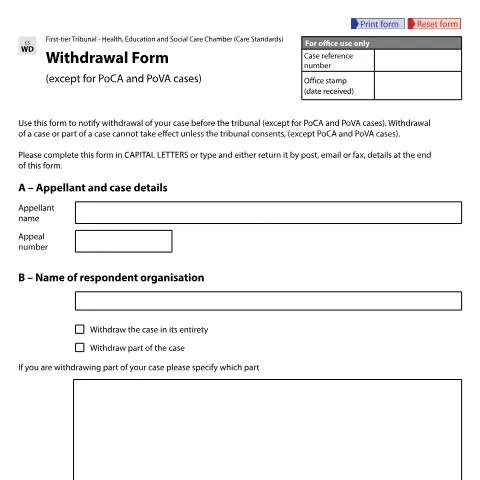
Completing Form CS WD might seem straightforward, but attention to detail is critical. The form must be completed in capital letters or typed to ensure legibility.
Key Sections of the Form
Here’s how to navigate each section effectively:
- Appellant and Case Details: Fill in your name and appeal number accurately to avoid complications. Ensure that the appeal number corresponds to your case.
- Name of Respondent Organisation: Identify the organisation involved in your appeal clearly.
- Withdrawal Scope: Indicate whether you are withdrawing the case in its entirety or just a part of it. If it’s a partial withdrawal, specify which part.
- Reasons for Withdrawal: Articulate your reasons concisely. Clear communication here will assist the tribunal in understanding your decision.
- Signature: You can either sign the form yourself or have your legal representative sign it. A typed signature is acceptable.
Timing is Everything: The Calendar of Withdrawal
Once you have submitted Form CS WD, the timing of your withdrawal becomes crucial. The tribunal requires that any application for reinstatement of a case must be made within specific time frames:
| Condition | Time Frame |
|---|---|
| After Notice of Withdrawal Received | 28 days |
| After Hearing at Which the Case was Withdrawn | 28 days |
Missing these time frames could result in a loss of the opportunity to reinstate your case, so it is imperative to adhere to these deadlines diligently.
The Role of HM Courts & Tribunals Service: What Happens Next?
Once Form CS WD is submitted, HMCTS takes over the processing of the withdrawal request. The tribunal will review your application, which includes any reasons and evidence provided.
What to Expect After Submission
- Inevitably, the tribunal will: Acknowledge the receipt of your form, usually with a confirmation of the next steps.
- Review Process: The tribunal may take some time to review your withdrawal request, especially if it raises questions about the case’s merits.
- Consent Notification: You will receive a notification regarding whether your withdrawal has been accepted or if further information is necessary.
Keep in mind, if there are additional queries, the tribunal may reach out to you for further clarification regarding your reasons for withdrawal.
Legal Framework Surrounding Form CS WD: Understanding Your Rights
The use of Form CS WD is embedded within a broader legal context. The Data Protection Act 2018 and UK GDPR govern the processing of personal data during tribunal proceedings. This ensures that your data is protected and processed lawfully.
Implications of Your Withdrawal
Understanding your rights and the impact of your withdrawal is essential. Withdrawing your case can lead to:
- Closure of the Case: Once the tribunal consents to your withdrawal, the case is effectively closed.
- Future Implications: Consider how this withdrawal might affect future claims or appeals; it may limit your options.
- Reinstatement Possibilities: If you withdraw, you retain the option to reinstate within the prescribed time frame, offering some flexibility.
Your Responsibilities as Appellant
As the appellant, it is your responsibility to ensure that all information provided is accurate and that your withdrawal aligns with your legal rights. Staying informed and proactive in communication with HMCTS is crucial.
Beyond the Withdrawal: Pathways for Future Claims
Once a withdrawal has been processed, it’s important to reflect on what pathways may still be available for you. Depending on the reasons behind your withdrawal, you might consider:
- Reevaluating Your Position: If the circumstances affecting your case have changed, it may be worth exploring new avenues for appeal.
- Seeking Legal Advice: Consulting with legal professionals can provide insights into whether pursuing another claim or appeal is viable.
- Documenting Lessons Learned: Take the time to reflect on the withdrawal process and the reasons behind your decision, as this can inform any future cases.
By proactively engaging with your situation, you can ensure that you are making informed decisions that align with your best interests.
Conclusion: Mastering the Withdrawal Process with Confidence
Understanding and effectively managing the withdrawal process through Form CS WD is vital for all appellants navigating the tribunal landscape. From knowing the unique aspects of the form to preparing adequate justifications and understanding the legal framework, every detail matters. By being diligent in your approach, you not only protect your interests but also ensure that your rights are maintained throughout the process.
In essence, the withdrawal journey is not merely about paperwork; it is about making informed choices that can shape your legal landscape for the better.
Understanding the Withdrawal Process: When and Why Form CS WD is Required
The Withdrawal Form (CS WD) is a crucial document for individuals looking to withdraw a case that involves civil proceedings in the UK. It is essential to understand the circumstances under which you might need this form. Typically, the need for a CS WD arises in situations where the claimant or defendant wishes to discontinue their involvement in a case before it reaches a final judgment. This could include various scenarios, such as settling a dispute out of court or simply deciding not to pursue the claim any further.
Moreover, the form is applicable across several types of cases, excluding those governed by the Proceeds of Crime Act (PoCA) and the Protection of Vulnerable Adults (PoVA) legislation. This distinction is important for ensuring that the appropriate legal protocols are followed. If you're uncertain whether your case falls within these exclusions, it's advisable to seek legal counsel. They can clarify whether the CS WD form is suitable for your situation or if alternative legal avenues need to be pursued.
Additionally, understanding the potential outcomes of submitting a CS WD form is vital. Upon submission, the court will review your request to withdraw. If approved, the case will be dismissed, and any hearings or further legal actions will cease. However, be aware that withdrawing a case may have implications for future claims, particularly if the other party has incurred costs while preparing for the proceedings. In some cases, they may seek reimbursement for expenses related to your initial claim.
Filling Out Form CS WD: Step-by-Step Guidance
Completing the Withdrawal Form CS WD correctly is critical to ensure a smooth withdrawal process. Below is a step-by-step guide on how to fill out the form effectively:
- Personal Information: Start by filling in your name, address, and contact details. Ensure that this information is up-to-date and accurate, as it will be used for all future correspondence regarding your case.
- Case Information: Clearly state the title of the case, including the court reference number. This aids the court in easily identifying your specific case and processing your withdrawal request without unnecessary delays.
- Reason for Withdrawal: Provide a brief explanation regarding why you are choosing to withdraw your case. While detailed reasons are not mandatory, including context can help the court understand your decision. This section can be particularly important if the other party has incurred significant costs related to your claim.
- Confirmation of Understanding: You will need to confirm your understanding of the implications of withdrawing your case. Typically, this involves acknowledging that you are aware of potential costs or legal ramifications that may arise from your withdrawal.
- Signature and Date: Finally, sign and date the form. This ensures that you are formally withdrawing your case and sets a clear date for your request, which can be relevant if any disputes arise later.
Once completed, make sure to keep a copy of the form for your records before submitting it to the relevant court. You can deliver the form in person or send it by post, but ensure that you do so well in advance of any scheduled court dates to avoid complicating ongoing proceedings.
After Submission: What to Expect from the Court
After you have submitted the Withdrawal Form CS WD, it's natural to wonder what happens next. Generally, the court will process your request in a timely manner, but the timeframe can vary based on the court's current workload and the complexity of your case.
Typically, you can expect to receive confirmation from the court that your request has been received. This confirmation will outline any next steps, including potential hearings or additional actions that may be required. If the court approves your withdrawal, you will receive official notification that the case has been dismissed.
It's also important to acknowledge that if the withdrawal occurs close to a scheduled court date, the court may still require you to attend the hearing to officially record your intention to withdraw. This is particularly common in cases where the other party may contest the withdrawal or claim for costs incurred during the proceedings.
Should complications arise—such as the other party filing for costs or raising objections regarding your withdrawal—the court will guide you on how to proceed. Legal representation may become invaluable in these situations, as navigating the complexities of court proceedings can be daunting without professional advice.
In summary, while the Withdrawal Form CS WD is a straightforward document, the implications of submitting it can have far-reaching effects on your legal standing. Always approach the process with careful consideration and seek professional advice if necessary.