Navigating Your Options: The T128 Form in Mental Health Tribunal Hearings
When a mental health case is referred to the First-tier Tribunal (Mental Health), it can be a daunting experience for the individual involved. At this critical juncture, the T128 form emerges as a key player, enabling you to express your preferences regarding attendance at your referral hearing. Understanding what this form entails, who it affects, and how to navigate the associated processes can significantly impact the outcome of your case.
Understanding Your Choices: Making An Informed Decision
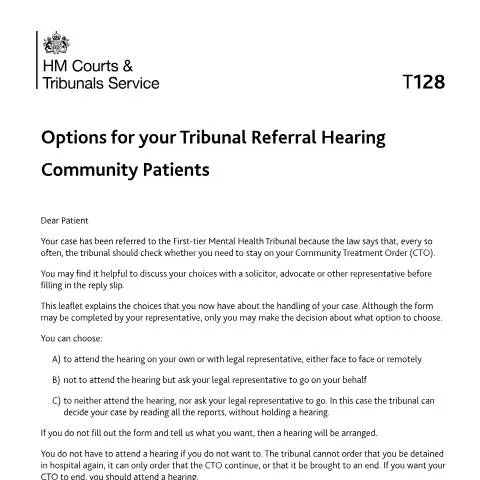
Upon receiving the T128 form, the decision on how you wish to proceed is entirely yours, albeit with the potential involvement of a representative such as a solicitor or advocate. The choices available to you can be summarised as follows:
- A) Attend the hearing in person or remotely, with or without legal representation.
- B) Opt not to attend the hearing, granting your legal representative permission to attend on your behalf.
- C) Choose to neither attend nor send a representative, allowing the tribunal to decide based on written reports.
This form is not simply an administrative tool; it plays a pivotal role in shaping the course of your case. Each option presents distinct implications for how your situation will be examined and what outcomes are possible.
Your Rights in the Tribunal Process
It is crucial to remember that the tribunal cannot order your detention in a hospital. Their authority extends only to determining whether your Community Treatment Order (CTO) should continue or be terminated. If your goal is to have the CTO revoked, attending the hearing is advisable.
Regardless of your decision, both you and your representative will still have the opportunity to review all case reports. If you wish to submit a letter or additional documentation to the tribunal, you are encouraged to do so.
The Process: A Step-by-Step Guide to Completing Form T128
Filling out the T128 form requires careful attention and understanding of the specific details involved in your case. Here’s a structured approach to assist you in completing it accurately:
- Read the accompanying leaflet: It provides essential context about the purpose of the hearing and your rights.
- Fill in your personal details: This includes your name, date of birth, case number, and the name of any representative.
- Indicate your preferences: Clearly mark whether you wish to attend the hearing or have your representative attend on your behalf.
- Sign the form: If you are unable to sign it yourself, ensure your representative provides the necessary explanation for your absence in the designated section.
- Return the form: Use the pre-paid envelope to send your completed form back to the tribunal, or have your representative submit it electronically if they possess secure CJSM email capabilities.
This systematic approach will ensure that all necessary information is accurately conveyed, enabling the tribunal to proceed with your case efficiently.
Who Is Affected by the T128 Form? Specific Scenarios and Profiles
The T128 form primarily addresses situations involving community patients under a CTO. However, the implications of this form can vary based on different profiles and circumstances:
Patients Without Legal Representation
Individuals who may not have legal representation should be particularly cautious. In such cases, it becomes imperative to fully understand the implications of each option laid out in the form. Consulting an advocate or trusted individual might provide clarity.
Complex Cases: Minors and Vulnerable Individuals
In instances where the patient is a minor or has diminished capacity, navigating the T128 form may require additional considerations. Typically, a parent or guardian would act on behalf of the patient. However, it's essential to ensure that the minor’s views are taken into account as much as possible.
Emergency Situations
For patients experiencing acute mental health crises, there may be urgent needs that complicate the completion of the T128 form. In these cases, rapid access to support from legal representatives or mental health advocates can facilitate timely decisions.
Placement of T128 Form in the Broader Legal Framework
The T128 form does not stand alone; it is part of a broader framework of mental health legislation and practices. Understanding where the T128 fits within this context is critical for grasping its importance.
The First-tier Tribunal (Mental Health) operates under the Mental Health Act 1983, and T128 is integral to ensuring the rights of patients are upheld during their legal processes. This form is a tool that helps to maintain transparency and fairness within the tribunal hearing system.
After Submission: What Happens Next?
Once the T128 form has been submitted, several subsequent steps occur:
Fill in your form directly online
No printing: type your details into the boxes of the official form, tick, then download the PDF ready to send.
- 1Type into the form boxes
- 2Tick in one click
- 3Save and download the PDF
- Acknowledgment: The tribunal will acknowledge receipt of your form and confirm your preferences.
- Next Steps: Depending on your choices, the tribunal may schedule a hearing, or a decision may be made based solely on written reports.
- Hearing Notification: If a hearing takes place, you will be informed of the date, time, and location, along with any necessary arrangements for attending remotely if applicable.
Throughout this process, it’s crucial to maintain communication with your representative or advocate to ensure that you are adequately prepared for any hearings that may arise.
Essential Documentation: Preparing for Your Hearing
In instances where a hearing is scheduled, gathering the necessary documentation can significantly bolster your case. Consider the following:
- Medical Reports: Ensure you have the latest assessments from mental health professionals that outline your current situation and treatment.
- Personal Statements: Write a statement detailing your perspective on your treatment, progress, and desired outcomes.
- Legal Advice Letters: If applicable, gather any advice or statements from your legal representative that may support your position.
Being prepared with these documents can enhance your ability to articulate your needs and preferences effectively during the tribunal proceedings.
Staying Informed: Tracking Your Case Progress
After submitting the T128 form and participating in any hearings, it's vital to remain engaged in the progress of your case:
- Regular Follow-Ups: Contact the tribunal or your representative to inquire about the status of your case, ensuring no crucial updates are missed.
- Reviewing Decisions: Once a decision is reached, take the time to review the reasoning behind it and seek further clarification if needed.
- Understanding Further Options: If you disagree with the decision, be informed of the avenues for appeal or further representation.
Key Takeaways: Acting Decisively with the T128 Form
The T128 form is not merely an administrative requirement; it is a critical component of ensuring your voice is heard in the mental health tribunal process. Your choices matter greatly, and understanding the intricacies of the form and its implications can empower you to navigate this challenging experience effectively.
By taking the time to understand your options, preparing your documentation, and staying engaged in the process, you can advocate for your rights and preferences assertively. This proactive approach can make a significant difference in the outcomes of your tribunal hearing.