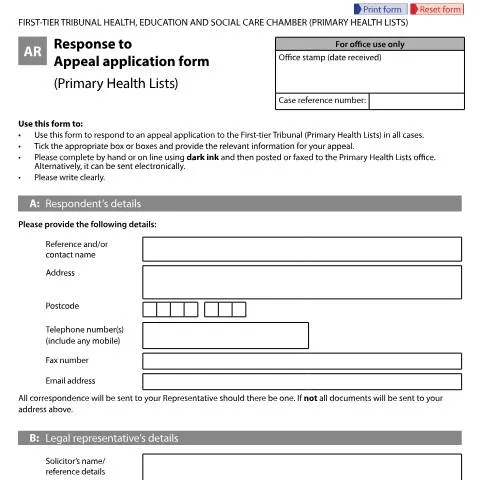
Understanding Form T173: A Key Document in Health Appeals
Dealing with an appeal to the First-tier Tribunal (Primary Health Lists) can be daunting, especially when navigating through the complexities of the form involved, known as Form T173. This document is essential for responding to appeals regarding inclusion or removal from a Performers List. Understanding the nuances of this form can significantly impact the outcome of an appeal, making it crucial for stakeholders to grasp its significance and process.
The Appeal Process: Why Responding Matters
When an appeal is lodged against a decision regarding a healthcare professional's inclusion on a Performers List, it can fundamentally alter their ability to practice. For instance, a removal from the list can prevent a healthcare worker from offering their services, impacting their career and livelihood. Therefore, completing Form T173 accurately and timely is not just a bureaucratic obligation; it is a vital step in protecting one’s professional standing.
To emphasize the importance of the response, it’s important to note that failure to submit the form within the stipulated time frame can result in the automatic acceptance of the appeal, leading to unwanted consequences for the respondent. This time-sensitive nature underscores the need to act quickly and efficiently.
Delving into the Details: What Information Does T173 Require?
Form T173 is designed to collect specific information relevant to the appeal. Here are the crucial sections that respondents must focus on to ensure that their appeal is addressed appropriately:
- Respondent’s Details: Provide your full name, address, and contact information, ensuring that all correspondence is directed to the correct location.
- Legal Representative Information: If you are represented by a solicitor, their details must also be included.
- Appeal Jurisdiction: Indicate whether the response pertains to a removal from the Performers List or conditional inclusion.
- Reasons for Opposing the Appeal: This is where you articulate your stance against the appeal. Clear, concise reasoning is crucial here.
- Directions, Press and Public: Respondents can request hearings to be held privately or specify the need for preliminary directions.
Providing comprehensive and accurate information in these sections is critical for a successful appeal response, as they serve the foundational purpose of the form.
Navigating Time Limits: Key Deadlines for Submission
Timing plays a pivotal role in the appeal process. Once you receive a copy of the appeal application, Form T173 must be completed and returned within 21 days. This deadline applies universally, regardless of the specifics of the case. It's essential to mark this date on your calendar and prepare your response well in advance to avoid last-minute complications.
If you find yourself unable to meet this deadline, there are options available. You can request an extension by explaining your reasons for the delay. However, securing an extension is not guaranteed and should be approached cautiously. Therefore, it is advisable to prioritize completing and submitting the form promptly.
Potential Pitfalls: Common Mistakes to Avoid
While filling out Form T173, there are several common mistakes that can lead to delays or complications in processing the appeal. Awareness of these pitfalls can help ensure a smoother experience:
- Incomplete Information: Failing to provide all required details can lead to delays. Double-check that every section is filled out correctly.
- Documentation Errors: Ensure that any supplementary documents are correctly referenced and included. Omissions can weaken your response.
- Missing the Deadline: The 21-day rule is strict. Late submissions can jeopardize the appeal response, so submit as soon as you are ready.
Taking time to review the form and ensure completeness can save significant headaches down the line.
Modes of Submission: Choosing the Right Path
Form T173 can be submitted through various channels, each with its advantages and considerations. Here’s a breakdown of the available options:
| Submission Method | Advantages | Considerations |
|---|---|---|
| By Post | Provides a physical copy for records. | Delivery times can vary; allow sufficient time. |
| Fastest method; instantaneous confirmation of receipt. | Ensure correct email address is used to avoid miscommunication. | |
| By Fax | Quick way to send documents; can be verified. | Fax machines may not be readily available to all respondents. |
Choosing the right method for submission can depend on personal preference, urgency, and the availability of resources. Regardless of the route taken, ensure to keep copies of all submitted documents for your records.
Understanding the Appeal Hearing: What to Expect
If the appeal proceeds to a hearing, respondents should be well-prepared. The tribunal can hold hearings in public or private settings, depending on the nature of the appeal and the requests made within the form. Here’s what to expect:
- Public Hearings: Generally, hearings are open to the public unless specified otherwise. If confidentiality is a concern, be prepared to provide reasoning for a private hearing.
- Oral Hearings: Respondents should be ready to present their case verbally, clearly outlining their objections to the appeal. Estimate the duration needed for your presentation to assist the tribunal in scheduling.
- Witnesses: If necessary, bring any witnesses or supporting documents that can substantiate your case. Preparing your arguments and evidence thoroughly is critical.
The outcome of the hearing can significantly affect the respondent's career, making proper preparation integral to the process.
Distinctive Features of Form T173 Compared to Other Tribunal Forms
Form T173 serves a specific purpose within the realm of health appeals, and understanding how it differs from other tribunal forms can help clarify its unique role. For instance, the T173 form is distinct from forms used for general appeals in that it specifically pertains to health professionals' inclusion or removal from the Performers List.
Other forms may address broader tribunal matters such as general case appeals, judicial reviews, or employment disputes. Recognizing these distinctions can prevent confusion and ensure that respondents utilize the appropriate form for their specific circumstances.
Real-Life Implications of Submitting Form T173
Finally, the submission of Form T173 has real consequences for the individuals involved. A successful response can lead to the upholding of a professional’s ability to practice, while a failure to respond adequately could result in losing that right.
Moreover, the implications extend beyond just the immediate respondent; they can affect patient care and availability of services in the community. Therefore, it is not merely a personal issue but one that resonates throughout the healthcare system.
In today's challenging healthcare landscape, understanding and effectively navigating the appeal process through Form T173 can empower healthcare professionals to safeguard their careers and maintain their contributions to public health.
By approaching the form with diligence and clarity, respondents can ensure that their voices are heard within the tribunal framework, leading to fair and just outcomes.
Understanding the Appeal Process for Health Lists
The appeal process regarding health lists can be somewhat complex, particularly for those unfamiliar with the procedures involved. When responding to an appeal to the First-tier Tribunal (Primary Health Lists), it is crucial to grasp the fundamental aspects of the process, including the roles of the parties involved and the potential outcomes of the tribunal's decisions.
The First-tier Tribunal, specifically within the jurisdiction of Primary Health Lists, deals primarily with disputes concerning applications made to join or remain on a health list managed by NHS bodies. These disputes can arise from various scenarios, such as refusals of applications, removals from lists, or decisions about the compliance of practitioners with NHS regulations.
As an appellant, it is essential to be prepared for a thorough examination of the arguments presented. Both written submissions and oral representations may be considered by the tribunal. Generally, parties involved include the appellant, the respondent (often the NHS body), and any witnesses or representatives. Each party will have the opportunity to present their case, including evidence and any relevant documentation.
The potential outcomes of the tribunal's decision can range from upholding the original decision made by the NHS body to overturning that decision. It is also possible for the tribunal to provide directions on how to proceed, which can include remitting the case back to the NHS body for reconsideration.
To effectively navigate this appeal process, it is advisable for appellants to familiarise themselves with previous tribunal decisions, especially those that relate to similar circumstances. This insight can help shape your appeal and increase the likelihood of a favourable outcome.
Preparation of Evidence for Tribunal Hearings
When preparing for a tribunal hearing concerning an appeal against a decision made by an NHS body regarding Primary Health Lists, compiling robust and relevant evidence is crucial. The tribunal will assess not only the arguments presented but also the evidence backing those claims. Therefore, a well-structured approach to evidence collection and presentation can significantly enhance your case.
Types of Evidence: Understanding the types of evidence that may be useful is key. This can include:
Written Documentation: Any correspondence related to your application, including letters from the NHS body, previous tribunal decisions, or any relevant policies or guidelines that support your position. Ensure that these documents are well-organised and referenced clearly in your submission.
Witness Statements: If applicable, witness statements from colleagues or other professionals who can attest to your qualifications, practice standards, or the circumstances surrounding your case can add significant weight to your appeal. Witnesses can provide first-hand accounts that corroborate your claims.
Fill in your form directly online
No printing: type your details into the boxes of the official form, tick, then download the PDF ready to send.
- 1Type into the form boxes
- 2Tick in one click
- 3Save and download the PDF
Expert Opinions: In some instances, it may be beneficial to obtain expert opinions from other health professionals. These opinions should be articulated in a clear and concise manner, directly addressing the points in dispute.
Statistical Evidence: If your case involves statistical data regarding practice performance, patient outcomes, or compliance with NHS standards, ensure you present this information in a comprehensible format, complemented by contextual explanations.
Submission Guidelines: All evidence submitted to the tribunal must adhere to strict guidelines. It is crucial to ensure that all documents are legible, properly labelled, and submitted within the required timeframes. Late submissions may not be accepted. Always keep copies of all documents submitted for your records.
A comprehensive preparation process not only establishes the credibility of your appeal but also demonstrates your commitment to addressing the matters at hand seriously. Judges at the tribunal value clarity and thoroughness, so take the time to consider how your evidence and arguments best align with the tribunal's expectations.
The Role of Representation in Tribunal Appeals
Navigating the complexities of an appeal can be daunting, and the decision of whether to seek representation is an important one. While it is possible to represent oneself at a tribunal hearing regarding Primary Health Lists, many individuals choose to engage legal professionals or advocates for various reasons.
Advantages of Legal Representation: Engaging someone with experience in tribunal processes can provide several benefits:
Expert Guidance: Legal representatives can offer critical insights into the nuances of the tribunal’s operations, including procedural rules and expectations. They can help prepare your case effectively, ensuring that all necessary documentation is collected and presented appropriately.
Strategic Preparation: A professional can assist in crafting your arguments and identifying the most effective strategies for presenting evidence, which might include anticipating counterarguments from the opposing party.
Experience with Similar Cases: An advocate who has previously worked on similar cases will have insight into common pitfalls and successful tactics employed in past hearings.
Emotional Support: The tribunal process can be stressful, and having a representative can alleviate the emotional burden of self-representation. Knowing that you have someone knowledgeable on your side can provide peace of mind.
When to Consider Representation: It is advisable to consider legal representation if:
- Your case involves complex legal issues that may require a deep understanding of health regulations.
- You feel overwhelmed by the prospect of presenting your appeal and handling cross-examinations or procedural nuances.
- There is a significant amount of evidence to be organised and presented, and you require assistance in making the best use of it.
Choosing the Right Representative: When selecting a representative, consider their background in handling tribunal cases, their familiarity with NHS regulations, and their approach to client engagement. A good fit in terms of communication style and trust is essential to ensure a collaborative working relationship.
Ultimately, whether you choose to represent yourself or seek legal assistance, understanding the appeal process, preparing solid evidence, and considering your options carefully will enhance your chances of a successful outcome in the First-tier Tribunal (Primary Health Lists).