Navigating the Complexities of Form C13: A Critical Tool for Child Welfare
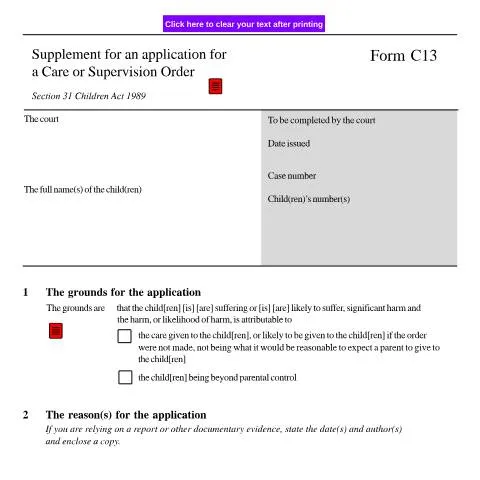
In family law proceedings, the well-being of children is paramount. Form C13, officially known as the Supplement for an Application for a Care or Supervision Order, is an integral component of legal processes concerning child welfare. This form is not merely a bureaucratic necessity; it represents the voices of children in situations where their protection is at stake. Whether you are a parent, guardian, or a concerned third party, understanding Form C13 is crucial for navigating the complexities of court orders related to child care and supervision.
Historical Context: Understanding the Legal Framework
The roots of Form C13 lay in the Children Act 1989, a landmark piece of legislation designed to ensure the welfare of children is the paramount consideration in all legal decisions affecting them. The Act was a response to a growing awareness of the need for a structured approach to child protection, recognizing that family dynamics and circumstances can lead to situations where children are at risk of significant harm.
Under this Act, Form C13 is utilized when an application for a Care or Supervision Order is made. The legal grounds for such applications are primarily focused on the well-being of children who may suffer significant harm due to their current living conditions or parental capabilities. A detailed understanding of the legal context in which Form C13 operates is vital for those engaging with the family court system.
When to Use Form C13: Timing is Key
Determining the right timing for submitting Form C13 can influence the outcome of the case significantly. An application for a Care or Supervision Order must be made when there is a reasonable belief that the child is at risk of suffering significant harm. This can arise from various scenarios, including domestic violence, neglect, or substance abuse issues within the home.
The completion and submission of Form C13 should coincide with the initiation of the proceedings. It is essential to ensure that the form is filled out comprehensively, as incomplete submissions may lead to delays or rejections. It is also crucial to note that the courts operate on strict timelines, and any delays in filing can affect the court's ability to grant urgent relief.
Filing Methods: Exploring Your Options
Submitting Form C13 can be done through various channels, each with its unique procedural nuances. Understanding these can help applicants choose the most suitable method based on their circumstances.
- Online Submission: Many applicants opt for the online submission of Form C13 through the HM Courts & Tribunals Service website. This method is typically faster and provides immediate confirmation of receipt.
- Paper Submission: Form C13 can also be submitted in hard copy at the relevant Family Court. This method may be preferable for individuals who are less familiar with online processes or who require assistance from court staff.
- Personal Delivery: In urgent cases, applicants may choose to deliver the form in person to ensure swift processing. This is especially pertinent when immediate action is required to protect a child.
Regardless of the submission method, it is critical to retain copies of the completed form and any supporting documentation.
Distinctive Elements: Differentiating Form C13 from Other Forms
Form C13 is often confused with other forms related to child custody and welfare, such as Form C100 (Application for a Child Arrangements Order) and Form C1 (Application for a specific issue order). However, there are distinct differences that applicants must grasp to avoid procedural pitfalls.
| Form | Purpose | Used For |
|---|---|---|
| Form C13 | Supplement for a Care or Supervision Order | To apply for intervention when a child is at risk of significant harm |
| Form C100 | Application for a Child Arrangements Order | To establish living arrangements or contact with a child |
| Form C1 | Application for a Specific Issue Order | To resolve specific disputes about a child’s upbringing |
This clarity is essential; misfiling can lead to critical delays in court proceedings that may put a child at risk.
Gathering Evidence: Justifying Your Application
Completing Form C13 is not just about filling out the required fields; it also necessitates a comprehensive gathering of evidence to support the application. This may include reports, witness statements, and any relevant documentation that illustrates the child's situation. Each piece of evidence should be clearly referenced in the application, with details provided on the date and authorship of reports or documents submitted.
- Reports: If professional reports (e.g., from social workers or child psychologists) are available, they must be included as part of the application.
- Witness Statements: Statements from individuals who can attest to the child's situation should be prepared and included.
- Documentation: Any supporting documentation, such as medical records or police reports, can strengthen the application.
Being thorough in the evidence-gathering process is not only a requirement but can critically influence the court's decision-making process.
The Implications of Filing: What Lies Ahead for Applicants
Filing Form C13 sets in motion a series of legal obligations and potential actions that applicants must be aware of. Upon submission, the court will review the application and may schedule a hearing to assess the situation further.
- Legal Representation: Applicants should consider obtaining legal advice to navigate subsequent court proceedings effectively.
- Interim Orders: Depending on the urgency of the situation, the court may issue interim orders to provide immediate protection for the child while the case is being considered.
- Follow-Up Actions: After the hearing, the court will issue a decision, which may require further actions from the parties involved, such as compliance with specific conditions or ongoing reporting to social services.
Failure to adhere to the court's decisions or conditions can result in serious repercussions, including the potential revocation of parental rights in extreme cases.
Special Considerations: Tailoring Your Approach
There are specific scenarios where the standard procedures for completing and submitting Form C13 may vary. These include cases involving individuals from outside the UK, minors applying on their own behalf, or situations that require urgent intervention due to immediate risks.
- International Considerations: If the applicant or child has connections to another country, additional legal frameworks, such as the Hague Convention, might apply, necessitating a careful approach to jurisdiction and legal representation.
- Minors as Applicants: In rare cases, minors may be allowed to apply for Care Orders themselves. Legal aid and advocacy services should be sought to ensure their rights are protected.
- Urgent Applications: Applications made on an urgent basis require prompt action and often differ in processing times. Evidence of urgency must be clearly articulated in the application.
Understanding these special considerations is vital to ensuring that all applications are both compliant with the law and effectively advocate for the child’s best interests.
Final Thoughts: Empowering Families and Protecting Children
The process surrounding Form C13 is steeped in legal requirements but ultimately centers on the protection and welfare of children. Applicants must approach this form with diligence and care, understanding its significance in the broader context of family law.
By fostering a clear grasp of the form and its implications, families can empower themselves to navigate the complexities of the family court system effectively. Ultimately, the goal is to ensure a safe and nurturing environment for children, which remains the core focus of all legal proceedings involving care and supervision orders.
Fill in your form directly online
No printing: type your details into the boxes of the official form, tick, then download the PDF ready to send.
- 1Type into the form boxes
- 2Tick in one click
- 3Save and download the PDF
Understanding Care and Supervision Orders in the UK
Care and Supervision Orders are essential legal mechanisms that aim to protect children at risk in the UK. These orders are issued by the Family Courts under the Children Act 1989, allowing local authorities or other designated bodies to take action in the best interests of a child. The difference between these orders is quite significant; a Care Order grants local authorities parental responsibility for the child, meaning they can make major decisions concerning the child's wellbeing. In contrast, a Supervision Order allows for monitoring the child's situation but does not transfer parental responsibility. Understanding the implications of these orders is crucial for any applicant navigating the process, as the outcomes can fundamentally alter the child's and family's future.
When applying for either type of order, Form C13 must be completed. This form requires detailed information about the child, the circumstances leading to the application, and the proposed arrangements for the child's care. Applicants must also outline why they believe a Care or Supervision Order is necessary, providing evidence that supports their claim. Local authorities often play a critical role in these applications, and their assessments of the child's needs and risks are pivotal in the court's decision-making process. Understanding these factors can significantly influence the success of an application.
The Role of Social Services in the Application Process
Social services are integral to the completion and submission of Form C13 for both Care and Supervision Orders. Local authorities have dedicated social services teams responsible for assessing the needs of children and families. When a concern is raised about a child's welfare, social services will conduct an initial assessment. This often leads to a more comprehensive assessment if serious concerns are identified.
In the context of a Form C13 application, social services may prepare a report that outlines their findings. This report will include information about the child, their living situation, family dynamics, and any risks identified during the assessment. It’s crucial for applicants to maintain open lines of communication with social services; cooperation can facilitate a smoother application process. Additionally, applicants should be aware that social services have the authority to recommend whether a Care or Supervision Order is warranted. Their professional input can heavily impact the court’s decision, making it essential to understand their role and foster a collaborative relationship.
Common Challenges and Considerations When Submitting Form C13
Submitting Form C13 can present various challenges, particularly when dealing with sensitive family dynamics and child welfare issues. One common challenge is the gathering of sufficient evidence to support your application effectively. This may include obtaining reports from social services, medical professionals, or educational institutions. Each piece of evidence must be carefully considered and relevant to the child's circumstances. Applicants should ensure that all documentation is organized and submitted alongside the application form.
Another frequent issue is the emotional toll of the application process. Parents or guardians may face intense scrutiny regarding their parenting capabilities and living conditions. It is essential to prepare emotionally and seek support from trusted friends, family members, or professional counseling services. Understanding that the courts prioritize the child's best interests can help frame the application in a constructive light.
Additionally, applicants must be mindful of the deadlines involved in the process. Failure to submit documentation within a specified timeframe may delay proceedings or negatively impact the outcome. Regular follow-ups with the court registry and social services can alleviate confusion surrounding deadlines and help keep track of the application's status.