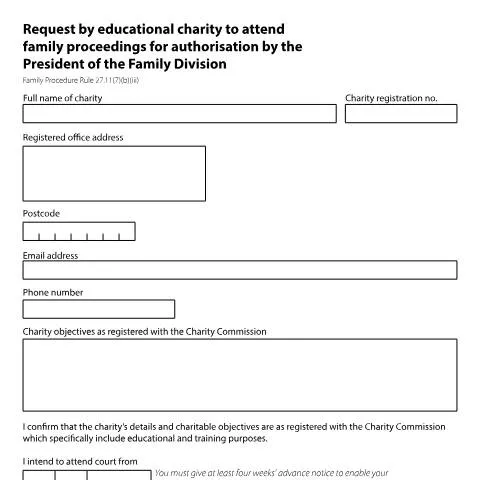
The Significance of the FP300 Form in Family Court Proceedings
In the landscape of family law, where sensitive matters involving children and individuals’ welfare are paramount, the presence of educational charities in court proceedings can add immense value. The FP300 Form, formally known as the "Request by educational charity to attend family proceedings for authorisation by the president of the family division," serves a vital role in facilitating this involvement. It is designed for educational charities seeking permission to attend family court hearings, ensuring that their presence aligns with the objectives they are registered for and promotes educational and training purposes within the legal framework.
Understanding the Legal Framework Surrounding the FP300
The roots of the FP300 can be traced back to the Family Procedure Rules 2010, particularly Rule 27.11(7)(b)(iii). This legislation underscores the need for transparency and inclusivity in family court proceedings, especially when educational charities aim to contribute their expertise or support. These rules ensure that while the court protects the sensitive nature of family cases, it also opens its doors to organisations that can provide constructive input.
Educational charities often have unique insights that can assist the court in understanding the broader implications of a case, particularly in matters concerning children and education. By allowing these organisations to attend, the legal system acknowledges the importance of educational perspectives in shaping outcomes that pertain to the welfare of children.
Timelines: When to Submit the FP300 Form
Timing is crucial when submitting the FP300. To ensure that your application is considered, you must provide a minimum of four weeks’ notice before the scheduled court date. This advance notice is necessary for the President of the Family Division to review your request adequately.
- Application Deadline: At least four weeks before your intended court date.
- Review Period: The President will assess your application and notify you of their decision.
- Court Attendance: If approved, you may attend the hearing on the designated date.
This timeline not only helps the court manage its schedule but also allows educational charities to prepare adequately for their attendance, ensuring they can contribute meaningfully to the proceedings.
Completing the FP300 Form: Key Sections and Requirements
Filling out the FP300 Form requires attention to detail. Key sections include:
- Charity Details: Name, registration number, and registered office address.
- Charity Objectives: A brief description of the charity's objectives as registered with the Charity Commission, specifically highlighting how they align with educational and training purposes.
- Notification of Intended Attendance: Clearly state the date you intend to attend the court.
- Confirmation Section: A declaration confirming that the charity’s details and objectives are accurately reflected as per the Charity Commission records.
Each of these components is crucial for the successful processing of your request. Missteps in filling out this form can lead to delays or outright refusals, so accuracy is paramount.
Ensuring Compliance with Data Protection Regulations
In filling out the FP300, it is essential to remain compliant with the Data Protection Act 2018 and the UK GDPR. When you provide personal and organisational data, ensure that:
- You only collect and disclose information necessary for your application.
- You are transparent about how this data will be used.
- You maintain the privacy and confidentiality of sensitive information throughout the process.
Failure to adhere to these regulations can lead to complications, including potential legal repercussions for the charity involved.
Dealing with Potential Refusals or Missing Information
Understanding the potential avenues when facing a refusal or incomplete submission is critical. If your request is denied, it may stem from various reasons, including inadequate justification of educational objectives or failure to meet the timely submission requirements.
Steps to Address a Refusal
- Review the Decision: Carefully read the correspondence from the Family Division, noting any specific reasons for refusal.
- Amend Your Application: If possible, address the points raised in the refusal and resubmit your FP300.
- Seek Legal Advice: Consider consulting a legal professional with experience in family law to better understand your options and the implications of the refusal.
Should there be missing information in your application, the court office may contact you for clarifications. Promptly addressing these requests can expedite the review process.
Following Up on Your Application: What to Expect
After submitting your FP300 Form, it is natural to want to verify the status of your application. The President’s office undertakes a thorough review but may take some time to reach a decision due to the nature of family court workloads.
Tracking Your Application
To follow up effectively, consider the following:
- Contact Information: Keep the contact details of the office you submitted your form to, as you may need to reach out for updates.
- Response Timeframe: Understand that response times can vary based on the court’s schedule and workload. Patience is often necessary.
- Email vs. Postal Inquiries: If you submitted your application via email, consider following up using the same channel for a more immediate response.
Being proactive in following up can help ensure that your request does not fall through the cracks, allowing you to maintain your intended attendance at the court proceeding.
The Role of Educational Charities in Family Proceedings
The inclusion of educational charities in family court proceedings can significantly influence the outcomes. These organisations often have extensive experience in helping children and families navigate complex social issues, and their insights can aid in crafting solutions that genuinely match the needs of the parties involved.
By submitting the FP300, educational charities gain access to vital information and can provide the court with comprehensive knowledge about the educational context surrounding the issues at hand. Their involvement can lead to:
- Enhanced Understanding: Charities can shed light on the educational implications of custody decisions.
- Support Services: They may offer resources or referral services that could assist families post-hearing.
- Future Preventative Measures: Insights from these charities can help in crafting educational interventions that prevent future disputes.
What Happens Next? The Path After Submission
Once you have submitted the FP300 Form and received approval, you will be allowed to attend the designated family court hearing. However, it is essential to understand the procedure during this attendance:
- Preparation: Familiarise yourself with the case details and the proceedings to enable informed contributions.
- Active Participation: While you can observe proceedings, any input must be relevant to your charitable objectives, and you may need to clarify your role to the court.
- Post-Hearing Actions: Reflect on your observations and consider ways in which your charity can assist following the hearings, either through post-proceeding support or further educational initiatives.
Through active involvement, educational charities can make a meaningful impact, ensuring that the voices of children and families are heard and respected within the family legal system.
Conclusion: The Unfolding Impact of the FP300
The FP300 Form is more than a mere administrative hurdle; it is a gateway for educational charities to influence family law proceedings positively. By understanding its significance, navigating the submission process with care, and being prepared for active engagement in court, charities can not only fulfil their objectives but also contribute to the broader societal goal of enhancing the welfare of children and families navigating the complexities of family law.
Understanding the Role of Educational Charities in Family Proceedings
Educational charities play a crucial role in supporting families during legal proceedings, particularly in family court cases. These organizations often provide resources, guidance, and advocacy for children's welfare, which is a primary concern in family law. When an educational charity requests to attend family proceedings, it is typically because they aim to gain insight and understanding of the issues at hand, which can further inform their work and help them support affected families more effectively.
One common instance where educational charities seek involvement is during hearings concerning children’s welfare, custody disputes, or assessments of educational needs. The Family Division of the High Court may grant permission for such organizations to attend hearings, especially when their expertise is pertinent to the case. This involvement can not only enhance the proceedings with additional perspectives but also ensure that the charity's programs are better aligned with the needs of families facing challenges.
In requesting attendance through Form FP300, charities must articulate their interest clearly, demonstrating how their participation supports the child's best interests and the educational objectives they aim to achieve. This is particularly important as the courts are guided by the principle of prioritizing children's welfare above all else.
The Process of Submitting Form FP300
Submitting Form FP300 is a structured process that requires careful preparation. To begin with, the charity must complete the form accurately, ensuring that all sections are filled out in compliance with the laid-out requirements. The form seeks specific information, including the nature of the charity's involvement, the particular proceedings they wish to attend, and how their presence will contribute positively to the case.
Once the FP300 is filled out, it must be submitted to the appropriate family court. It is crucial to adhere to any specific instructions regarding submission, including deadlines and methods of submission, as these can vary by court. Charities must also consider whether they should engage legal representation for assistance in navigating the process. In some cases, legal counsel can help articulate the benefits of the charity's presence more effectively, weigh the nuances of family law, and ensure compliance with court protocols.
After submission, the court will typically review the request and may hold a preliminary hearing to discuss the charity's application. During this hearing, the charity may be asked to present arguments or respond to any concerns raised by the judge or other parties involved in the proceedings. Transparency and a collaborative approach can enhance the chances of a successful application.
Legal Considerations and Data Protection Compliance
When an educational charity seeks access to family proceedings via Form FP300, it is essential to consider the legal framework governing such matters. The Data Protection Act 2018 and the UK GDPR govern how personal data must be handled. Given that family proceedings often involve sensitive information about children and families, there are strict regulations regarding data privacy and confidentiality.
Charities must ensure that they understand their responsibilities regarding data protection when attending family proceedings. This includes safeguarding any information obtained during the proceedings, understanding the limitations on sharing such information, and ensuring that any data collected is used solely for the intended purpose.
Moreover, the court may impose additional restrictions on the information that can be accessed or disclosed based on the specific circumstances of the case. Charities should be prepared for the possibility that some information shared during the proceedings may be subject to confidentiality orders or other prohibitions on disclosure. Being aware of these legal considerations not only protects the charity but also upholds the integrity of the family law process.