Understanding the Context of the FE16 Form in Family Courts
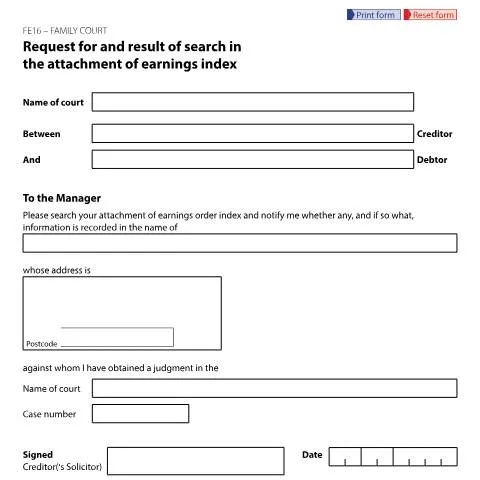
The Request for, and result of, search of the attachment of earnings index (Family Court): Form FE16 holds significant importance in resolving financial disputes within the framework of the UK's Family Courts. When creditors seek to enforce a financial judgment against debtors, understanding how this form fits into the larger picture of debt collection and compliance with court orders is crucial.
Who Might Utilize the FE16 Form?
The users of the FE16 form typically include various stakeholders involved in a financial dispute. These include:
- Creditors: Individuals or entities who are entitled to receive payments based on a court order.
- Solicitors: Legal representatives who act on behalf of creditors, guiding them through the legal complexities surrounding debt enforcement.
- Debtors: Individuals against whom a judgment has been made and who may have wages subject to attachment to meet their financial obligations.
Within these categories, there are specific scenarios that might warrant the use of the FE16 form:
- Debt Recovery: Creditors who have obtained a court judgment and wish to enforce it through an attachment of earnings order.
- Employment Circumstances: When debtors are employed and may have a portion of their earnings withheld to repay debts, this form serves as a necessary tool to ascertain their financial standing.
Components of the FE16 Form: A Detailed Breakdown
Completing the FE16 form accurately is essential for the proper processing of requests. Each section must be handled with care. Below are the key components of the form:
Details of the Court and Judgment
Begin with the name of the court where the original judgment was made. This section ensures that the request is linked to the correct judicial proceedings. Misstating the court can lead to delays or misdirection of the request.
Information About the Debtor
The section requiring the debtor's name and address must be filled out completely. Omitting details or providing incorrect information can result in the form being rejected or the search yielding no results. Precision here is key, as the form is used to locate potential earnings subject to deductions.
Judgment Details
Including the case number and the name of the court again reaffirms the context of the debtor's financial obligations. This acts as a double-check for the clerk processing the request and helps avoid administrative errors.
Certification of Search Results
Upon completion of the search for attachments of earnings, the court manager will indicate whether there are any recorded entries against the debtor. This certification is critical for creditors to understand their options moving forward.
The Process of Submitting the FE16 Form
Submitting the FE16 form involves several procedural steps that are vital for ensuring the request is properly handled. The following guidelines outline this process:
- Completion: All sections of the form must be filled out accurately, ensuring all information is up to date.
- Submit to the Appropriate Court: The completed form should be submitted to the Family Court that issued the original judgment. This can often be done in person or via post.
- Await Confirmation: Once submitted, it is essential to await a response from the court. This will typically include the search results and any applicable details regarding the debtor's earnings.
Positioning the FE16 in the Debt Recovery Process
The FE16 form acts as a crucial link in the chain of actions that creditors can take to recover debts. It fits into a larger context of enforcement mechanisms available under UK law:
| Action | Description |
|---|---|
| Obtaining a Judgment | The initial step where a creditor secures a court ruling confirming the debtor owes money. |
| Issuing an Attachment of Earnings Order | A court order directing an employer to withhold a portion of the debtor's wages to satisfy the debt. |
| Utilizing the FE16 Form | A method for creditors to investigate the debtor's employment status and earnings. |
| Implementing Further Actions | Based on the results of the FE16 form, creditors can decide on next steps—be it further legal actions or pursuing negotiations. |
Differentiating FE16 from Similar Official Documents
The FE16 form is often confused with other forms related to financial judgments and debt recovery. Understanding these differences can be crucial for effective legal compliance:
- Form N322A: Used for applying for an attachment of earnings order directly, rather than querying existing orders.
- Form N56: Related to the application for a charging order, which is a different enforcement mechanism.
- Form N244: General application form for various court orders, which might include modifications to existing judgments.
While these forms serve distinct purposes, the FE16 specifically targets the inquiry aspect of debt recovery, focusing on identifying any existing attachments of earnings.
The Legal Framework Surrounding the FE16 Form
Within the realm of family law and financial judgments, the FE16 form operates under specific legislation and regulatory frameworks that provide its legitimacy:
- Family Law Act 1996: Outlines the rights and obligations of parties in financial disputes relating to family matters.
- Data Protection Act 2018: Ensures that personal data handled during the process complies with data protection standards.
- UK GDPR: Governs how personal data is processed, particularly relevant when dealing with sensitive financial information in family law cases.
This legal backdrop not only legitimizes the use of the FE16 form but also protects the rights of all parties involved, ensuring that any information shared is handled with the utmost care and confidentiality.
Practical Insights for Successful Completion of the FE16
To maximize the chances of a successful request using the FE16 form, here are some practical insights:
- Double-check Details: Before submission, ensure that all names, addresses, and case numbers are accurate and match the court records.
- Keep Records: Retain a copy of the completed form and any correspondence with the court as part of your records.
- Follow Up: If you do not receive a response within a reasonable timeframe, it may be prudent to follow up with the court to confirm receipt of your request.
These steps will facilitate a smoother process and enhance the likelihood of receiving timely and accurate information regarding the debtor’s earnings.
Final Thoughts on the Role and Impact of the FE16 Form
The FE16 form is a vital instrument within the landscape of family law in the UK. By facilitating inquiries into attachment of earnings, it empowers creditors while maintaining a structure governed by legal frameworks that protect debtor rights. Understanding its purpose, the process, and its place within the broader debt recovery system equips users with the knowledge needed to navigate financial disputes effectively.
Understanding the Attachment of Earnings Index
The Attachment of Earnings Index is an essential tool within the Family Court system, particularly when considering the enforcement of financial obligations, such as maintenance payments. This index allows for the identification of a debtor’s earnings, facilitating the court's ability to enforce orders effectively. It serves as a reference point for judges and solicitors in determining the appropriate amount to be deducted from a debtor's wages directly, ensuring that payments are made as required. Within the realm of financial orders, understanding how to navigate this index is crucial for both applicants and respondents.
When you submit a request via Form FE16 to search the Attachment of Earnings Index, you are essentially seeking to verify whether the individual in question has a current employment status and, if so, the details regarding their earnings. This can be pivotal in situations where a non-paying party may not be forthcoming about their financial information. The Family Court has a vested interest in ensuring that financial support is upheld, which is why this index is maintained with up-to-date records of known employment statuses.
The process of accessing this index is controlled and governed strictly under the Data Protection Act 2018 and UK GDPR, meaning that any personal data accessed during this inquiry must be handled with care and in compliance with legal standards. This includes ensuring that any information obtained is only used for legitimate purposes associated with family law proceedings.
Fill in your form directly online
No printing: type your details into the boxes of the official form, tick, then download the PDF ready to send.
- 1Type into the form boxes
- 2Tick in one click
- 3Save and download the PDF
The Application Process for Form FE16
Completing Form FE16 is a critical step in the process of searching the Attachment of Earnings Index. To begin your application, it is important to gather all necessary information about the individual concerned, including their full name, address, and any known employment details. This detailed information helps ensure that your request is successful, as the index relies on accurate identifiers to return relevant results.
Once you have completed the form, it needs to be submitted to the Family Court where your case is registered. Depending on the court’s location and workload, you may receive a response to your request within a few days to a few weeks. It's advisable to keep track of your application, including any reference numbers provided, as this can assist in follow-ups or if you need to provide additional information.
After the court processes your application, you will receive the outcome of your search in a formal response. If the individual is registered in the index, you will obtain details of their employer(s) and the relevant earnings information, which can then be used to assist in enforcing any existing financial orders.
Should you discover that the individual is not listed in the index, this does not necessarily mean they are unemployed. There could be various reasons for this outcome, ranging from the individual working in a sector not reported to the index to potential privacy issues surrounding their employment status. In such cases, further investigation may be warranted, and other methods may need to be explored to ascertain their financial situation.
Legal Implications and Considerations
The use of Form FE16 and the subsequent search of the Attachment of Earnings Index raises several legal implications that parties involved should consider. Firstly, the information derived from this search can influence the direction of your case significantly, particularly in the context of proving financial dependency and establishing a clear picture of the debtor's ability to pay.
Furthermore, it is crucial to note that the handling of any information acquired must adhere to the principles of the Data Protection Act 2018 and UK GDPR. This includes ensuring the data is kept secure, only shared with relevant parties involved in the court proceedings, and not misused for any other purposes. Breaching these regulations can result in serious penalties, including fines and potential legal action. Therefore, it is wise to consult with legal professionals if you have any uncertainties regarding the handling of sensitive information.
Moreover, understanding the potential outcomes of your inquiry is essential. If the attachment of earnings is enforced, this may result in a significant alteration to the debtor's financial situation, impacting their ability to manage their essential living expenses. This is a sensitive area, and as both parties navigate this process, it’s vital to approach it with a sense of fairness and responsibility.
Lastly, parties should be aware that a search of the Attachment of Earnings Index is not the only mechanism available for enforcing financial orders. Alternative routes, such as seeking a court order for information about a debtor's financial circumstances or employing a private investigator, may be warranted depending on the complexity and nuances of your situation.