Understanding the Draft European Supervision Order Certificate
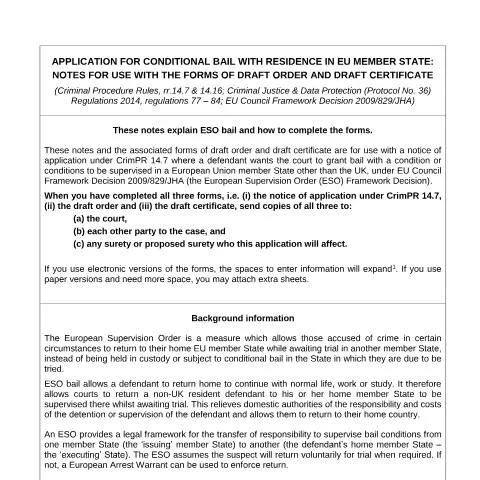
Imagine being accused of a crime in the UK, yet being provided an opportunity to continue your life, work, or studies in your home EU member state while awaiting trial. This is where the Draft European Supervision Order (ESO) Certificate comes into play, representing a significant pillar of the EU's judicial cooperation framework. This certificate not only assists defendants but also alleviates the burden on UK authorities, allowing for a more efficient handling of cases.
The Essence of the European Supervision Order
The ESO is designed to bridge the gap between a defendant’s civil liberties and the judicial processes of different EU member states. It is particularly relevant in situations where the defendant is not a UK resident but is facing legal proceedings within the UK. The objective is to allow defendants to avoid detention while ensuring they remain supervised while awaiting trial.
Legal Framework Supporting the ESO
Rooted in the EU Council Framework Decision 2009/829/JHA, the ESO has been integrated into UK law through the Criminal Justice and Data Protection (Protocol No. 36) Regulations 2014. This legislative backdrop enables the transfer of supervision responsibilities between member states, ensuring that the courts maintain oversight of defendants while respecting their rights.
Who Can Obtain the ESO Certificate?
The eligibility to apply for an ESO certificate is contingent upon several factors:
- Defendant’s Residency: The defendant must be ordinarily resident in the executing EU member state.
- Nature of the Offence: The charges must fall under the purview of Article 14 of the Framework Decision.
- Conditions for Bail: The court must determine that the proposed bail conditions are appropriate as per Article 8 of the Framework Decision.
Complications can arise if there are concerns regarding public safety. In such cases, the court may decide that the defendant should remain in custody rather than being granted ESO bail.
Obtaining the Draft European Supervision Order Certificate
The application process for the ESO certificate involves a structured approach:
- Notice of Application: Fill out the notice of application under CrimPR 14.7.
- Draft Order: Prepare the draft order for the court’s review.
- Draft Certificate: Complete the draft certificate to formalize the request.
- Submission: Send copies of all three documents to the relevant court, involved parties, and any proposed sureties.
Each form plays a crucial role in ensuring that the court has all necessary information to consider the application comprehensively.
The Role of the Courts in the ESO Process
The judiciary plays a pivotal role in determining whether to grant an ESO. The court must evaluate:
- The seriousness of the alleged offence
- The defendant's ties to the proposed executing State
- The appropriateness of the conditions of bail
Judges will often require consultations with the executing state before issuing an ESO. This can help verify the defendant's identity and previous criminal history, ensuring that the supervising state is prepared to manage the bail conditions effectively.
Value and Legal Standing of the ESO Certificate
The Draft European Supervision Order Certificate holds substantial legal weight. It signifies the transfer of supervision responsibilities, creating a binding agreement between the issuing and executing member states. This instrument enables the defendant to return home while ensuring that they can be called back for trial when required.
Operational Mechanics of the ESO
The ESO operates under certain assumptions and commitments:
- The defendant will comply with the supervision conditions set forth.
- Failure to comply can lead to swift enforcement actions, including the issuance of a European Arrest Warrant.
Such legal measures underscore the importance of maintaining the integrity of the legal process across EU borders. The ESO aims to balance the defendants' rights with the judicial requirements of the country where the trial is to occur.
What Happens in Case of Issues?
Despite the thorough processes in place, complications may arise such as loss of the certificate or errors in the documentation. Here’s how to handle these situations:
Loss or Theft of the ESO Certificate
In the unfortunate event of losing the ESO certificate, the following steps should be taken:
- Report the loss to the local authorities.
- Contact the court that issued the certificate to request a replacement.
- Provide any necessary documentation to support your case.
Errors in the ESO Certificate
If you spot any inaccuracies in your ESO certificate, it’s critical to act swiftly:
- Notify the issuing court immediately.
- Submit a formal request for correction, including supporting documents that validate the changes.
Timely communication with the court is essential to prevent any misunderstandings that might affect the defendant's legal standing.
Practical Applications of the ESO Certificate
While the ESO primarily serves defendants, its implications extend to various stakeholders in the justice system:
- Defendants: It allows them to maintain their daily life and responsibilities in their home country.
- Judicial Authorities: It reduces the burden on UK prisons and enhances cooperation with EU member states.
- Legal Representatives: Understanding the ESO framework equips lawyers to better serve their clients facing international judicial issues.
Moreover, it demonstrates the UK’s commitment to collaborative justice across borders, even amidst complex legal landscapes.
The Future of the ESO in a Changing Legal Milieu
As the legal landscape continues to evolve, particularly in the context of Brexit, the future of the ESO remains a topic of significant interest. Continuing cooperation between the UK and EU in matters of criminal justice will be pivotal in determining how effectively the ESO can be utilized going forward. Legal frameworks must adapt to ensure that defendants’ rights are upheld while also maintaining robust judicial processes.
Overall, the Draft European Supervision Order Certificate serves as an essential tool in balancing individual rights with the needs of the justice system, promoting a more efficient, humane approach to criminal proceedings within the EU.
Understanding the Draft European Supervision Order Certificate Process
The Draft European Supervision Order (ESO) Certificate procedure is a vital aspect of the UK's cooperation with European Union member states in matters of criminal justice. This mechanism allows individuals who are subject to a European Arrest Warrant (EAW) to be released from custody in the UK under specific conditions, contingent upon the supervision of their activities. The process requires a thorough understanding of the legal framework, the documentation involved, and the implications for personal liberty. Here’s an overview of the essential steps and considerations involved in obtaining an ESO.
Eligibility Criteria for Applying for an ESO
Not every individual facing extradition or detained under a European Arrest Warrant is eligible for the Draft ESO. Certain criteria must be satisfied:
- Nature of Offence: The offence for which the EAW has been issued must be eligible for supervision. It typically should not involve serious violent crimes, terrorism, or other severe charges.
- Legal Status: The applicant must have a legal residence in the UK, and their identity must be verifiable through documentation such as a passport or national ID. The UK must also have jurisdiction to supervise the individual.
- Category of Offenders: The ESO is primarily aimed at those who pose a lower risk to public safety, such as first-time offenders or those who have committed non-violent crimes.
Required Documentation for the ESO Application
The application for a Draft ESO requires various forms and evidence that establish the applicant's eligibility and ensure compliance with the supervision conditions. Here’s a list of the primary documents:
- Draft European Supervision Order Certificate (E-ESO): This official document must be filled out meticulously, containing details of the prosecution in the issuing member state and the specific terms of supervision.
- Criminal Record: A comprehensive history of the applicant's criminal background, including previous convictions and any outstanding sentences.
- Risk Assessment: A formal evaluation may be required to assess the risk the individual poses to society, which will influence the decision-making process of the authorities.
- Proof of address: Documentation proving the individual’s residence in the UK, such as utility bills or rental agreements, may be necessary to establish compliance with supervision terms.
Role of Legal Representatives in the ESO Process
Engaging a legal representative experienced in international law and extradition matters is highly advisable when navigating the Draft European Supervision Order Certificate process. Legal professionals play a crucial role in ensuring that all documentation is correctly completed and that the individual’s rights are protected throughout the procedure.
They can provide significant assistance in the following ways:
- Legal Advice: A solicitor can advise on the implications of accepting or contesting the EAW and the associated risks involved with the ESO.
- Preparation of Documentation: They help in accurately preparing and submitting all necessary documents, ensuring that nothing is overlooked that could delay the process.
- Representation in Court: If there are any hearings regarding the ESO, a legal representative can advocate on behalf of the individual, presenting compelling arguments for approval of the order.
Monitoring and Compliance Under the European Supervision Order
Once a Draft European Supervision Order Certificate has been granted, the individual is subject to specific monitoring conditions designed to ensure compliance with the terms of their release. The UK authorities, in conjunction with the relevant European Union member state, will oversee the supervision process. Here’s what you need to know about monitoring under the ESO.
Types of Supervision Conditions
Supervision conditions can vary widely depending on the nature of the offence and the individual's circumstances. Common conditions may include:
- Reporting Requirements: The individual may be required to report regularly to a probation officer or law enforcement authority, providing updates on their living situation and activities.
- Travel Restrictions: Restrictions may be placed on the individual’s ability to travel outside the UK or to specific locations within the country, particularly if those locations are relevant to the case.
- Engagement in Rehabilitation Programs: Depending on the nature of the offence, the applicant may be required to participate in rehabilitation programs, such as counselling or training, aimed at reducing the risk of reoffending.
Consequences of Non-Compliance
Non-compliance with the supervision conditions set forth in the ESO can have severe consequences. The UK authorities will closely monitor adherence, and any breaches can result in immediate repercussions. Potential consequences include:
- Revocation of Supervision: If an individual fails to comply with the conditions, the ESO can be revoked, leading to their immediate arrest and potential extradition to the issuing member state.
- Legal Action: Non-compliance may lead to further legal action within the UK, including charges of breaching bail conditions or parole violations.
- Impact on Future Applications: A breach of supervision can adversely affect any future applications for similar orders or influence the legal standing of the individual in subsequent legal matters.
Appealing Decisions Related to the Draft European Supervision Order Certificate
If an application for a Draft European Supervision Order Certificate is denied, the individual has the right to appeal the decision. Understanding the appeal process is crucial for anyone impacted by such a decision, as it can provide an avenue for redress and the possibility of securing supervision.
Grounds for Appeal
There are specific grounds upon which an appeal can be lodged. These may include:
- Procedural Errors: Any errors in the processing of the application or failure to follow proper procedures can form a basis for an appeal.
- Insufficient Justification: If the original decision lacked adequate justification or failed to take relevant evidence into account, this may warrant an appeal.
- Change in Circumstances: New evidence or changes in the applicant’s situation may also provide grounds for a successful appeal.
Process of Filing an Appeal
To initiate the appeal process, the individual must follow specific steps:
- Notice of Appeal: A formal notice must be submitted outlining the grounds for appeal, which typically requires legal representation to ensure it is properly drafted.
- Gathering Evidence: Collecting relevant documentation and evidence to support the appeal is essential. This might include character references, new risk assessments, or any documentation addressing the grounds of appeal.
- Hearing: In many cases, an appeal will be scheduled for a hearing before a judge or panel. Legal representation during this hearing is highly recommended to navigate the complexities of the appeal process effectively.
Potential Outcomes of an Appeal
The outcome of an appeal can vary based on the grounds presented and the evidence provided. Possible outcomes include:
- Approval of ESO: The appeal may result in the granting of the ESO, allowing the individual to remain in the UK under supervision.
- Upholding of Original Decision: The appeal could also result in the original decision being upheld, maintaining the denial of the ESO.
- Remand for Reconsideration: The case may be sent back to the original decision-making body for reconsideration, with instructions to address errors or omissions in the initial application.