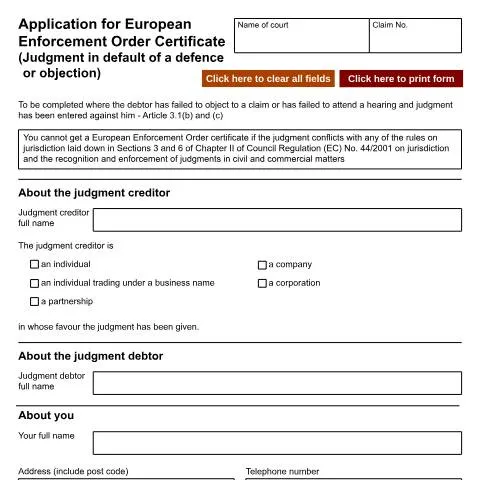
Understanding the Application for a European Enforcement Order Certificate
In the intricate landscape of international debt recovery, the Application for a European Enforcement Order Certificate (EEO) stands as a pivotal tool for creditors seeking to enforce judgments across EU member states. This process, encapsulated in the Form N219A, is not merely a bureaucratic formality; it is an essential step for those who find themselves in the challenging position of chasing an unpaid debt. This document is particularly significant in cases where a judgment has been rendered in default of a defence or objection from the debtor, making it imperative for creditors to understand its nuances and applications fully.
Who Can Apply for the EEO Certificate?
The eligibility to apply for the EEO certificate is primarily contingent upon the nature of the judgment and the circumstances surrounding the debtor's absence. Here are the key criteria:
Judgment Creditor's Profile
- The judgment creditor can be an individual, a partnership, a corporation, or any other legal entity that has been granted a judgment in its favour.
- Notably, the creditor must have a judgment that has not been stayed, varied, or set aside. In simple terms, this means the creditor must be acting on a valid, enforceable judgment.
Judgment Debtor’s Non-Response
For a creditor to apply, the debtor must have failed to either respond to the claim or attend the court hearing. The application must explicitly state that the judgment was entered against the debtor due to their inaction. This factor is crucial, as it underpins the grounds for enforcing the judgment across borders.
The Legal Weight of the EEO Certificate
The EEO certificate holds significant legal value, particularly within the framework of the Brussels Regulation (EC) and the various conventions governing cross-border enforcement.
Legal Foundations
- The EEO is regarded as a valid enforceable judgment across EU member states, which allows creditors to pursue debt recovery without the need for re-examination of the case in the foreign jurisdiction.
- It is essential to note that the application for an EEO cannot be made if the judgment violates any jurisdictional rules established within the Brussels Regulation. This includes instances where the judgment sought conflicts with the established rules regarding jurisdiction found in Sections 3 and 6 of Chapter II of the Regulation.
The Step-by-Step Process of Obtaining an EEO Certificate
Acquiring an EEO certificate, while essential for debt recovery, is also a detailed process that requires careful attention to documentation and compliance with legal stipulations. Below are the essential steps involved:
- Preparation of the Application:
- The applicant must complete the Form N219A, providing detailed information about the judgment and the parties involved.
- It is crucial to ensure that all relevant details, including the court's name, the judgment number, and the creditor's and debtor's information, are accurate and current.
- Submission of Supporting Evidence:
- Alongside the application, the creditor must submit evidence of the judgment, including any documentation that demonstrates the debtor was aware of the proceedings.
- This may include service acknowledgments, which are vital to proving that the debtor was duly informed of the judgment against them.
- Verification by the Court:
- The court will review the application to ascertain that all conditions are met, including the nature of the judgment and the absence of any objections from the debtor.
- If satisfied, the court will issue the EEO certificate, which confirms the enforceability of the judgment.
Practical Uses of the EEO Certificate
Once granted, the EEO certificate serves multiple practical purposes for creditors, particularly in cross-border debt recovery. Here’s how it is typically employed:
Enforcement Across Jurisdictions
- The EEO certificate allows creditors to enforce their judgment in other EU member states without the need for further legal proceedings.
- This is especially beneficial for creditors with clients or business partners operating across different jurisdictions, as it streamlines the typically cumbersome process of international debt collection.
Efficiency in Debt Recovery
- By obtaining an EEO certificate, creditors can expedite the recovery process. The certificate acts as a powerful legal instrument that can compel payment, often leading to quicker resolutions compared to traditional debt recovery methods.
- Furthermore, the existence of the EEO certificate can serve as leverage in negotiations, encouraging debtors to settle outstanding amounts to avoid enforcement actions.
What If Things Go Wrong? Handling Errors and Disputes
In the realm of legal documentation, mistakes can happen, and situations may arise that require rectification or contestation. Here’s what creditors should consider:
Addressing Errors in the Application
- If an error is discovered in the application after submission, the creditor may need to file a request to amend the application. This can include correcting details such as the debtor's name or the amount claimed.
- It is advisable to act swiftly, as delays may complicate the enforcement of the judgment.
Dealing with Contestations
- Should the debtor contest the EEO certificate, the creditor may be required to provide additional evidence to support their claim. This could involve proving that the debtor was adequately informed of the proceedings.
- In some instances, the court may hold a hearing to assess the validity of the debtor's objections, which can delay the enforcement process.
Validity and Renewal of the EEO Certificate
The duration of validity for an EEO certificate is subject to specific conditions that creditors must be aware of:
Validity Period
- Typically, an EEO certificate does not have a specific expiration date; however, the enforceability of the judgment it certifies may be affected by the laws of the member state where enforcement is pursued.
- It is crucial for creditors to stay informed about any changes in legal frameworks that might impact the enforceability of their judgments over time.
Renewal and Withdrawal
- While renewal is not explicitly required, creditors should monitor the status of their claims and the debtor's actions, as new developments may necessitate a review of the enforcement strategy.
- Should the judgment be settled or otherwise rendered moot, creditors must formally withdraw the EEO certificate to prevent unnecessary complications in future dealings.
The Broader Implications of EEO Certificates in Debt Recovery
The Application for a European Enforcement Order Certificate is a cornerstone of effective debt recovery within the European Union. Its implications extend beyond the individual creditor-debtor relationship, influencing cross-border commerce and legal cooperation among member states.
Impact on International Trade
- The availability of EEO certificates facilitates smoother transactions between businesses operating in different jurisdictions, as it assures creditors that their rights will be upheld across borders.
- This assurance can enhance business confidence and encourage more robust economic interactions among EU member states.
Legal Harmonization and Cooperation
- The existence of a unified process for debt recovery fosters greater legal coherence across the EU, ultimately contributing to a more integrated market.
- It reflects a commitment among member states to uphold the rule of law and support creditors' rights, reinforcing the importance of judicial cooperation in the European context.
In navigating the complexities of international debt recovery, understanding the nuances of the EEO certificate and its application process is essential for creditors. By being well-informed and prepared, creditors can effectively leverage this tool to secure their financial interests and enhance their overall business operations.
Understanding the Process of Obtaining a European Enforcement Order Certificate
Applying for a European Enforcement Order (EEO) certificate, particularly in cases of a judgment in default, involves several critical steps. The EEO allows for the enforcement of monetary judgments throughout the European Union, streamlining the process significantly. To initiate this procedure, one must first ensure that the judgment meets the necessary criteria, particularly confirming that it is enforceable in the UK and that the debtor has failed to respond adequately to the initial claim.
The Form N219A is specifically designed for this purpose. Applicants must fill out the form correctly, detailing the original judgment and the circumstances of the default. It’s essential to provide comprehensive information regarding the jurisdiction in which the judgment was made, as well as any communications that occurred prior to the judgment being issued. Before submission, applicants should review the requirements set out by HM Courts & Tribunals Service to ensure compliance with all procedural rules.
Once the application is submitted, it's advisable to keep track of the case status through the HM Courts & Tribunals Service. They provide a reference number upon submission which can help in future correspondence and any necessary follow-ups. Expecting a response can take time, so patience is key; however, proactive communication with the court can often yield insights into the progress of your application.
Key Considerations and Common Pitfalls When Completing Form N219A
Completing Form N219A requires meticulous attention to detail. Here are several key considerations to keep in mind:
- Accuracy of Information: Ensure that all personal details, including your National Insurance number and the debtor's contact information, are accurate. Mistakes can lead to delays or even rejection of your application.
- Supporting Documentation: Attach all necessary supporting documents that corroborate your claim. This might include copies of the original judgment, proof of service to the debtor, and any correspondence related to the case.
- Understanding of Legal Terminology: Familiarize yourself with the legal language used in the form. Misinterpretation of legal terms can lead to incomplete or incorrect applications.
- Filing Fees: Be aware of any fees associated with the application process. Currently, there may be costs involved depending on the specific court and the nature of the enforcement order.
- Timeframes: Understand the time limits for submitting Form N219A after a judgment in default. Delays can impact your ability to enforce the judgment abroad.
Additionally, many applicants overlook the importance of following up with the court after submission. It is beneficial to keep a record of all communications and to check in if you have not received a response within a reasonable timeframe. This proactive approach can help navigate potential administrative bottlenecks.
Post-Application Steps: What Happens After You Receive the EEO Certificate?
Upon obtaining the European Enforcement Order certificate via Form N219A, the next phase involves enforcing the judgment in the debtor's country of residence. This process can vary significantly across different EU member states due to varying enforcement laws and procedures. Here’s what to consider:
- Local Legal Consultation: It is advisable to seek legal advice in the debtor's country, as local laws can greatly influence the enforcement process. A solicitor familiar with cross-border enforcement can provide invaluable guidance.
- Translations: Ensure that all documents, including the EEO certificate, are translated into the official language of the country where enforcement is sought. This is often a legal requirement and failing to comply can invalidate the enforcement effort.
- Notification to the Debtor: Be prepared for the requirement to notify the debtor of the enforcement proceedings. This notification process can differ by jurisdiction, and it’s vital to adhere to local regulations to avoid complications.
- Monitoring the Enforcement: Once enforcement actions are initiated, it’s crucial to monitor the process closely. Some jurisdictions may require additional filings or responses from the creditor during the enforcement phase, so staying informed is essential.
- Potential for Appeal: Be aware that the debtor might have the right to appeal the enforcement in their jurisdiction, which can prolong the process. Understanding the local appeal process will help you navigate any challenges that arise.
In conclusion, obtaining a European Enforcement Order certificate through Form N219A involves a detailed understanding of both the UK and EU legal frameworks. Each step, from application to enforcement, requires careful consideration and adherence to local laws to ensure a successful outcome.