Navigating Disclosure Orders: A Practical Guide to Form EX670
When facing the complexities of legal proceedings, understanding the importance of Form EX670 is paramount for parties seeking to obtain vital information from the Inland Revenue. This document serves as a critical tool in the legal landscape, particularly when the disclosure of sensitive information is necessary to support claims or defenses in court. This guide aims to explore the various dimensions of Form EX670, detailing its purpose, who can utilise it, and how to effectively navigate the process.
The Significance of Form EX670 in Legal Proceedings
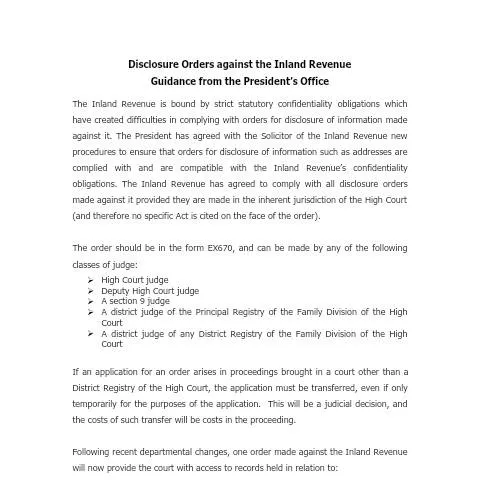
Form EX670 is specifically designed for submitting disclosure orders against the Inland Revenue, a government department responsible for collecting taxes and administering social security. The form allows judges to access information from the Inland Revenue while balancing the department’s stringent confidentiality obligations. Typically, it is issued within the context of High Court proceedings, reinforcing its relevance in serious legal matters.
Why Disclosure Orders Matter
A disclosure order enables parties to request specific information that may be crucial in settling disputes or informing a court's decision. In cases involving financial matters, access to information like income tax records or National Insurance contributions can be pivotal. Without this information, litigants may find themselves at a significant disadvantage. Understanding the process surrounding Form EX670 is essential for both solicitors and litigants.
Eligibility: Who Can File Form EX670?
Not every judge is authorised to issue a disclosure order. The power to grant an order using Form EX670 is reserved for specific classes of judges:
- High Court judges
- Deputy High Court judges
- Section 9 judges
- District judges of the Principal Registry of the Family Division of the High Court
- District judges of any District Registry of the Family Division of the High Court
This exclusivity is intentional, as the courts wish to ensure that such requests are considered thoughtfully and within the legal framework established for confidentiality and information management.
Understanding the Judicial Process
When a need arises for a disclosure order, it’s crucial to file the application with the appropriate court, often requiring a transfer to a High Court District Registry if lodged elsewhere. This transfer is not just procedural; it may incur costs that will be borne by the parties involved. The decision regarding transfer falls under judicial discretion, emphasizing the need for legal representation during this phase.
Completing Form EX670: A Step-by-Step Approach
Filling out Form EX670 may seem daunting, but breaking it down into manageable sections can simplify the process.
Essential Components of the Form
- Applicant Information: Here, the individual or legal representative must provide their name, contact information, and role in the proceedings.
- Details of the Order Sought: Clearly state what information is being requested from the Inland Revenue. This could include details concerning income tax, National Insurance contributions, or any other relevant data.
- Grounds for Disclosure: Justify the need for the requested information. Highlight how it is pertinent to the case, bearing in mind that the necessity must be convincingly articulated.
- Inherent Jurisdiction: Since the order must be made under the inherent jurisdiction of the High Court, ensure this is explicitly stated.
- Signature: Finally, the form must be signed by the judge issuing the order.
Once completed, the form must then be submitted to the respective office of the Inland Revenue as specified.
Submitting the Disclosure Order: Where and How?
Correct submission is crucial for the enforcement of the order. Depending on the nature of the request, the submission address varies:
| Request Type | Submission Address |
|---|---|
| Information about an Adult | Inland Revenue, National Insurance Contributions Office, Special Section A, Longbenton, Newcastle upon Tyne NE98 1YX |
| Information about a Child | Child Benefits Office (GB) Internal Security, Waterview Park, District 15, Mandarin Way, Paterson, Washington NE38 8QA |
Understanding these distinctions can prevent unnecessary delays and ensure that the right authorities are contacted to facilitate the disclosure process.
Consequences of Non-compliance and the Importance of Timeliness
Once submitted, the Inland Revenue is obliged to comply with the order, provided it adheres to the established legal framework. However, if the form is incorrectly filled out or submitted to the wrong address, it could result in delays or outright rejection. This underscores the importance of thoroughness and accuracy when filling out Form EX670.
Potential Outcomes of the Disclosure Process
Upon successful submission, recipients can expect a few possible outcomes:
- Full Compliance: The Inland Revenue may provide all requested information, allowing the case to move forward.
- Partial Compliance: In cases where certain confidentiality rules apply, the Inland Revenue might provide only part of the information requested.
- Objection or Delay: If the Inland Revenue believes the order conflicts with confidentiality statutes, they may lodge an objection. This could lead to further court action or negotiation.
Understanding these potential outcomes prepares litigants for various scenarios once the order is submitted.
Tracking Your Disclosure Order: What’s Next?
After submission, it is wise to monitor the status of the disclosure order. This can usually be done through correspondence with the court or the Inland Revenue. Delays are common, especially if further clarification is needed, so patience and proactive follow-up are essential.
What to Expect During the Waiting Period
While waiting for compliance on a disclosure order, litigants should:
- Remain in contact with their legal counsel to ensure that any changes or updates can be communicated swiftly.
- Document all correspondence regarding the order, including submissions and responses from the Inland Revenue.
- Be prepared for potential hearings if the Inland Revenue contests the order.
This proactive approach can mitigate stress and ensure that all parties remain informed throughout the process.
Special Considerations: Unique Situations and Urgency
Certain circumstances may necessitate expedited disclosure orders. These could include urgent financial disputes or cases involving vulnerable individuals like minors. In such situations, the applicant should clearly state the urgency in the application to motivate the court to prioritise the request.
Tailoring Your Disclosure Order for Specific Needs
When filing for urgent cases, consider elaborating on:
- The immediate implications of delay on the parties involved.
- Any existing court orders that may affect the outcome of the case.
- Potential impacts on third parties, if applicable.
Highlighting these factors can significantly bolster an application for expedited processing of a disclosure order.
Final Thoughts: Empowerment Through Knowledge
Understanding Form EX670 and the associated processes not only empowers litigants in their legal battles but also underscores the significance of informed decision-making in navigating the complexities of the legal system. By being well-prepared and informed, parties can leverage this essential tool effectively, facilitating the disclosure of crucial information that can affect the outcome of a case.
As you embark on this process, remember that clarity, precision, and adherence to procedure are your greatest allies. Engaging with legal counsel can further enhance your understanding and ensure that your application for a disclosure order is not only compliant but also timely and effective.
Understanding the Purpose and Scope of Form EX670
Form EX670 is specifically designed to facilitate the issuance of disclosure orders against the Inland Revenue, which is vital in various legal contexts, including tax disputes and compliance investigations. The primary purpose of this form is to enable individuals or entities to seek access to information held by HM Revenue and Customs (HMRC) that may be crucial for resolving tax-related matters.
Notably, the disclosure orders made under this form pertain to information that HMRC is required to maintain under the relevant statutes, including the Income Tax (Earnings and Pensions) Act 2003 and the Value Added Tax Act 1994. For applicants, understanding the intricacies of this form is essential, as the process not only involves the completion of the EX670 itself but also adherence to specific procedures mandated by the courts.
Applicants should ensure that they provide a clear rationale for the disclosure request. The grounds for the application should detail why the information is necessary, how it relates to the particular case, and any previous attempts made to obtain the information through other means. The more comprehensive and substantiated the application, the greater the likelihood of the court granting the disclosure order.
Process of Completing Form EX670: Step-by-Step Guidance
Completing Form EX670 can be daunting if you are unfamiliar with legal processes. However, breaking it down into manageable steps can simplify the experience. Here’s a step-by-step guide that can help you navigate through the completion of this form effectively:
Obtain the Correct Form: Ensure you are using the most recent version of Form EX670. Outdated forms may lead to delays or rejections. Check the official UK Courts and Tribunals website for the latest version and any accompanying guidance notes.
Filling Out Personal Information: Begin with your personal details, including your name, address, and contact information. If you are representing a business, include the company name and registration number, if applicable.
Outline the Request: Clearly state the type of information you are seeking from HMRC. Be specific about the disclosure you are requesting, including dates, relevant tax years, and the nature of the information.
Provide Supporting Evidence: Attach any supporting documentation that substantiates your request. This may include prior correspondence with HMRC, notices of assessment, or documentation demonstrating the relevance of the requested information to your case.
Legal Grounds: In the appropriate section of Form EX670, outline the legal grounds for your request. This is critical, as the court will assess whether the disclosure is justified based on the information provided.
Review and Submit: Before submitting the form, take time to review all entries for accuracy and completeness. Incomplete forms can lead to delays. Submit the completed EX670 to the specified court along with any applicable fees.
Await Court Decision: After submission, you will receive a notification regarding the court's decision. It may take several weeks for the court to process your request, especially if additional hearings are required.
Understanding each step not only helps in filling out Form EX670 accurately but also prepares you for any potential follow-up actions that may be necessary after your initial submission.
Common Challenges and How to Overcome Them
Navigating the process of obtaining a disclosure order against the Inland Revenue through Form EX670 can present several challenges. Identifying these common pitfalls and knowing how to address them proactively can greatly enhance your chances of a successful application.
Insufficient Justification: One of the most common reasons for the rejection of a disclosure request is the lack of sufficient evidence to justify the need for information. To overcome this, applicants must prepare a robust case that clearly articulates why the information is essential. Include specific examples of how the data will impact your argument or position in the case.
Incomplete Information: An incomplete application can lead to significant delays. Ensure that all sections of the form are filled out and that supporting documents are attached. It is advisable to utilize a checklist to verify that nothing has been overlooked before submission.
Understanding Legal Terminology: Legal jargon can often be confusing. If you encounter terms on Form EX670 that are unclear, consider consulting legal resources or seeking advice from professionals who specialize in tax law. Understanding the language used in legal documents can make a considerable difference in how you complete the form.
Inadequate Knowledge of HMRC Procedures: Familiarity with HMRC's processes can aid in anticipating possible responses. Researching common HMRC practices regarding disclosure can provide insights into how to frame your request and what to expect thereafter.
Handling Rejections or Appeals: In the event that your application for a disclosure order is denied, it’s crucial to know your options for appeal. Understanding the grounds on which you can challenge a decision will empower you to take further action if necessary. It may be beneficial to consult legal advice immediately following a rejection to discuss your options.
Proactively addressing these challenges can largely determine the outcome of your application. Being thoroughly prepared and informed will facilitate a smoother process as you navigate the complexities of Form EX670 and its implications regarding disclosure orders against HMRC.